

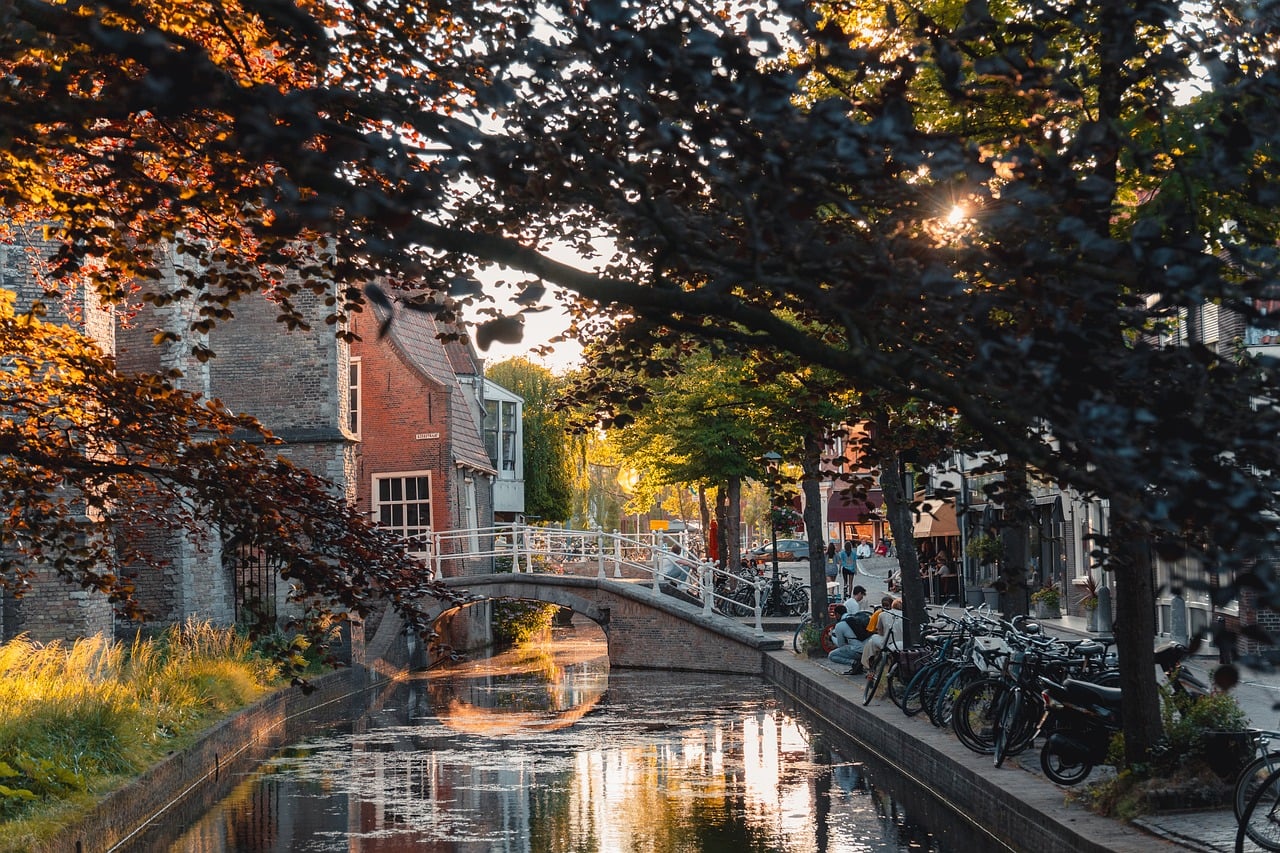
From the soaring spires of medieval cathedrals to the sleek, sustainable glass towers of contemporary capitals, architectural design tells the story of the continent. For anyone planning a Europe travel itinerary, understanding the built environment adds profound context to the journey. Beyond mere aesthetics, these structures reflect centuries of shifting power, economic milestones linked to the Europe economy, and the evolution of European culture.
The Age of Awe: Gothic Architecture
Emerging in the 12th century, Gothic architecture transformed European cities by literally reaching toward the heavens. Master builders moved away from the heavy, fortress-like Romanesque style, introducing revolutionary engineering techniques.
Key Characteristics of Gothic Design
- Ribbed Vaults: Allowed for higher ceilings and greater weight distribution.
- Flying Buttresses: External supports that transferred wall weight outward, enabling massive stained-glass windows.
- Pointed Arches: Distributed thrust more efficiently than traditional round arches.
Iconic examples like Notre-Dame in Paris and Cologne Cathedral in Germany stand as testaments to this era. These projects required immense financial investment and communal labor, heavily influencing the medieval Europe economy by creating specialized guilds of stonemasons, glassmakers, and carpenters.
Rebirth of Reason: The Renaissance
Beginning in 15th-century Italy, the Renaissance marked a cultural rebirth that drew heavy inspiration from classical Greek and Roman antiquity. Architects like Filippo Brunelleschi and Andrea Palladio shifted the focus from divine awe to human proportion, symmetry, and geometry.
Architectural Shifts During the Renaissance
- Symmetry and Proportion: Buildings were designed using strict mathematical ratios.
- Domes and Columns: Reintroduction of classical orders (Doric, Ionic, Corinthian) and monumental domes.
- Integration with Nature: Villas were carefully aligned with surrounding landscapes.
This era wasn’t just about beauty; it reflected a changing worldview centered on humanism. Today, cities like Florence and Rome offer travelers a masterclass in Renaissance design, deeply embedded in the rich tapestry of European culture.
The Contemporary Canvas: Modernism and Sustainability
As the 20th and 21st centuries unfolded, European architecture embraced functionality, minimalism, and technological innovation. Pioneers like Le Corbusier and Ludwig Mies van der Rohe stripped away ornamental excess, favoring steel, concrete, and glass.
Modern Trends and Policy Integration
- Functionalism: The belief that form must follow function.
- Adaptive Reuse: Transforming historic industrial sites into modern cultural hubs.
- Green Building Standards: Aligning with ambitious Europe climate policy goals.
Modern European architecture is no longer just about looking sleek—it plays a vital role in urban sustainability. Funded in part by initiatives from the European Union, contemporary structures increasingly feature solar integration, energy-efficient facades, and carbon-neutral materials. Cities like Copenhagen and Vienna lead the world in eco-friendly urban design, proving that historical reverence and futuristic innovation can coexist.
Conclusion
Exploring European architecture is more than a visual treat; it is a walk through history, economics, and environmental consciousness. Whether you are marveling at a Gothic cathedral or analyzing a modern net-zero office building supported by the European Union, these structures shape how we live, travel, and innovate. Keep these historical layers in mind on your next journey to truly appreciate the genius behind Europe’s built landscape.