
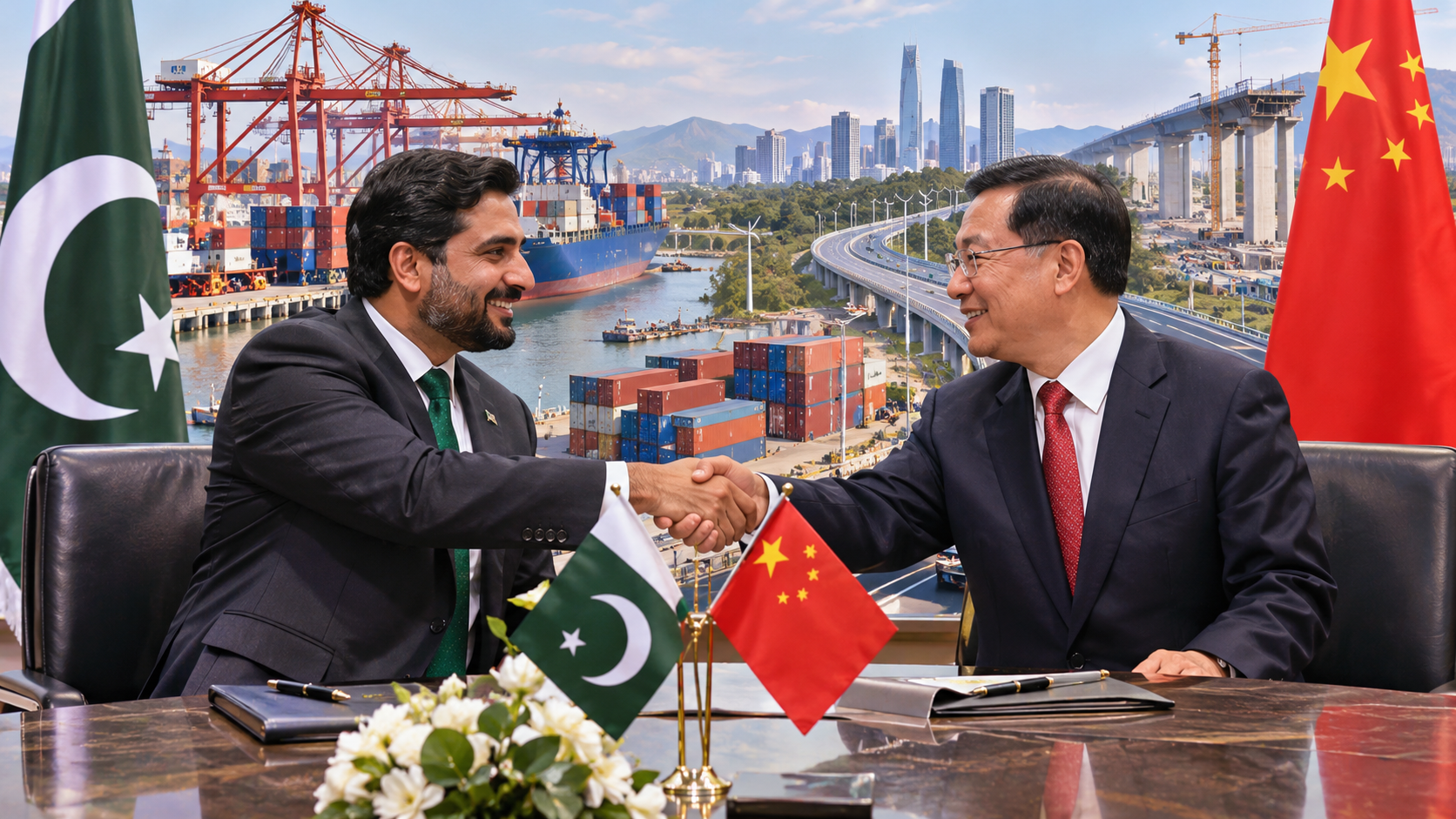
As developing economies navigate rising energy costs, global uncertainty, and infrastructure challenges, Pakistan continues to strengthen its economic relationship with China. The partnership is gradually expanding beyond traditional infrastructure development into energy security, industrial modernization, technology, and scientific research.
Recent discussions between Pakistan and China regarding fuel storage and terminal infrastructure highlight the growing importance of this strategic relationship.
The Evolution of Pakistan-China Economic Relations
The China-Pakistan Economic Corridor (CPEC) has played an important role in shaping Pakistan’s infrastructure development. Investments in highways, energy projects, and transportation networks have created opportunities for improved regional connectivity.
The next phase of cooperation presents an opportunity to focus more heavily on industrial development, agricultural modernization, technology transfer, and export-oriented businesses.
Key Areas Driving Economic Cooperation
1. Energy Security and Infrastructure
Energy security remains one of Pakistan’s most significant economic challenges. Cooperation in petroleum storage, renewable energy, and electricity infrastructure could help the country manage supply disruptions more effectively.
Improved energy infrastructure could also support industrial productivity and provide businesses with more reliable operating conditions.
2. Industrial Development and Employment
Special Economic Zones offer Pakistan an opportunity to attract manufacturers seeking competitive production locations.
These zones could generate employment opportunities, encourage skills development, and support local businesses through stronger supply chains.
3. Agricultural Modernization
Agriculture remains an essential component of Pakistan’s economy. Cooperation in modern irrigation, agricultural machinery, food processing, and research could improve productivity and reduce post-harvest losses.
4. Technology and Scientific Research
Emerging technologies, including artificial intelligence, satellite technology, robotics, and digital infrastructure, represent another important area of bilateral cooperation.
Scientific partnerships could provide Pakistani students and researchers with access to advanced training and international research opportunities.
Challenges and the Road Ahead
Despite significant opportunities, Pakistan must address regulatory uncertainty, project delays, financing constraints, and governance challenges.
Transparent policies, effective project management, and investment in domestic skills will be essential to maximizing the long-term benefits of international cooperation.
Conclusion
Pakistan-China economic cooperation has the potential to support sustainable economic development, industrial growth, and technological advancement. However, its long-term success will depend on Pakistan’s ability to convert international investment into meaningful employment, stronger exports, and improved living standards.
Key Takeaways:
- Pakistan and China are expanding cooperation in energy infrastructure.
- Industrial development could generate employment opportunities.
- Agricultural modernization remains an important area of collaboration.
- Transparent governance will be essential for sustainable economic benefits.