
Seven Lean Years? The Silent Crisis Threatening Pakistan’s Agriculture
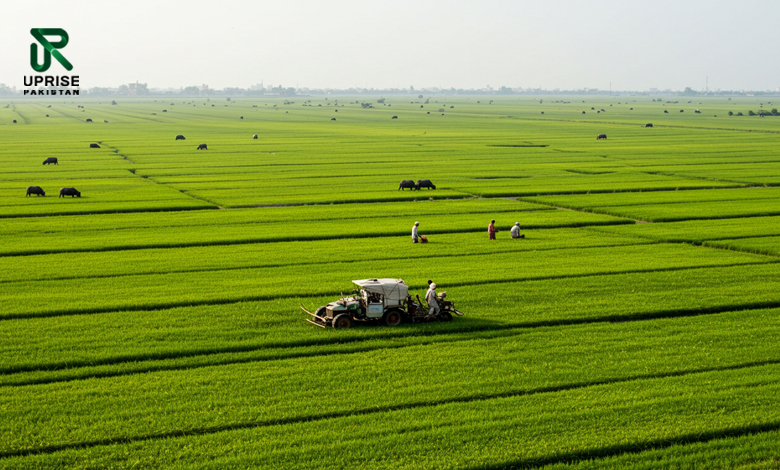
Pakistan’s farms are quietly struggling, and most people are unaware of it yet. Recent agricultural data indicate that, for nearly seven years, farmers have faced smaller land areas, weaker water supplies, rising input costs, and increasingly harsh weather conditions.
These problems don’t stay in the village. They travel to the city due to higher food prices, fewer job opportunities, and increased poverty. This is not only about crops. It’s about families, food security, and the future of rural Pakistan. From Punjab’s wheat belt to Sindh’s cotton fields, the warning signs are real. So, what is causing this slow crisis—and can Pakistan fix it in time?
The Land Is Shrinking—And So Are Incomes
Across Pakistan, farms are getting smaller with every generation. According to the latest agriculture census, about 43% of farms are now under 5 acres. That size is often too small to use modern machines or grow enough to sell. In Punjab, many families that once farmed 10–12 acres now share 3–4 acres. With such small plots, farmers can’t scale up, so they stay poor.
“Small farmers can’t afford tractors or new seeds,” said a rural officer from Multan.
So, the land is there—but it’s sliced too thin to feed a nation.
Pakistan’s Seven Agricultural Pressures
| Problem | What It Means |
| Shrinking farm sizes | Farms too small for profit or mechanization |
| Water scarcity | Old canals, low rainfall, and falling groundwater |
| Climate stress | Floods, heat waves, and crop loss |
| Gender gap | Women work the fields but rarely own land |
| Youth migration | Young people leave villages for cities |
| Technology access gap | Small farmers can’t afford machines or digital tools |
| Debt and middleman traps | Credit comes with conditions that cut farmer earnings. |
Water Woes And A Changing Climate
Water used to be agriculture’s strength. Now it’s a weakness. Many farmers still depend on canal systems built decades ago. These don’t reach everyone anymore. So, farmers turn to tubewells. However, groundwater levels in some areas have dropped by more than two meters over the past decade.
At the same time, climate change is having a profound impact. One year brings record floods. The next brings dry spells. As a result, farmers can’t predict seasons, and crop yields become unstable.
The Hidden Workforce: Women
Here’s a fact the census highlights: about 68% of Pakistan’s farm labor is done by women. They plant, harvest, feed animals, and process food. Yet less than 1% of farms are registered to women. That means women do the work but don’t get the land, the loans, or the decisions.
“Women are the invisible backbone of agriculture,” said one Sindh-based activist.
If Pakistan wants to strengthen its agriculture sector, it must empower women to own land and provide them with training.
Why Young People Are Walking Away
Farming no longer appears to be a secure future for many young people. Earnings are low. Risks are high. So, rural youth move to Karachi, Lahore, or even abroad. But when young people leave, villages lose energy and innovation. Older farmers tend to stay, but they often struggle to adopt new technology.
The Debt And Middlemen Trap
Most small farmers struggle to obtain bank loans. Instead, they borrow from arthis—middlemen. These lenders give seeds or cash at the start of the season. But later, the farmer must sell the crop to them at a lower price. So even in a good year, the farmer earns little. This keeps families stuck in debt for years.
The Technology Gap Is Real
Large farms can purchase tractors, harvesters, drip irrigation systems, and even farming apps. Small farmers can’t. Machines are expensive, and service centers are far. As a result, large farms grow more rapidly, while smallholders struggle to survive. This gap widens rural inequality.
Why This Crisis Matters To Everyone
Agriculture still employs around 37% of Pakistan’s workforce. It feeds over 240 million people. So, when agriculture slows down, everything slows down.
- Food prices rise
- Rural poverty grows
- Migration to cities increases
- Imports of food go up
That’s why this isn’t just a “farmer problem.” It’s a national problem.
Steps Toward A Better Future
Pakistan can still turn this around. But it needs smart, people-focused steps.
- Support small farmers through cooperatives and shared machinery
- Fix water systems and regulate groundwater
- Promote climate-smart agriculture like drought-tolerant seeds
- Give women land rights and access to credit
- Help young farmers with training and digital tools
- Create fair markets so farmers don’t depend on middlemen
- Improve data and research so policies match real field problems
When farmers have access to tools, water, and fair prices, they are more likely to produce more. And when they produce more, the whole country benefits.
Act Now, Or Pay Later
Pakistan’s agriculture is not collapsing, but it is weakening. The warning signs are clear: smaller farms, thirsty fields, aging farmers, and rising debt. If the country ignores these signs, the next seven years could be even more difficult. However, if Pakistan invests in its farmers—especially women and smallholders—it can protect food security and rural livelihoods. Farmers are not the cause of this crisis; they are the key to solving it.


