

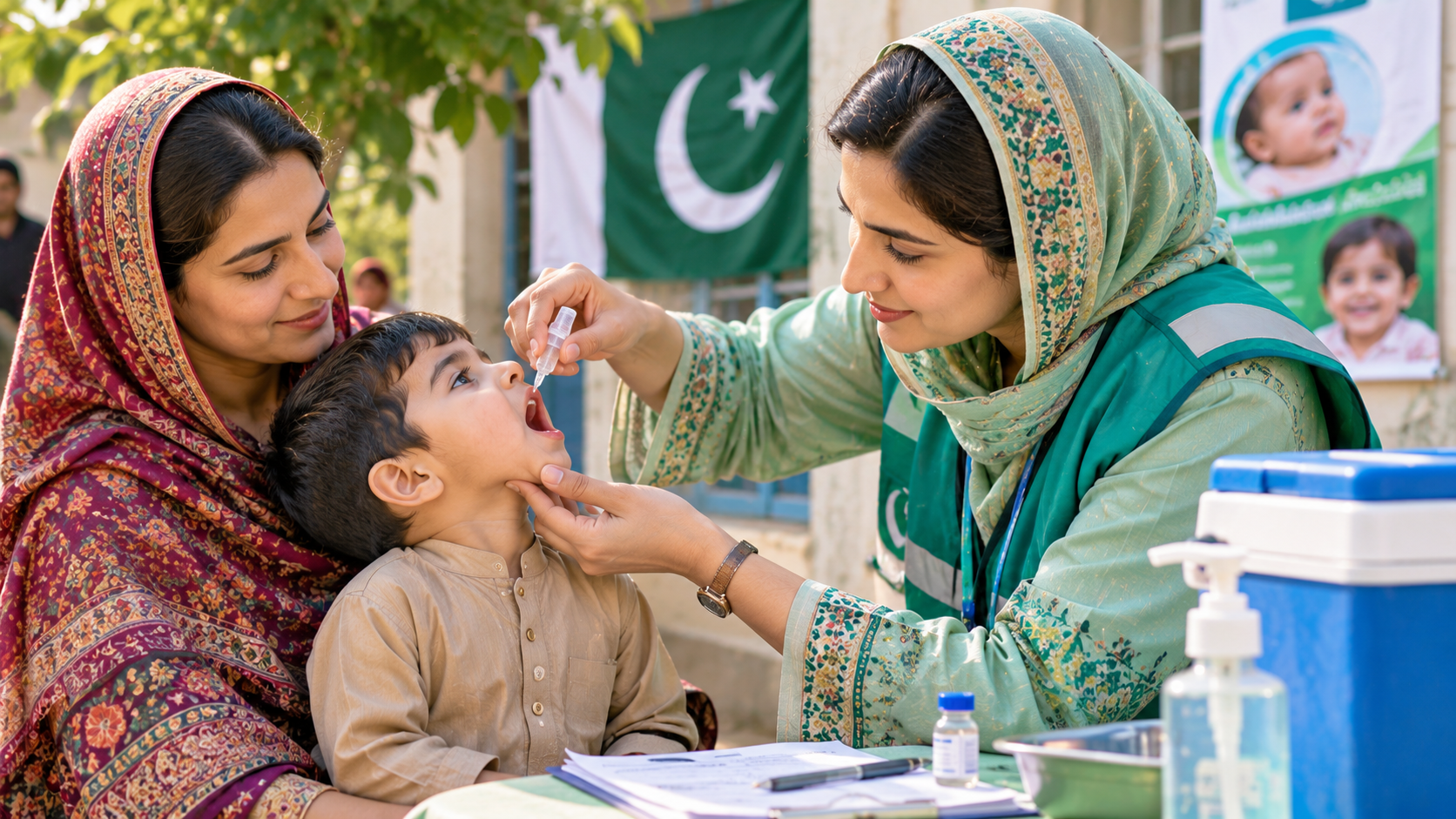
Pakistan is continuing its efforts to eliminate poliovirus transmission through vaccination campaigns, disease surveillance and community outreach. Despite decades of progress, the country remains one of the few places where wild poliovirus continues to circulate, making the protection of young children an urgent public health priority.
In November 2026, Pakistan launched a targeted vaccination campaign covering 97 selected districts, with the aim of reaching approximately 24 million children under the age of five.
The campaign, scheduled from November 2 to November 8, involves more than 200,000 frontline health workers who are helping families protect their children against a preventable disease that can cause lifelong paralysis.
The initiative illustrates why sustained vaccination remains essential even after substantial reductions in polio cases.
What Is Polio and Why Is It Dangerous?
Poliomyelitis, commonly known as polio, is a highly infectious disease caused by poliovirus.
The virus primarily spreads through the faecal-oral route, often when food, water or hands become contaminated with infected faecal matter. Poor sanitation and inadequate access to clean water can increase the risk of transmission.
Many infections cause no noticeable symptoms. Others may produce fever, fatigue, headache, vomiting or muscle discomfort.
In a small proportion of cases, the virus can invade the nervous system and cause irreversible paralysis.
Severe infections may affect muscles needed for breathing and can become life-threatening.
Children under five are particularly vulnerable, which is why vaccination programmes place special emphasis on this age group.
There is no cure that reverses paralytic polio. Prevention through vaccination is therefore the most effective approach.
Pakistan’s Progress in Polio Eradication
Pakistan has made considerable progress since launching its national polio eradication programme in 1994.
Government figures indicate that annual cases have fallen by more than 99% compared with the estimated 20,000 cases recorded during the early years of the programme.
This achievement reflects decades of vaccination campaigns, disease monitoring and cooperation among health professionals, families, governments and international partners.
However, eliminating the final remaining chains of transmission has proved difficult.
The World Health Organization continues to identify Pakistan and Afghanistan as the two countries where wild poliovirus remains endemic.
The continued detection of the virus demonstrates that vaccination campaigns cannot stop simply because reported case numbers have declined.
Why Even One Case Matters
A confirmed polio case may indicate that the virus has circulated within a community.
Because many infected people experience few or no symptoms, transmission can occur without every infection being identified through clinical diagnosis.
Health authorities therefore monitor both reported cases of paralysis and environmental samples collected from wastewater.
This combination helps officials identify where the virus may be circulating and where additional vaccination activities are needed.
November 2026 Vaccination Campaign Targets 24 Million Children
Pakistan’s November vaccination initiative focuses on areas where children may face a greater risk of poliovirus exposure.
The government announced that approximately 24 million children under five would be targeted across 97 districts.
More than 200,000 frontline workers are taking part in activities intended to reach children in homes and communities.
Health authorities are focusing on vaccination coverage, particularly in high-risk areas where missed children, population movement and operational difficulties can allow the virus to persist.
The campaign is part of broader efforts to interrupt transmission and protect children before they become exposed.
The announced target represents the number of children officials intend to reach; it should not be confused with a verified count of children already vaccinated.
Why Children Need Polio Drops During Every Campaign
Some parents may wonder why their children need additional polio drops after receiving previous doses.
Repeated vaccination is an important part of Pakistan’s eradication strategy.
The oral polio vaccine helps build immunity against poliovirus, including protection in the intestine that can reduce viral transmission.
In areas where the virus continues to circulate, multiple opportunities for vaccination are important to strengthen population-level protection.
Pakistan’s health authorities advise that eligible children under five receive the recommended oral polio vaccine during every campaign, even if they have been vaccinated previously.
Do Campaign Drops Replace Routine Vaccination?
No. Supplementary vaccination campaigns and routine childhood immunisation serve complementary purposes.
Routine immunisation provides scheduled vaccines against polio and several other preventable diseases.
Campaigns provide additional opportunities to reach children and strengthen protection in communities where poliovirus remains a threat.
Parents should follow their child’s recommended immunisation schedule and consult a qualified healthcare professional if any doses have been missed.
The Role of Oral and Injectable Polio Vaccines
Pakistan’s immunisation programme uses both oral polio vaccine (OPV) and inactivated polio vaccine (IPV).
Oral polio vaccine is administered as drops by mouth and plays an important role in efforts to interrupt transmission.
Inactivated polio vaccine is given by injection and helps provide protection against paralytic disease.
The two vaccines support different aspects of immunity and can be used together within established vaccination programmes.
Parents should follow the current official immunisation schedule rather than deciding independently which vaccine doses their children require.
Health workers can explain the purpose of each vaccine and help families identify any missed routine appointments.
Challenges Facing Polio Eradication in Pakistan
Despite sustained progress, several barriers continue to complicate eradication efforts.
Children Missed During Campaigns
Some children may be absent when vaccination teams visit or may live in communities that are difficult to reach.
Repeated visits, improved planning and cooperation with local communities can help reduce these gaps.
Population Movement
Families may move between cities, provinces or countries for employment, trade or personal reasons.
Mobile populations require coordinated vaccination approaches so children are not overlooked.
Misinformation and Vaccine Hesitancy
False claims and confusion surrounding vaccination can discourage families from accepting immunisation.
Clear communication from qualified health professionals and trusted community representatives can help parents make informed decisions.
Security and Access Difficulties
In certain locations, operational and security challenges can complicate vaccination activities.
Frontline health teams need appropriate coordination and support to reach eligible children safely.
Sanitation and Environmental Conditions
Inadequate sanitation can facilitate poliovirus transmission.
Improved hygiene, safe drinking water and sanitation are valuable public health measures, although they do not replace vaccination.
The Importance of Frontline Health Workers
Polio vaccination campaigns rely on thousands of healthcare workers, supervisors, community mobilisers and other personnel.
These teams visit neighbourhoods, communicate with parents, identify children who may have missed doses and support vaccination activities.
Women health workers can play an especially important role in reaching households and discussing children’s health with caregivers.
Community trust is essential.
When families understand why vaccination is recommended and have opportunities to ask questions, they may be better equipped to participate in prevention efforts.
The continued contribution of frontline workers remains central to Pakistan’s polio eradication strategy.
How Parents Can Help Protect Their Children
Parents and caregivers have an important role in preventing poliovirus transmission.
Keep routine vaccinations up to date. Follow the official immunisation schedule and maintain a record of completed doses.
Participate in vaccination campaigns. Ensure eligible children receive polio drops when authorised vaccination teams visit.
Ask qualified healthcare professionals. If a child has missed vaccinations or has a medical concern, seek advice from a recognised healthcare provider.
Practise good hygiene. Encourage regular handwashing, safe food handling and access to clean drinking water.
Use trusted information sources. Rely on official public health authorities rather than unverified social media messages.
Support vaccination teams. Cooperate with legitimate health workers and help eligible children access available services.
Families can also contact Pakistan’s official polio helpline at 1166 for vaccination-related information.
Why Pakistan’s Polio Eradication Matters Globally
Polio eradication is an international public health objective.
A virus that continues circulating in one area can pose risks elsewhere, particularly where vaccination coverage is insufficient.
Cooperation between Pakistan, Afghanistan and international health organisations is therefore important for interrupting transmission.
The World Health Organization, UNICEF and other partners contribute technical support, disease surveillance and operational assistance to eradication efforts.
Global progress has demonstrated that vaccination can eliminate wild poliovirus transmission from large regions.
The remaining challenge is ensuring that every vulnerable community receives consistent protection.
What Comes Next for Pakistan?
Pakistan’s future progress will depend on maintaining high vaccination coverage, responding rapidly to confirmed cases and strengthening environmental surveillance.
Health authorities will also need to improve access to children who are repeatedly missed during campaigns.
Long-term success requires coordination across federal, provincial and district institutions, alongside continued community participation.
Public confidence, accurate information and reliable healthcare services are essential elements of this effort.