

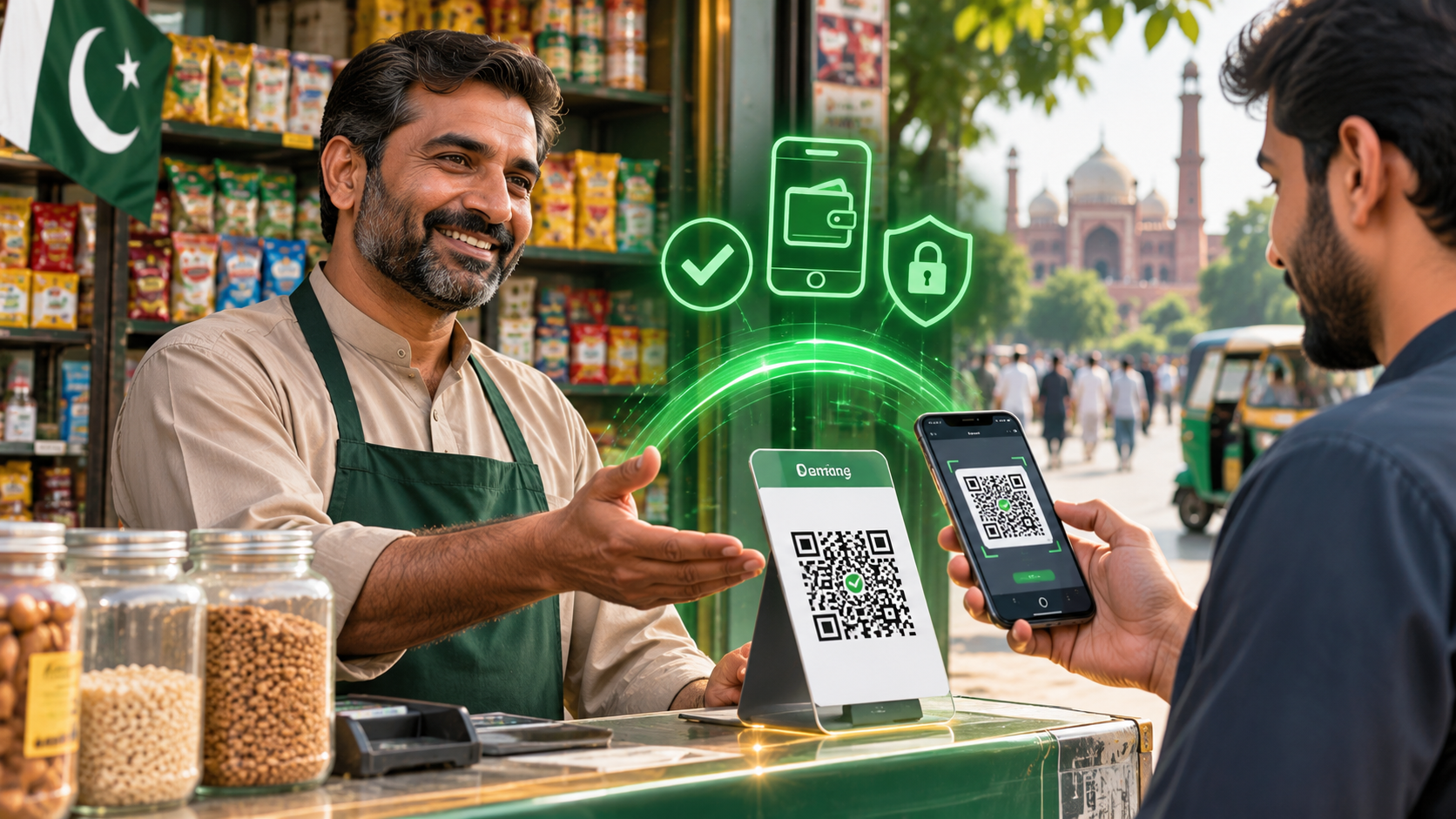
Pakistan’s financial landscape is undergoing a significant transformation as digital payments become increasingly important to everyday business activity. From neighbourhood grocery shops to online retailers, more merchants are exploring mobile banking, digital wallets and instant payment services as alternatives to cash-only transactions.
The shift is supported by growing smartphone adoption, financial technology innovation and government efforts to expand access to digital financial services.
According to the State Bank of Pakistan’s Annual Payment Systems Review for fiscal year 2025–26, retail transactions through formal banking channels increased to approximately 14.3 billion, including around 13.2 billion transactions processed digitally.
These figures illustrate the scale of change in Pakistan’s formal payments ecosystem, although they do not include every cash transaction taking place outside the banking system.
Digital Payments Are Becoming Part of Everyday Commerce
For decades, cash has been central to business transactions across Pakistan. Small retailers, wholesalers and service providers have traditionally relied on physical currency to receive payments and manage daily sales.
That model is gradually changing as customers become more comfortable using mobile banking applications, digital wallets and QR-code payments.
A customer purchasing groceries, for example, may now be able to transfer payment directly to a merchant’s account instead of carrying cash.
Similarly, an online seller can receive digital payments and maintain transaction records without depending entirely on manual cash collection.
For merchants, these services can offer convenience and make payments easier to track.
However, the benefits vary depending on internet connectivity, service reliability, transaction costs and customers’ preferred payment methods.
Raast: Pakistan’s Instant Payment Infrastructure
One of the central developments in Pakistan’s digital financial system is Raast, the instant payment platform introduced by the State Bank of Pakistan.
Raast enables participating institutions to process electronic payments through an interconnected infrastructure.
Its services include person-to-person transfers and person-to-merchant payments, helping individuals and businesses move money electronically.
How Raast Benefits Small Businesses
For a small business owner, instant payment options can provide several practical advantages.
Faster payment confirmation: Electronic transfers can allow merchants to verify that a payment has been received without waiting for physical cash collection.
Digital transaction records: Payment histories can assist business owners with bookkeeping, sales reconciliation and financial planning.
Additional payment choices: Customers who prefer digital banking may find it easier to shop at businesses that accept electronic payments.
Reduced dependence on cash handling: Merchants can potentially spend less time counting and transporting physical money.
These benefits are not automatic. Businesses still need to verify transactions, understand applicable fees and maintain appropriate security practices.
Growth in Pakistan’s Digital Payment Ecosystem
Government and central bank data demonstrate how rapidly Pakistan’s formal payment infrastructure has expanded.
In July 2026, the government reported that the number of active merchants accepting digital payments under the Cashless Pakistan initiative had increased from approximately 500,000 to more than 2 million.
The announcement also highlighted the contribution of Raast QR-code payments and expanding digital banking services.
The government’s broader objective is to improve transaction convenience, encourage financial documentation and strengthen transparency in economic activity.
For small businesses, increasing merchant acceptance may make digital payment tools more accessible than in previous years.
Nevertheless, the number of registered or active merchants does not by itself show how frequently each business uses digital payments.
E-Commerce Creates New Opportunities for Entrepreneurs
Digital payments are closely connected to the development of online commerce.
Small businesses can now promote products through websites, social media platforms and digital marketplaces, reaching customers beyond their immediate neighbourhoods.
An entrepreneur selling clothing, handmade products or household accessories may use an online storefront to attract buyers across Pakistan.
Digital payment services can support this business model by offering alternatives to traditional cash-on-delivery arrangements.
Why Payment Options Matter
Providing customers with several payment methods may improve the purchasing experience.
Some buyers prefer cash on delivery, while others find bank transfers, mobile wallets or card payments more convenient.
Businesses that understand their customers’ preferences can build payment systems that support their sales processes.
However, online businesses must also consider refunds, delivery disputes, consumer protection and transaction security.
A convenient payment system is only one part of a successful e-commerce operation.
Challenges Facing Digital Payment Adoption
Despite the progress, several barriers continue to affect businesses and consumers.
Internet Access and Reliability
Digital transactions often depend on reliable mobile networks, internet connectivity or access to working banking applications.
Connectivity problems can interrupt payments and create difficulties for merchants during busy periods.
Digital Literacy
Not every customer or shop owner is familiar with online banking applications, QR codes or digital security practices.
Clear instructions and accessible customer support can help reduce these barriers.
Fraud and Cybersecurity
Digital payments introduce risks involving phishing, account impersonation, malicious links and unauthorised access.
Business owners should avoid sharing one-time passwords, banking PINs or account credentials.
Payment confirmations should be checked through trusted banking applications rather than relying solely on screenshots supplied by customers.
Access to Financial Services
Some merchants may face difficulties opening accounts, completing identity verification or accessing suitable financial products.
Financial inclusion initiatives need to address these challenges if digital services are to reach a wider range of businesses.
What Digital Payments Could Mean for Pakistan’s Economy
A more accessible digital payments system could support economic activity in several ways.
Businesses may find it easier to document transactions, monitor revenue and manage financial records.
Financial institutions may gain better information for developing services that meet the needs of smaller enterprises.
Digital payment systems can also contribute to greater transparency, although their effects on tax compliance and the informal economy depend on broader institutional and regulatory conditions.
For consumers, wider payment acceptance offers more choice and convenience.
These potential benefits should be considered alongside privacy, cybersecurity and financial inclusion concerns.
How Small Businesses Can Prepare for Digital Payments
For merchants considering digital payments, a gradual and practical approach can be effective.
Start with customer needs. Identify which payment methods customers already use and which services are supported by the business’s bank or payment provider.
Choose an appropriate merchant solution. Compare QR-code acceptance, bank transfers, payment gateways and other services based on actual business requirements.
Understand fees and settlement procedures. Review applicable charges, transaction limits and how payments reach the business account.
Train staff. Employees should know how to confirm payments, recognise suspicious messages and respond to transaction disputes.
Maintain accurate records. Digital payment histories can support bookkeeping, but businesses should still reconcile sales, refunds and other financial activity.
Protect customer information. Businesses should use approved payment channels and avoid collecting unnecessary sensitive financial details.
The Future of Digital Commerce in Pakistan
Pakistan’s growing digital payments ecosystem suggests that electronic transactions will continue to play an important role in the country’s business environment.
Mobile banking, instant transfers, payment gateways and QR-code services are creating new opportunities for companies of different sizes.
However, sustained progress will require reliable infrastructure, affordable services, consumer trust and effective regulatory oversight.
The transition will not eliminate cash immediately. Instead, digital payments are likely to operate alongside traditional payment methods as businesses and customers adopt the services that best meet their needs.