
Southern Israel Residents Shaken After Direct Iranian Strikes
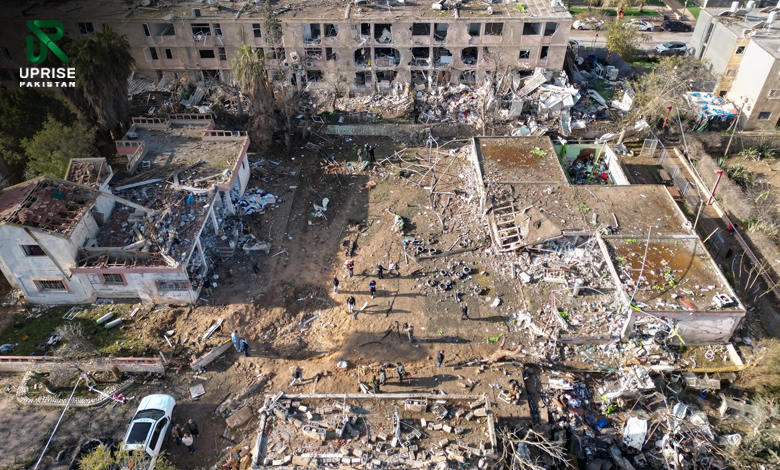
After Iranian missiles struck Arad and Dimona, people in southern Israel woke up to shattered glass, smoke, and panic. The assaults happened late at night, when a lot of families were home getting ready for bed. The streets seemed rattled by dawn. There were pieces of trash all over the ground. The windows blew out. The walls were broken. People stood outside in some locations, looking at houses that didn’t seem secure anymore. The strikes did more than hurt those who lived in these desert communities. They transformed how people felt about everyday life in only one night.
The Blasts Left Homes Torn Open and Families Reeling
The scale of the damage quickly became clear. In Arad, one missile ripped into an open area near apartment buildings and left behind a large crater. In Dimona, another strike landed close to homes and sent shock waves through nearby buildings. Reports said around 175 people were injured in the two attacks, with at least 10 seriously hurt. No one was killed, but officials said that outcome came down to luck. In both cities, families walked through damaged rooms, picked up scattered belongings, and tried to make sense of what had just happened around them.
Residents Said the Force Was Like Nothing Before
The people who lived through the attack described moments of deep shock. In Dimona, Yitzhak Salem said he was inside a safe room with his wife when the blast hit. Dust and smoke filled the room, and the force of the explosion made the moment feel unreal. He said it felt like a hurricane mixed with an earthquake. In Arad, residents spoke of homes shaking, blinds rattling, and the ground moving under their feet. One man said he knew at once the strike had landed close by. That feeling stayed with people long after the sirens stopped.
The Hardest Moments Came While Families Waited for News
For many residents, the fear did not end with the blast itself. It grew in the minutes after, when people tried to reach loved ones and could not get through. In Arad, Isaac Waxler said his son and eight grandchildren lived near the impact site. While he was sheltering at home, he heard the explosion and then tried to call them. For a short time, he did not know whether they were safe. He later learned they were alive, and the family spent the night together. Still, those few minutes of silence became the most frightening part of the night.
Shelters Saved Lives but Also Exposed Weak Points
The strikes showed how much they depended on getting to shelter in time. In Dimona, city officials said many people in damaged buildings escaped serious harm because they followed the warnings and reached protected spaces before impact. That likely prevented a much greater tragedy. At the same time, Arad also revealed the limits of that system. Local officials said many of the injured were not inside shelters when the missile hit. Some were older residents who could not move down several flights of stairs quickly enough. In moments like these, a warning helps, but only if people can act fast.
Why These Two Cities Carry More Weight
Arad and Dimona are not only small cities in the Negev Desert. They also sit near Israel’s main nuclear research center, one of the country’s most sensitive sites. That is one reason these strikes drew such strong attention. Local leaders said neither city had taken a direct hit before, even through years of conflict in Gaza, Lebanon, and with Iran. This time felt different. The missiles did not just hit civilian neighborhoods. They landed close to an area tied to Israel’s strategic strength. That made the attack feel larger than a local tragedy and more like a warning about how far the conflict has spread.
The Strikes Point to a More Dangerous Phase
The attacks came during a tense stage in the Israel-Iran war and only hours after Iran’s Natanz nuclear facility was reportedly hit in an airstrike. Israel denied responsibility, but the timing shaped how many people understood the strikes on Arad and Dimona. Israeli officials said Iran was targeting civilian areas and using fear as a weapon. Iran, in turn, has cast its actions as a response to attacks on its own sites. Whatever the political language, ordinary residents paid the immediate price. They were the ones running to shelters, checking on relatives, and standing among broken buildings the next morning.
Southern Israel Now Feels the War in a Different Way
For years, many residents in southern Israel watched regional conflict unfold from a distance, even when the threat always felt close. After this attack, that distance seems gone. The war reached apartment blocks, family homes, and quiet streets in a matter of seconds. People who once thought of their towns as removed from the center of the fighting now see things differently. Even without fatalities, the emotional shock was severe. The broken buildings can be repaired over time. The harder thing to restore may be the sense that home is protected. That feeling was badly shaken in Arad and Dimona.


