

Introduction
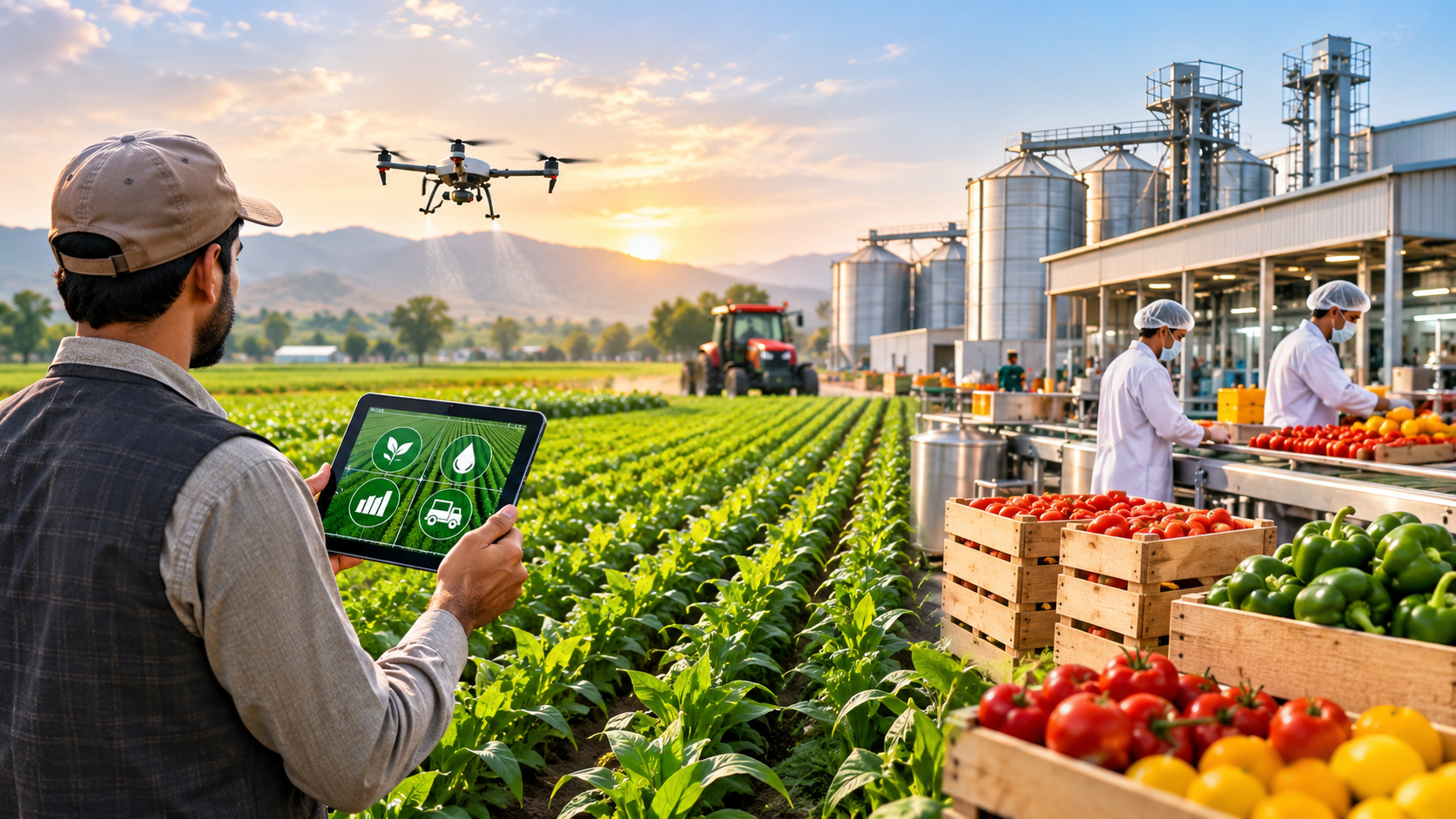
Agriculture has long been the backbone of economies around the world, feeding populations, supplying raw materials to industry and providing livelihoods to millions. Today, however, farming is no longer just about growing crops and raising livestock. It has grown into agribusiness: a broad value chain that covers inputs, production, processing, storage, logistics, marketing and retail. At the heart of this transformation is entrepreneurship, the willingness to spot opportunities, take calculated risks and build ventures that create value.
As populations rise, diets change and climate pressures grow, the demand for innovative, efficient and sustainable food systems has never been greater. Entrepreneurs who combine agricultural knowledge with business thinking are well placed to meet this demand while generating jobs and income.
Understanding Agribusiness
Agribusiness refers to all commercial activities connected with agricultural production and the supply chain that carries food and fibre from farm to consumer. It includes far more than farming itself. Seed and fertiliser suppliers, machinery dealers, processors, packaging firms, transporters, exporters, retailers and agri-technology companies all form part of the same ecosystem. Each link in this chain presents its own openings for new businesses.
The Role of Entrepreneurship in Agriculture
Entrepreneurship brings a commercial mindset to a sector that has traditionally been dominated by subsistence practices. An agri-entrepreneur does not simply produce; he or she identifies market needs, organises resources, adds value and builds a brand. The main contributions of entrepreneurship to agribusiness include:
- Job creation: Agri-enterprises generate employment in rural areas, reducing poverty and slowing migration to overcrowded cities.
- Value addition: Turning raw produce into processed goods such as juices, dried fruit, dairy products and packaged grains raises profit margins and reduces post-harvest waste.
- Innovation: New seed varieties, precision farming, drip irrigation, vertical farming and mobile advisory services improve yields and efficiency.
- Food security: Efficient production and distribution systems make nutritious food more available and affordable.
- Economic growth: Thriving agribusinesses strengthen exports, diversify income and support related industries.
Opportunities for Agri-Entrepreneurs
The sector offers a wide range of paths for aspiring business owners, including:
- Agro-processing: Milling, oil extraction, fruit pulping, packaging and cold chain services.
- Livestock, dairy and poultry: Commercial farming, feed production and veterinary services.
- Agri-technology: Digital marketplaces, drone services, smart irrigation and farm-management apps.
- Organic and specialty farming: High-value crops, herbs, mushrooms and certified organic produce for premium markets.
- Supply chain and logistics: Storage, transport and direct-to-consumer delivery that connect farmers to buyers.
- Agri-tourism: Farm stays, orchards and educational experiences that diversify farm income.
Key Challenges
Despite its promise, agri-entrepreneurship faces real obstacles. Limited access to finance remains one of the most common barriers, as small farmers and start-ups often lack collateral and credit history. Weather variability and climate change create production risks, while volatile prices can erode profits overnight. Poor rural infrastructure, including roads, storage and electricity, raises costs and increases losses after harvest. In addition, many producers have limited market access and depend on intermediaries who capture a large share of the value. Skills gaps in business management, record keeping and marketing further hold back growth.
Strategies for Success
Overcoming these challenges requires a deliberate approach. Successful agri-entrepreneurs typically follow several principles:
- Start with the market: Research what customers want and are willing to pay for before deciding what to produce.
- Add value: Move beyond selling raw commodities by processing, grading, branding and packaging.
- Adopt technology: Use data, mobile tools and modern equipment to cut costs and improve quality.
- Build partnerships: Join cooperatives, farmer groups and contract-farming arrangements to gain scale and bargaining power.
- Manage risk: Diversify crops, use crop insurance and keep financial records to withstand shocks.
- Practise sustainability: Conserve water and soil, reduce chemical use and protect the land for future generations.
The Role of Government and Institutions
Entrepreneurs do not succeed alone. Governments, banks, universities and development organisations all play a part in creating a supportive environment. Affordable credit schemes, tax incentives, training programmes, research and extension services, and investment in rural infrastructure can lower the barriers to entry. Policies that encourage young people and women to take part in agribusiness are especially valuable, since both groups represent large pools of untapped talent.
Looking Ahead
The future of agribusiness will be shaped by technology, sustainability and changing consumer expectations. Artificial intelligence, satellite imagery, blockchain traceability and e-commerce are already changing how food is grown, tracked and sold. Consumers increasingly value safe, traceable and environmentally responsible products, creating room for entrepreneurs who can deliver them. Young, educated and digitally skilled people have the chance to make farming an attractive and profitable career rather than a last resort.
Conclusion
Entrepreneurship and agribusiness are natural partners. Together they can transform agriculture from a means of survival into an engine of growth, innovation and rural development. By identifying opportunities, adding value, embracing technology and working in partnership, agri-entrepreneurs can build resilient businesses that feed communities and strengthen national economies. The seeds of opportunity are already in the ground; what is needed now is the vision and determination to help them grow.
By Tayyab