
Why Did Iran Attack Israel? Unraveling the Complex Geopolitical Dynamics
Understanding the Roots of Conflict and the Broader Implications
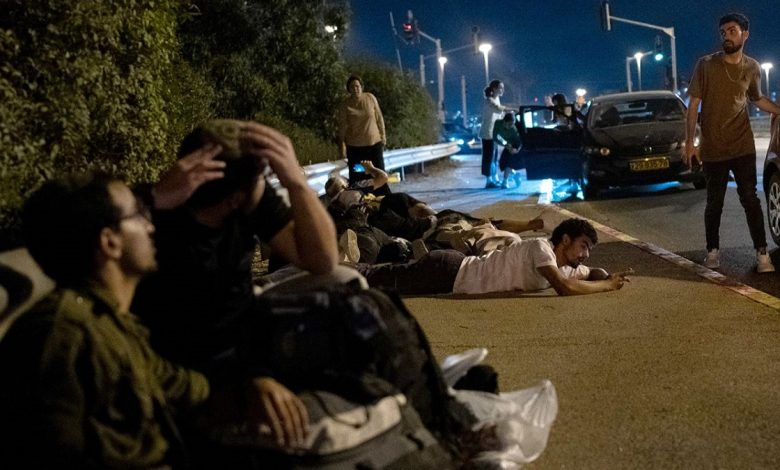
The Middle East has long been a hotspot for geopolitical conflicts, and the relationship between Iran and Israel has been at the center of many of these tensions. In recent years, hostility between the two nations has escalated, culminating in missile attacks from Iran directed at Israeli military and strategic targets. But what led to this aggressive stance by her, and what are the broader implications for the region? To understand why it attacked Israel, it is essential to delve into the historical context, the ideological differences, and the current regional dynamics that fuel this conflict.
Iran Attack-Historical and Ideological Roots of Hostility
The animosity between Iran and Israel can be traced back to the 1979 Iranian Revolution, which saw the overthrow of the US-backed Shah and the establishment of the Islamic Republic under Ayatollah Khomeini. Prior to the revolution, Iran and Israel maintained relatively cordial relations. However, the rise of the Islamic Republic marked a dramatic shift in Iran’s foreign policy.
The new Iranian leadership embraced a staunch anti-Israel stance, denouncing Israel as an illegitimate state and a “Zionist entity” that had no right to exist in the Middle East. This position was rooted in Iran’s ideological commitment to supporting the Palestinian cause and its opposition to Israel’s treatment of Palestinians in the occupied territories. For Iran, Israel’s occupation of Palestinian land became a symbol of Western imperialism in the region, and Tehran vowed to oppose it at every turn.
The ideological clash between Iran and Israel has been further exacerbated by religious differences. Iran, a predominantly Shia Muslim country, sees itself as the defender of oppressed Muslims worldwide, particularly the Palestinians, who are mostly Sunni Muslims. This has led Iran to support various Palestinian and Lebanese groups, most notably Hezbollah, that are committed to the destruction of Israel.
Regional Rivalries and Power Struggles
While ideology plays a significant role in the Iran-Israel conflict, the rivalry between the two nations is also driven by broader regional power struggles. Iran aspires to be the dominant power in the Middle East, and it views Israel, along with its Western allies, as a significant obstacle to achieving that goal. Israel, on the other hand, perceives Iran’s growing influence in the region, particularly its support for proxy groups like Hezbollah in Lebanon and militias in Syria and Iraq, as a direct threat to its security.
The power struggle between Iran and Israel has manifested itself in several proxy conflicts across the region. Iran has provided extensive military and financial support to groups that oppose Israel, such as Hamas in Gaza and Hezbollah in Lebanon. These groups have frequently launched attacks against Israel, and in return, Israel has conducted airstrikes on Iranian positions in Syria and Iraq. This ongoing cycle of violence has contributed to the growing tension between the two nations.
The Role of the Nuclear Issue
One of the most significant sources of friction between Iran and Israel has been Iran’s nuclear program. Israel, along with many Western nations, has long suspected that Iran’s nuclear ambitions extend beyond peaceful energy purposes and are aimed at developing nuclear weapons. For Israel, an Iranian nuclear bomb would be an existential threat, and it has made it clear that it would not allow Iran to acquire such capabilities.
Over the years, Israel has undertaken covert operations to sabotage Iran’s nuclear program, including cyberattacks on Iranian nuclear facilities and the assassination of key Iranian nuclear scientists. These actions have only fueled Iran’s resentment toward Israel, further entrenching the conflict.
In response, Iran has vowed to retaliate against any Israeli aggression and has used its missile capabilities to demonstrate its ability to strike Israeli targets. The missile attacks on Israel, including the recent barrage of ballistic missiles fired at key military installations, are seen as part of Iran’s broader strategy to deter Israel from taking more aggressive actions against its nuclear program.
The Gaza and Lebanon Connection
Another critical factor behind Iran’s attack on Israel is the ongoing conflict between Israel and Palestinian groups, particularly Hamas. Iran has been a long-time supporter of Hamas, providing the group with financial and military aid to resist Israeli occupation. Whenever tensions flare up between Israel and Gaza, Iran often plays a behind-the-scenes role, encouraging Hamas and other militant groups to stand firm against Israeli actions.
The recent round of violence in Gaza, which saw Israeli airstrikes on civilian targets and infrastructure, provoked outrage across the Muslim world. Iran, viewing itself as the protector of the Palestinian cause, felt compelled to respond. The missile attacks on Israel can be seen as a form of retaliation for Israeli actions in Gaza, as well as a broader message that Iran will not stand idly by while Palestinians suffer under Israeli bombardment.
Similarly, Iran’s support for Hezbollah in Lebanon is another crucial factor. Hezbollah, which has fought multiple wars against Israel, is one of Iran’s most significant allies in the region. As the situation in Lebanon deteriorates and tensions along the Israeli-Lebanese border escalate, Iran’s involvement in the conflict has grown more direct. The missile attacks on Israel are also a way for Iran to demonstrate its commitment to Hezbollah and to signal that any Israeli action against Lebanon will have consequences.
Broader Implications for the Middle East
Iran’s attack on Israel marks a dangerous escalation in an already volatile region. The missile strikes are not just a response to Israeli actions in Gaza and Lebanon but a broader statement about Iran’s willingness to challenge Israel and its Western allies in the Middle East. As both nations engage in a complex game of brinkmanship, the risk of a full-scale regional war grows.
The international community, particularly the United States and other Western powers, faces a difficult challenge in managing the conflict. Efforts to revive the Iran nuclear deal, officially known as the Joint Comprehensive Plan of Action (JCPOA), have stalled, and Israel remains firmly opposed to any agreement that would allow Iran to maintain a nuclear program.
As the situation unfolds, the stakes for the Middle East are higher than ever. The conflict between Iran and Israel is not just about territorial disputes or religious differences; it is a battle for influence, power, and control over the future of the region.


