

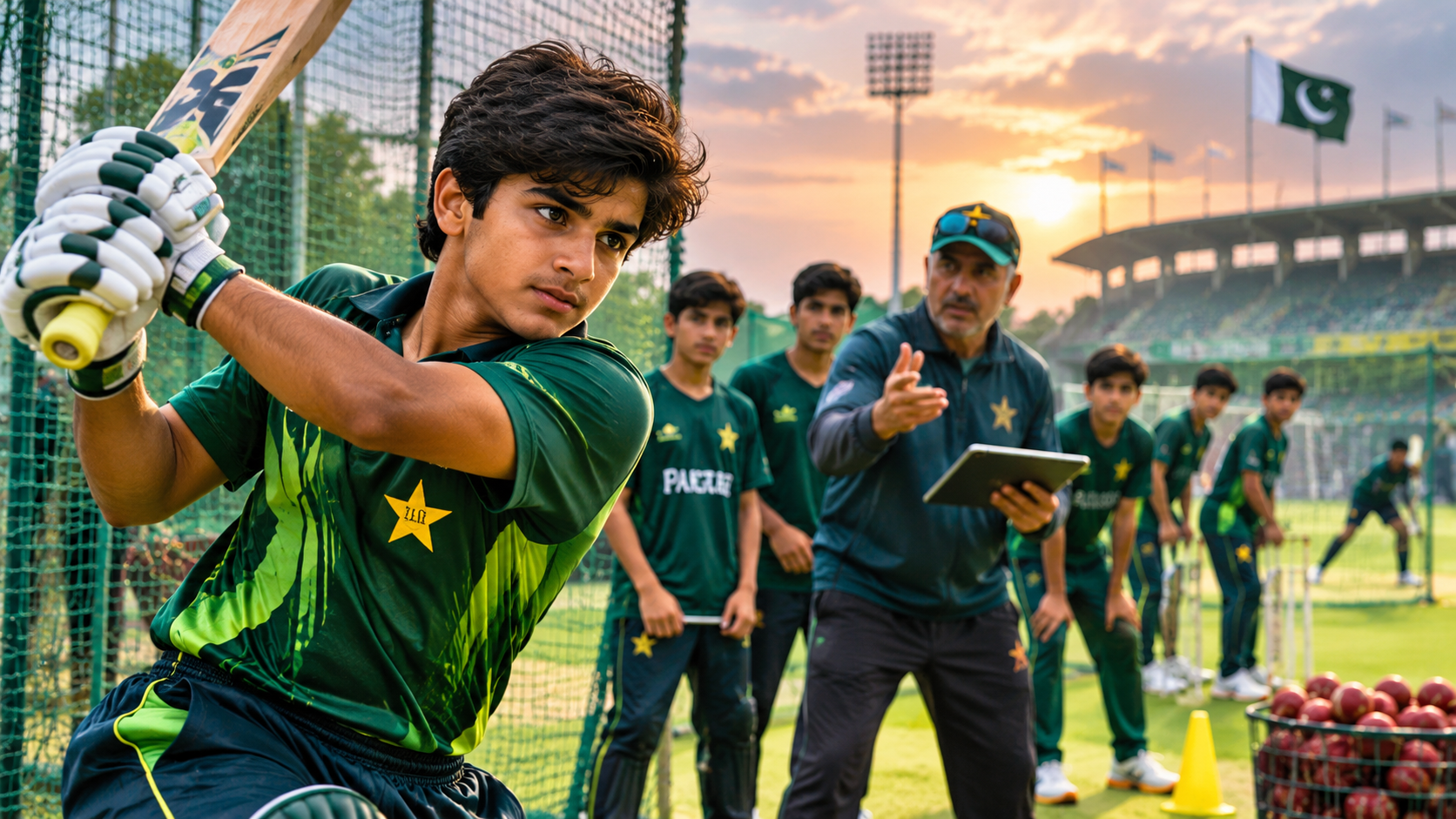
Cricket is more than a sport in Pakistan. From neighbourhood streets and school playgrounds to professional stadiums, the game has become an important part of the country’s sporting identity. Millions of young Pakistanis grow up watching international matches, following their favourite players and dreaming of representing the national team.
Pakistan’s cricketing history demonstrates that exceptional talent can emerge from a wide range of communities. However, natural ability alone is not enough to build a consistently competitive national side.
Developing the next generation of cricketers requires organised grassroots competitions, qualified coaching, modern facilities and a transparent pathway from junior cricket to the professional game.
As the demands of international cricket continue to evolve, Pakistan faces an important opportunity to strengthen the systems that discover and develop its future stars.
Pakistan’s Rich Cricketing Legacy
Pakistan has produced some of the world’s most recognisable cricketers, earning a reputation for exciting fast bowling, technically accomplished batting and unpredictable match-winning performances.
The country’s victory at the 1992 ICC Cricket World Cup remains one of its defining sporting achievements.
Pakistan also won the ICC Men’s T20 World Cup in 2009 and the ICC Champions Trophy in 2017, demonstrating its ability to compete successfully in major international tournaments.
These achievements have inspired generations of young players to pursue cricket professionally.
However, past success does not guarantee future results. Modern international cricket demands consistent preparation, physical conditioning, tactical awareness and the ability to perform across different playing conditions.
A strong development system can help young players acquire these skills before entering the international arena.
Why Grassroots Cricket Is Essential
Grassroots cricket refers to the opportunities available to players at the earliest stages of the sport, including school competitions, local clubs, district tournaments and community training programmes.
These environments form the foundation of a country’s cricketing talent pool.
A young fast bowler may first be noticed during a school tournament, while a promising batter could develop their skills through regular club matches.
Without organised competitions and access to coaching, talented players may never receive the opportunity to progress.
Early Talent Identification
Local competitions allow coaches and selectors to observe young players across multiple matches rather than relying on a single impressive performance.
A strong scouting process should assess technique, consistency, discipline, fitness and potential for improvement.
Identifying promising athletes early also provides more time to address weaknesses and develop professional habits.
Opportunities Beyond Major Cities
Pakistan’s cricket infrastructure has historically attracted considerable attention to major centres such as Lahore, Karachi and Rawalpindi.
However, talented athletes can emerge from smaller cities, rural districts and less-developed regions.
Expanding opportunities outside established cricket centres could help create a broader and more representative pool of players.
Affordable coaching, safe playing grounds and regular regional tournaments are important components of such efforts.
School and College Cricket: A Vital Starting Point
Educational institutions can play a valuable role in developing young athletes.
School and college tournaments provide opportunities for students to gain competitive experience while continuing their education.
These competitions can also help develop teamwork, discipline, leadership and the ability to handle pressure.
For many young players, structured school cricket may represent the first step towards club or district-level participation.
Balancing Education and Cricket
Young athletes should not have to choose prematurely between education and sporting development.
Academic support, flexible training schedules and responsible coaching can help students pursue both objectives.
Professional sporting careers are highly competitive, and relatively few players eventually represent their country.
Maintaining educational progress provides important opportunities for young people regardless of how far they advance in cricket.
The Role of Domestic Cricket in Developing International Players
Domestic cricket serves as the bridge between junior competitions and international selection.
First-class, List A and T20 competitions expose players to different formats, playing conditions and tactical challenges.
Regular competitive cricket allows selectors to evaluate performance over time.
A batter who performs consistently across a long domestic season may demonstrate qualities that cannot be measured through a few short-format matches alone.
Similarly, bowlers benefit from learning how to manage workload, adapt strategies and maintain effectiveness over extended periods.
Why Consistent Domestic Performance Matters
Selection systems should consider more than occasional outstanding performances.
Consistency, opponent quality, match conditions and a player’s role within the team all contribute to a fuller assessment.
Strong domestic structures can create competition for national-team places and encourage established players to maintain high standards.
Clear selection criteria can also strengthen confidence among athletes working towards professional opportunities.
How the Pakistan Super League Supports Player Development
The Pakistan Super League (PSL) has become an important part of the country’s professional cricket environment.
The competition gives domestic players opportunities to compete alongside experienced international cricketers and perform under high-pressure conditions.
Young players can gain exposure to professional coaching, performance analysis and large audiences.
For emerging cricketers, such experience may accelerate development and increase visibility.
However, franchise T20 cricket is only one component of a complete development system.
Test cricket and one-day international cricket require additional technical and tactical skills that are often strengthened through longer-format domestic competitions.
Pakistan therefore benefits from maintaining a balanced structure that supports players across all major formats.
Modern Coaching and Sports Science
International cricket has changed significantly with advances in training methods, fitness monitoring and performance analysis.
Professional teams increasingly use video footage, statistical analysis and specialised coaching to identify areas for improvement.
For Pakistan’s young players, access to modern training practices can be particularly valuable.
Bowling Development and Injury Prevention
Fast bowling places substantial physical demands on the body.
Young bowlers benefit from age-appropriate training, technical guidance, strength development and carefully managed workloads.
Excessive bowling without sufficient recovery can increase the risk of injury.
Coaches should prioritise long-term athlete development rather than pushing young players to perform beyond their physical capabilities.
Batting Technique and Match Awareness
Young batters need opportunities to face different bowling styles, pitches and match situations.
Technical practice remains important, but decision-making and adaptability are also essential.
Players must learn when to attack, defend, rotate the strike and respond to changing conditions.
Mental Preparation
Competitive cricket involves public expectations, selection pressure and the possibility of failure.
Mental skills training can help athletes develop concentration, emotional regulation and resilience.
Supportive coaching environments encourage players to learn from mistakes rather than view every disappointing performance as a personal failure.
Technology’s Growing Influence on Cricket
Technology is increasingly used to support player development and match preparation.
Video analysis helps coaches examine bowling actions, batting techniques and fielding movements.
Performance-tracking systems can provide information about workload, training intensity and physical recovery.
Statistical analysis can help teams identify patterns in opposition strategies and evaluate tactical decisions.
However, data should complement expert coaching rather than replace it.
Numbers alone cannot capture every aspect of a player’s character, adaptability or contribution to team performance.
For grassroots programmes, affordable and accessible technology may be more practical than expensive systems designed for elite international teams.
Women’s Cricket and Expanding Opportunities
The development of women’s cricket is another important part of Pakistan’s sporting future.
Greater access to coaching, safe facilities and organised competitions can help talented female cricketers pursue professional opportunities.
School and university programmes may also encourage more girls to participate in the sport.
Visibility matters. When young athletes see women competing at domestic and international levels, they may be encouraged to explore similar opportunities.
Sustainable progress requires continued investment in training programmes, competitive structures, financial support and pathways into professional cricket.
Improving participation at the grassroots level can contribute to a stronger national women’s cricket programme over time.
Challenges Facing Young Pakistani Cricketers
Despite widespread enthusiasm for cricket, aspiring players can face several obstacles.
Limited facilities: Some communities lack suitable grounds, practice nets or well-maintained pitches.
Coaching costs: Professional training and equipment may be financially difficult for certain families.
Unequal opportunities: Access to trials and competitions can vary between regions and institutions.
Physical development: Young athletes may not receive consistent guidance on nutrition, fitness and injury prevention.
Career uncertainty: Only a small proportion of aspiring players reach professional or international cricket.
Addressing these challenges requires cooperation between cricket authorities, educational institutions, clubs and local communities.
What Pakistan Can Learn From Strong Development Systems
Successful sporting development programmes generally share several characteristics.
They provide regular opportunities to compete, establish transparent progression pathways and invest in qualified coaches.
They also monitor athletes over time instead of making major decisions based entirely on isolated performances.
For Pakistan, an effective strategy could focus on connecting school cricket, district competitions, regional tournaments, domestic teams and professional franchises.
Young players should understand what standards they need to meet and how they can progress to higher levels.
A reliable pathway can encourage long-term effort and help reduce uncertainty.
The Importance of Fans and Community Support
Cricket’s popularity gives Pakistan a valuable foundation for developing future players.
Families, schools, local clubs and supporters contribute to the environment in which young athletes learn the game.
Communities can support cricket by maintaining accessible grounds, organising youth competitions and encouraging participation.
Fans also have an important role in creating a healthier sporting culture.
Constructive support can encourage athletes to improve, while excessive personal criticism may place unnecessary pressure on young players.
Celebrating discipline, teamwork and consistent effort can help strengthen the culture surrounding the sport.
What Lies Ahead for Pakistan Cricket?
The future of Pakistan cricket will depend on how effectively promising young athletes are identified, trained and supported.
International success requires more than occasional individual brilliance.
Competitive domestic tournaments, modern coaching, effective administration and clear selection pathways are essential for building sustainable performance.
Investment in women’s cricket, regional participation and youth development can also expand the country’s sporting potential.
The benefits may extend beyond international results by providing young Pakistanis with opportunities for physical activity, personal development and community participation.