
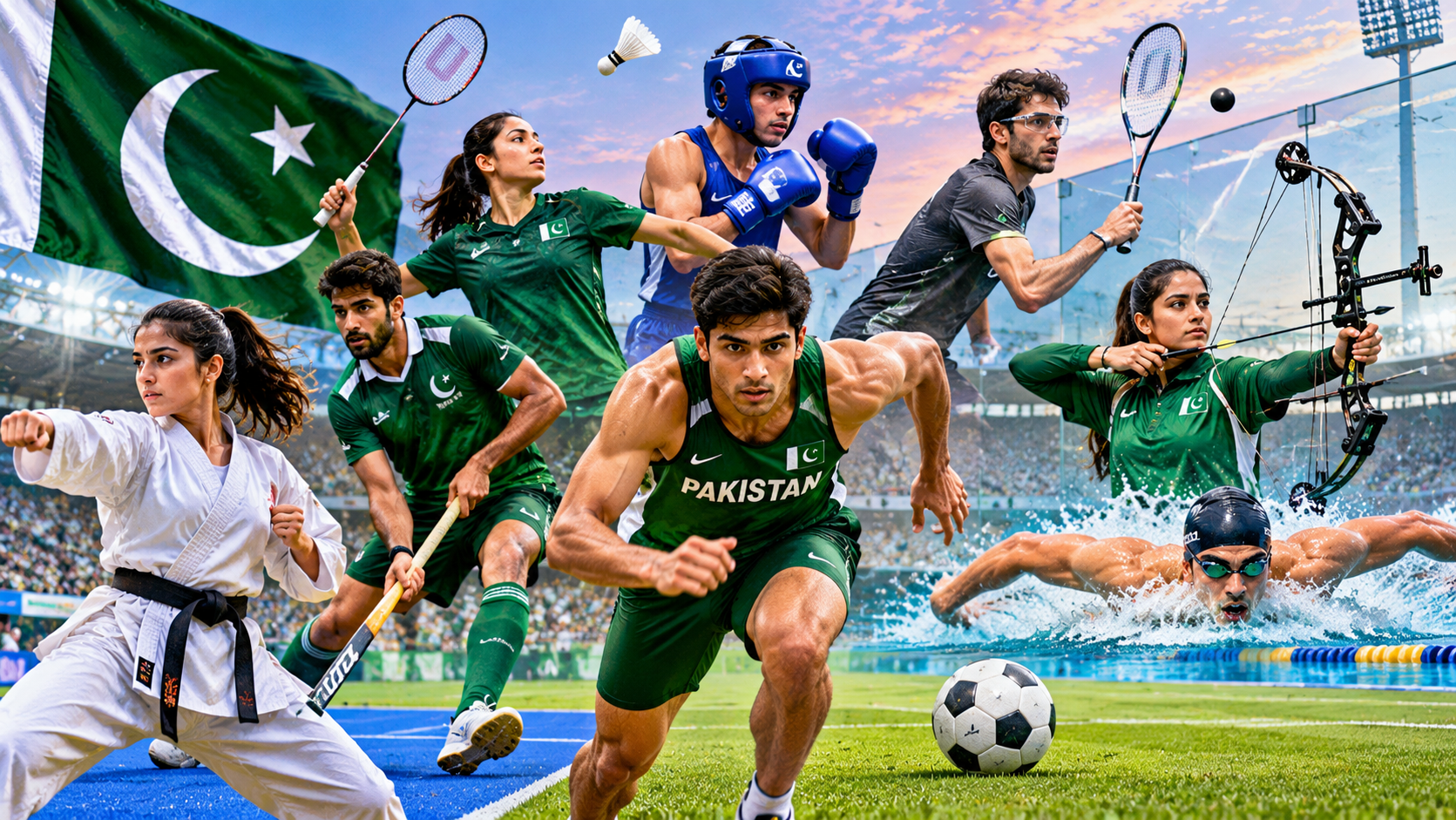
While cricket remains Pakistan’s most popular sport, the country possesses significant potential in athletics, football, hockey, squash, martial arts, and other sporting disciplines.
Recent initiatives involving athletics education and international support for Pakistani taekwondo highlight opportunities to strengthen grassroots sports development.
Pakistan’s Sporting Heritage
Pakistan has historically achieved international recognition across several sporting disciplines.
Maintaining this legacy requires consistent investment in training facilities, professional coaching, athlete development, and competitive opportunities.
Key Drivers of Sports Development
1. Grassroots Training Programmes
Introducing organized sports at school and community levels can help identify talented athletes from an early age.
Regular competitions and professional training can support physical development, teamwork, and discipline.
2. Sports Infrastructure
Modern stadiums, training grounds, swimming facilities, and fitness centres are essential for developing competitive athletes.
Accessible facilities can also encourage greater participation among young people.
3. Professional Coaching
Qualified coaches play an important role in improving athletic performance and preventing injuries.
International coaching partnerships could introduce modern training techniques and performance analysis.
4. Women’s Participation in Sports
Creating accessible and supportive environments for female athletes can help Pakistan develop a more inclusive sporting culture.
School competitions, scholarships, and professional opportunities could encourage greater participation.
The Economic Benefits of Sports
Professional sporting events can support tourism, sponsorship, broadcasting, sports equipment manufacturing, and local businesses.
A stronger sporting ecosystem could generate employment opportunities beyond professional athletic careers.
Challenges and the Road Ahead
Limited funding, unequal access to facilities, and inconsistent development programmes remain major obstacles.
Long-term investment and transparent athlete selection systems will be essential.
Conclusion
Pakistan’s sporting future extends beyond cricket. By investing in grassroots development, professional coaching, and inclusive sporting opportunities, the country could develop athletes capable of competing internationally across multiple disciplines.
Key Takeaways:
- Pakistan has sporting potential beyond cricket.
- Grassroots programmes can identify emerging talent.
- Professional coaching improves athlete development.
- Sports investment can generate economic opportunities.