
Floods In Punjab Leave 1.2 Million Affected, Force 250,000 To Evacuate
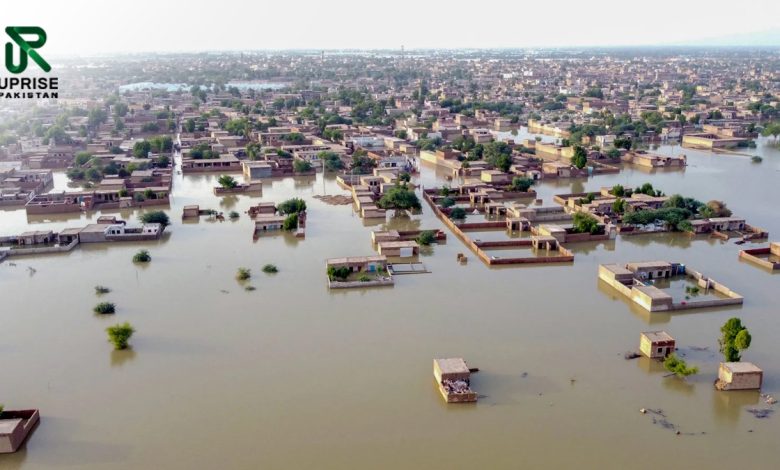
Severe monsoon rains and water released from upstream dams have flooded parts of Pakistan’s Punjab. The Ravi, Sutlej, and Chenab rivers overflowed for the first time in decades, forcing about 250,000 people to evacuate and affecting roughly 1.2 million. Homes, crops, roads, and small businesses now sit under water across more than 1,400 villages.
Kartarpur’s Gurdwara Darbar Sahib and parts of the corridor are under water as well. Rescuers moved staff and visitors to safety as the Ravi River rose fast.
The Flood And The Damage
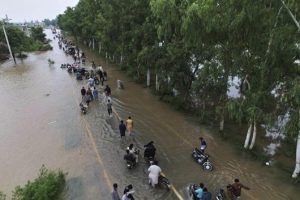
Floodwater spread quickly along low-lying river belts in Narowal, Kasur, Gujranwala, Sialkot, and Lahore. Boats ferried families from rooftops and school grounds. Officials reported nearly 700 relief camps and 265 medical camps serving the worst-hit areas. However, more rain could still push levels higher.
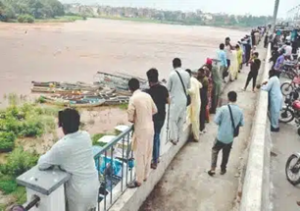
Witness accounts describe long waits for help. Meanwhile, authorities warned people to avoid riverbanks and drains as flows surged through the Ravi, Sutlej, and Chenab.
Government Efforts—And Negligence
The state moved early in some districts. Punjab’s chief minister ordered evacuations near rivers and urged strict disease control in shelters. Prime Minister Shehbaz Sharif called Pakistan one of the most climate-vulnerable nations and floated new water-storage projects.
But gaps remain. Analysts and residents point to slow aid in some pockets, weak site enforcement, and illegal floodplain construction. Experts also flag inadequate climate assessments that allow risky development to continue.
| Metric | Latest figure | Notes |
| People affected | ~1,200,000 | Eastern Punjab |
| Displaced/evacuated | ~250,000 | Ongoing operations |
| Villages impacted | ~1,400+ | Multi-district |
| Relief camps | ~700 | Provincial setup |
| Medical camps | ~265 | Provincial setup |
Source: Associated Press, Aug. 28, 2025.
Poor Infrastructure Made Losses Worse
Years of encroachment on riverbeds, blocked drains, and unplanned growth magnified damage. Studies and reports after recent disasters show how clogged drainage and weak land-use control turn heavy rain into urban floods. Moreover, wetlands that once soaked up excess water have shrunk.
This year, experts again link severe impacts to poor planning and deforestation, which speed up runoff and erode banks. Therefore, even moderate surges can breach embankments and roads.
Climate Change, Glacial Melt, And Cloudbursts
Scientists find that warmer air holds more moisture, so heavy rain events grow more intense over much of Asia—the IPCC and WMO report rising extremes across the region, with floods taking the biggest toll.
This monsoon, researchers also detected a climate-change signal in Pakistan’s extreme rainfall, which likely made downpours 10–15% heavier than they would have been otherwise.
Farther north, heat drives glacial melt and forms unstable lakes that can burst. In Gilgit-Baltistan, a mudslide recently dammed a river and created a 7-km lake, raising downstream flood risk. Pakistan and UN partners have active GLOF programs to manage this growing threat.
Finally, cloudbursts—sudden downpours of ≥100 mm in an hour over a small area—have killed hundreds across the mountains this season. These bursts worsen landslides and flash floods and can overload rivers that feed Punjab.
Security Forces And Civil Responders
The Pakistan Army, police, and rescue agencies launched air and ground missions. Troops ferried families, delivered food, and set up medical posts across Punjab. Official tallies last week cited thousands rescued and treated as operations scaled up.
Meanwhile, cross-border water releases complicated the picture. India warned of dam discharges amid intense rain; Pakistan said the alert came outside normal treaty channels and accused New Delhi of worsening flows. Authorities on both sides watched river gauges as gates opened upstream.
Southern Punjab Outlook: Rising Flood Threat
Southward, floodwaters are moving toward low-lying districts along the Chenab and Sutlej. As levels stay high, breaches could flood fields and market towns. Therefore, cotton and rice belts face crop loss and livestock strain. Roads and feeder canals may fail, slowing ambulances and supply trucks. If heavy rain resumes, urban drains in Multan and Bahawalpur could overflow. Authorities should pre-position boats, fuel, and chlorine tablets, and ready shelters for a rapid, large-scale evacuation. Farm dams and weak embankments need urgent checks today.
Developments and solutions
Immediate Priorities
- Keep evacuations moving where waters rise.
- Expand clean water, sanitation, and vaccination to limit waterborne disease in camps.
- Repair embankments and restore power and road links to speed aid.
Fix What Failed
- Enforce no-build zones on floodplains; remove encroachments that choke drains.
- Upgrade stormwater systems in cities like Lahore, Gujranwala, and Kasur, using larger outfalls and debris screens.
- Restore wetlands and river buffers to slow runoff; use nature-based solutions alongside levees.
Plan For A Warmer Future
- Build a modern early-warning system that links upstream gauges to village alerts in minutes.
- Fund flood-resilient housing, raised schools, and safe community shelters along the Ravi, Sutlej, and Chenab.
- Expand water storage projects with transparent safeguards and basin-wide coordination.
- Scale GLOF protection in the north and include cloudburst risk in river forecasts that affect Punjab.
Governance And Cooperation
- Publish real-time data on river flows, gate releases, and rainfall.
- Improve Indus basin coordination so dam operations reduce, not amplify, downstream harm.
- Align budgets with the 2022 Post-Disaster Needs Assessment and resilience plans so promised projects actually break ground.
The Rising River Crisis in Punjab
The flood crisis is only because of extreme monsoon rains, dam releases, and years of risky development. It is also part of a larger climate story that includes glacial melt and cloudbursts. Punjab needs fast relief today and smart rebuilding tomorrow. If leaders match warnings with action, future floods need not become repeat tragedies.


