
Mojtaba Khamenei’s Rise: Power Shift or Political Dynasty?
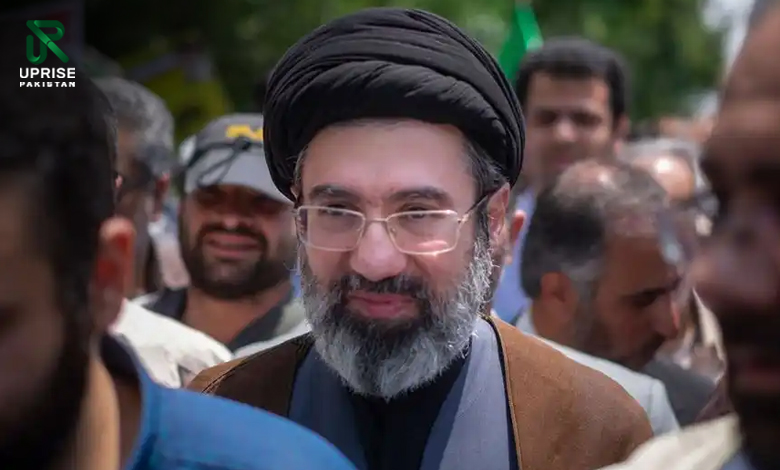
Iran’s top job is not like a normal presidency. The Supreme Leader of Iran controls the army, courts, state media, and key security bodies. So, when people hear about Mojtaba Khamenei, they pay attention.
Many reports say Mojtaba has held quiet power for years. Still, his name raises a hard question: Is Iran facing a power shift, or a political dynasty? Some Iranians fear a family handoff. Others say it is more about the IRGC and the security rule.
Who Is Mojtaba Khamenei?
Mojtaba Khamenei is the son of Ayatollah Ali Khamenei. Many analysts call him a behind-the-scenes figure. Also, several reports link him to strong ties inside Iran’s security world.
He does not hold an elected office. However, the U.S. Treasury sanctioned him in 2019. It said he acted “on behalf of” the Supreme Leader’s office.
People often ask why this matters. The answer is simple. In Iran, real power often sits with unelected centers. So, an insider can shape big decisions without a public role.
Key points people cite about Mojtaba:
- He stays close to top clerical and security networks.
- He has faced U.S. sanctions tied to the Supreme Leader’s inner circle.
- He appears in many succession discussions in Iranian politics.
How Iran Chooses A Supreme Leader
Iran’s constitution gives the choice to the Assembly of Experts. This body includes senior clerics. It can select, supervise, and even remove a Supreme Leader.
But there is a catch. Candidate vetting and elite pressure can shape outcomes. So, the process can look legal on paper. Yet it can still feel controlled in practice.
Also, Iran has a long record of closed-door decisions at the top. Because of that, many details stay unclear to the public.
What this means:
- The Assembly of Experts holds the formal vote.
- Yet powerful groups can influence which choices look “real.”
Why Do Some People See A Power Shift?
Some observers argue that this story is not only about one man. Instead, they say it signals a wider power shift in Iran.
For years, many reports have described the rising influence of security bodies. That includes the IRGC, which plays a major role in defense and internal control. So, if leaders lean more on security support, the balance can change.
Also, outside pressure matters. For example, U.S.-Iran tensions can push Iran’s system toward harder, more security-led choices.
A recent Reuters report captured how sensitive this topic is abroad. President Donald Trump said he was “disappointed” about Mojtaba becoming the Supreme Leader.
That short quote shows how closely Washington watches Iran’s leadership.
Signs people point to when they argue “power shift”:
- Security voices appear to carry more weight in leadership debates.
- The system may prefer loyal insiders during high-tension periods.
Why Others Fear A Political Dynasty
Many Iranians reject the idea of inherited rule. Iran calls itself a republic. So, a father-to-son transfer can look like a political dynasty.
Even if a legal body votes, the symbolism still matters. People may ask: “Did the system choose the best leader?” Or did it protect a family line?
This matters for trust. When citizens feel locked out, anger can grow. Also, rival elites may resist a dynastic look, even inside the system.
Why the dynasty concern hits hard:
- It clashes with the idea of non-hereditary religious rule.
- It can weaken legitimacy among skeptics and rivals.
- It can raise fears of “closed” leadership for decades.
| Topic | What trusted sources show |
| Mojtaba’s public role | Not elected; described as influential behind the scenes. |
| Succession mechanism | The Assembly of Experts has the constitutional role to select the leader. |
| U.S. sanctions | U.S. Treasury sanctioned Mojtaba in 2019, citing action on behalf of the Supreme Leader. |
| Why the issue is global | U.S. leaders publicly react to Iran’s leadership direction. |
Beyond Iran: Regional Posture, Sanctions, And Negotiating Space
Externally, Mojtaba’s rise intersects with three realities:
Sanctions and diplomatic constraints
Because Mojtaba has been sanctioned (at least by the U.S.), any diplomatic engagement becomes politically harder, and the optics of negotiating with a sanctioned Supreme Leader can tighten everyone’s room to maneuver.
War and escalation dynamics
In March 2026 coverage, the leadership question was explicitly tied to conflict conditions and heightened U.S.–Iran tension, including U.S. political reactions to his appointment.
Continuity is the default… until it isn’t
Even if policy continuity is the intention, leadership transitions can create:
- miscalculation windows,
- overcorrection to prove toughness,
- or internal bargaining that spills into foreign policy.
This is why “who leads” matters even in systems designed to look ideologically consistent across decades.
A Dynasty Wearing A Revolution’s Mask
Mojtaba Khamenei’s rise sits at the center of Iran’s biggest question: Who really holds power? On one side, people see a security-backed shift that tightens control. On the other side, many fear Iran is sliding toward a political dynasty.
Both views can be true in parts. A single leader can rise, while the deeper system also hardens. So, the real story may be less about personality. Instead, it may be about how Iran’s institutions choose stability over openness.


