
The inventions that tell the story of America, and the 1 innovation that made them possible

The American innovations that catapulted the U.S. into a world superpower touch almost every facet of modern life.
From the lightbulb to the airplane, to medical breakthroughs and the internet age, the past 250 years have been defined by America’s intrepid intellect.
But beyond the inventions themselves, there is one innovation that gave way to all the others: The United States patent process, said Eric S. Hintz, a historian at the Lemelson Center for the Study of Invention and Innovation at the Smithsonian Institution’s National Museum of American History.
“It creates a system that’s good for the individual and good for the country,” Hintz said.
U.S. patent system
The U.S. Constitution established an intellectual property clause in 1788 and George Washington signed the first patent statute in 1790, establishing a system that would embody democratic ideals.
“One of the things that’s really interesting about the first patent law is that it says the patent shall go to the first and true inventor,” Hintz said. “So long before women can vote, long before we’ve gotten rid of Jim Crow, women could get a patent, free Blacks could get a patent.”
By 2026, the United States Patent and Trademark Office issued more than 12,650,000 patents, according to its website. The office grants government protection for inventors during a period of time after their invention’s registration, and when that expires, it enters the public domain, allowing others to potentially build off that creation.
“It’s a series of instructions of how to build the thing,” Hintz said.
With the patent system in place, American innovators fostered in multiple sectors.
Agriculture
America’s feudal system allowed for agricultural innovation to blossom and led to some of the first U.S. patents.
European settlers built on the crops established by indigenous people in America and introduced new ones, such as cotton. Once farmers saw profitability, innovation followed.
Eli Whitney’s cotton gin, which made it easy to separate the crop from its seeds, doubled raw cotton production each decade of the 19th century.
Looms then followed. Francis Cabot Lowell drew on British ingenuity to develop a practical power loom, which made Lowell, Massachusetts, a pioneering textile town with an estimated 8,000 workers — mostly women and girls.
In Virginia, Cyrus Hall McCormick created the world’s first mechanical reaper for the public, a machine that could cut, thresh and bundle grain while being pulled by horses.
“You go back to 1776, maybe you have a mule and a plow, you have an ax, you’re clearing a field,” Hintz said.
Agriculture would later benefit from Frederick McKinley Jones’ patented refrigeration system for trucks, which enabled the transportation of perishable foods, such as milk, to more distant places.
Bettmann/Getty Images
Transportation
By 1776, Americans were walking, using horse-drawn carriages or sailing to move around.
“If you think about using waterways, it’s easy to go downstream but hard to go upstream,” Hintz said. Rival inventors who were granted patents for the steamboat, John Fitch and James Rumsey, developed a way to fix that by creating mechanisms to move vessels upstream using fires to produce steam.
Robert Fulton, who is often miscredited as the steamboat’s creator, commercialized the vessel, and by the 19th century, provided a way for the U.S. Postal Service to transport mail.
“If you think about starting in New Orleans, you can get all the way up to Pittsburgh, if you follow the Mississippi and Ohio rivers,” Hintz said.
Sepia Times/Universal Images Group via Getty Images 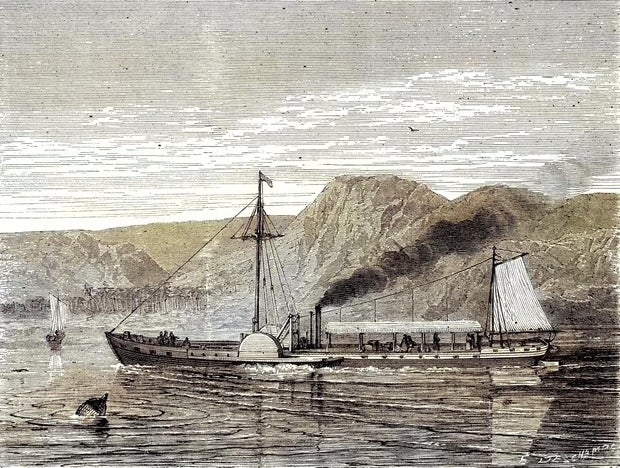
By the 1850s, railroad tracks boomed in the U.S., spreading across almost 30,000 miles and reaching coast-to-coast coverage by the 1870s.
In 1903, America grew wings, when Wilbur and Orville Wright successfully tested their 1903 Wright Flyer.
“They realized, we need to add power in order to stay aloft,” Hintz said. “They actually write to the Smithsonian … and they say, what are some of the windiest places in the U.S.?“
“That’s how they find out how to get from Dayton, Ohio, where their bicycle shop is based, to get down to Kitty Hawk, North Carolina, where it’s a coastal town in the Outer Banks and the wind is constantly blowing,” Hintz said. “They were very precise experimentalists.”
The Wright brothers had another co-pilot on board for their mission to revolutionize air travel who seldom gets her due in America’s textbooks.
Their sister, Katherine Wright, was also instrumental in their process.
“As one historian has said, there would have been no Kitty Hawk without Kitty Wright,” said CBS News senior correspondent Norah O’Donnell, who wrote a book, “We The Women,” about overlooked contributions of women in American history earlier this year.
Historica Graphica Collection/Heritage Images/Getty Images 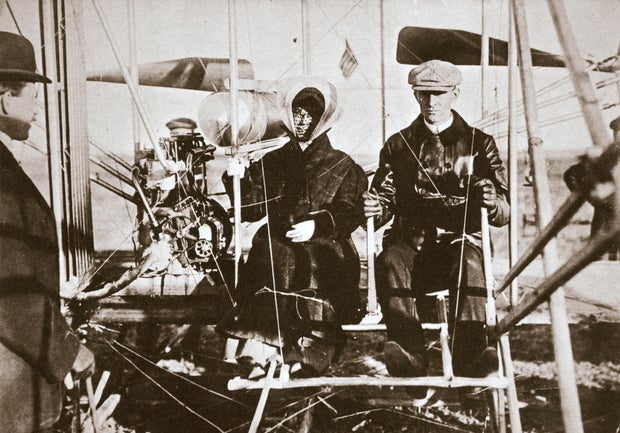
The Wrights faced a tragic mishap in 1908, and it was Katherine who helped get them back on track, O’Donnell said. She was also their chief operating officer and chief marketing officer, O’Donnell said.
When President William Howard Taft later awarded the Wright brothers the Congressional Gold Medal, he said Katherine was the most important member of the family, but she was not included in the citation.
The blunder is common in American history, highlighting how many women were excluded from records despite their undoubtedly crucial contributions to America’s evolution.
“As Julie (Morse Goff) and I were going through researching this book, we uncovered so many women that we were not taught about in school,” O’Donnell said.
“In our book, it’s all about patriotic women who were change makers, who were revolutionaries, who pushed at every step throughout our country’s journey to live up to that important phrase that all men are created equal with certain inalienable rights of life, liberty and pursuit of happiness.”
Katherine Wright, who was also an activist and suffrage advocate, embodied those ideals.
Electricity
In the 18th century, Americans relied on the sunrise and sunset to determine life’s beat until electricity lit the way to more.
“We’re no longer trapped by the rhythms of the sun,” Hintz said.
When Charles F. Brush installed an arc lamp to illuminate Cleveland’s Public Square, he marked the first successful use of an electric street-light system in the world.
The Print Collector / Getty Images 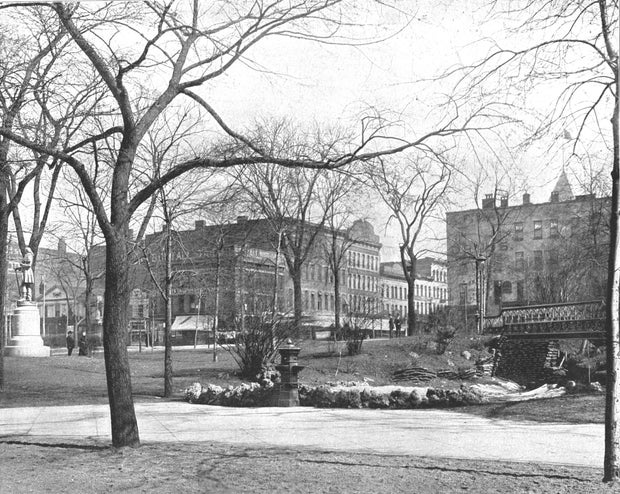
“When you can light things, your streets are safe, you feel comfortable walking around at night. You can have entertainment. You can go out to the theater. You can run a factory with three shifts, 24 hours,” Hintz said.
Hintz says electricity is likely America’s most vital invention, and many Americans agree. A recent CBS News poll asked, “What is America’s greatest invention?”
“Light bulb/lighting” was the second most common answer, with 14% of respondents choosing it, behind only “Democracy/freedom.”
That may make Thomas Edison the most important and prolific U.S. inventor.
“He has all kinds of innovations,” Hintz said. “Many of them have to do with electricity and ways to apply it.”
By 1879, Edison had introduced the incandescent light bulb, but Hintz said he was behind the entire process of generating power.
“It’s also the transmission lines, and it’s all of the meters, and it’s the whole system of innovations that go into lighting,” he said.
Instantaneous communications
Edison also contributed to instantaneous communication by building on Alexander Graham Bell’s phone innovation, which was exhibited at the Centennial Exhibition in Philadelphia.
Science & Society Picture Librar 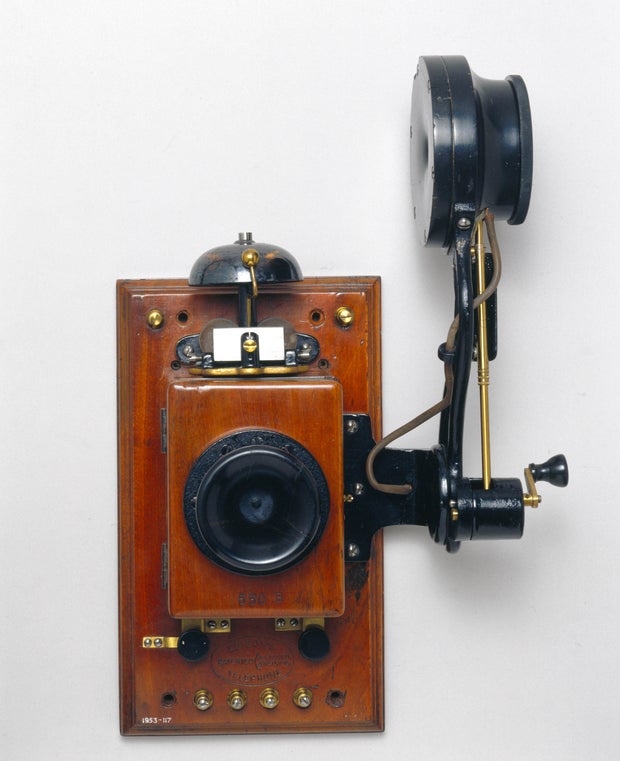
Edison’s experience with the telegraph helped him improve Bell’s telephone transmitter by enhancing call clarity and increasing volume, which led to the creation of the phonograph in 1877. By the 20th century, Bell and his assistant Thomas A. Watson had tested long-distance calls.
“Those are some examples of how you can take one invention, continuously improve it with the work of other inventors, and you build a series of innovations around it so that you have a solution that works,” Hintz said.
Manufacturing
America’s manufacturing, powered by steam and other innovations that enabled factories in places without water wheels, grew into a massive economy that pivoted from small artisanal craft to scaled-up operations.
“If you needed a gun, you went to a gunsmith, and they made you a bespoke gun, lock, stock and barrel,” Hintz said. “They made every piece of it.”
The antiquated method could take a month until manufacturing came along in urban areas, where labor was easier to find, moving from an artisanal system to the American system of manufacturers.
That’s when Eli Whitney Jr. secured a government contract to manufacture weapons, and collaborated with Samuel Colt to produce the first Colt Revolvers.
Hulton Archive / Getty Images 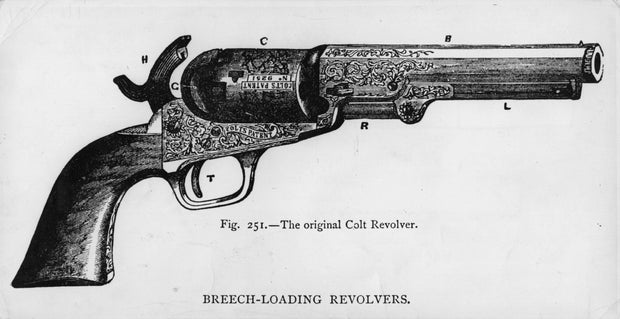
“Instead of building every gun in a bespoke way, you create like a platonic master, here’s the trigger and I’m gonna make 10 of these all exactly the same,” Hintz said. “By making all the individual components to look exactly the same and interchangeable, you do division of labor.”
Hintz says that labor theory led to the assembly line and to the manufacture of spindles and typewriter keys, then bicycles and ultimately cars, like Henry Ford’s Model T, one of the first mass production vehicles.
Keystone View Company / Archive Photos / Getty Images 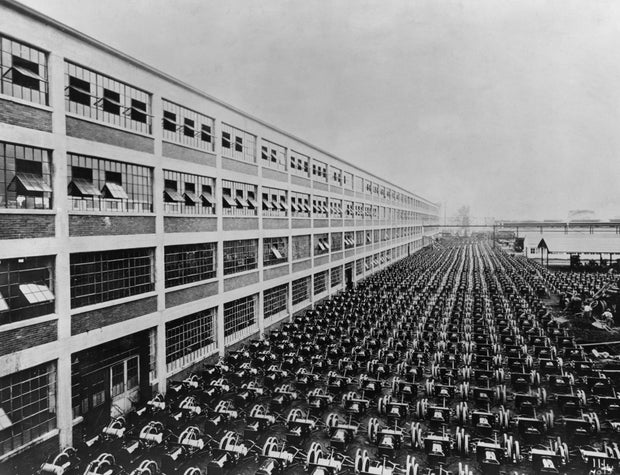
“It’s just thousands and thousands of cars coming off the line, one every few seconds,” Hintz said.
Fuel
Ford’s cars utilized gas, which harkens back to another element of American innovation.
Edwin Drake launched the first American oil well in Titusville, Pennsylvania, in 1859, at a depth of 69.5 feet, ushering in America’s “petroleum age,” according to the American Oil & Gas Historical Society.
Bettmann 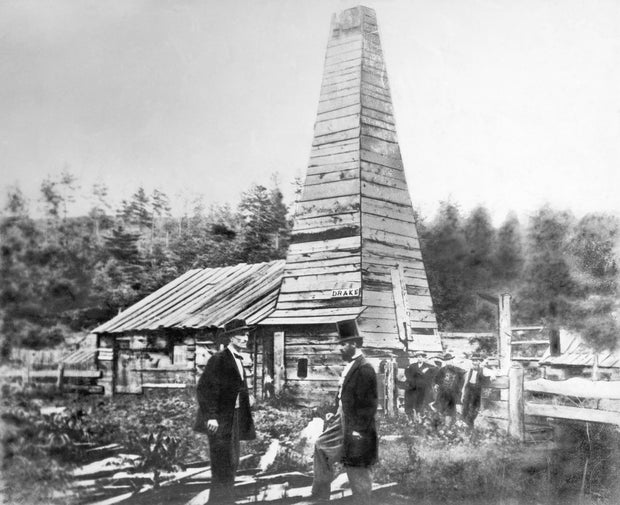
“We discovered oil in all kinds of places – Texas, Oklahoma, California,” Hintz said, adding that America’s reliance on oil is still center stage in politics and global affairs. “We’re still worrying about the Strait of Hormuz and oil imports and exports.”
Hintz said oil matters from 50 years ago drove innovation in nuclear energy, and now there’s more experimentation with wind, solar and geothermal energy.
“But oil and gas is really hard to dislodge. We still pump a lot of gas, and we still burn a lot of coal,” Hintz said. “If you go back to 1776, you’re pretty much chopping trees down and burning wood, but in the 1820s, coal kind of takes off.”
Medical
Global medical innovation led to Americans living longer, lowering mortality rates, expanding life expectancy and improving the understanding of the human body.
After Germany’s Robert Koch established “germ theory” in the 1850s through experiments with anthrax, France’s Louis Pasteur began developing his theories of immunity.
“You start seeing vaccinations for things like rabies, cholera, typhoid,” Hintz said, and as World War II raged on, the U.S. and the U.K. worked together to produce penicillin to kill bacteria, eventually scaling its production in Peoria, Illinois.
More life-saving medical methods emerged soon after, including the polio vaccine, innovations in surgery, pharmaceuticals, oral contraceptives and birth control, and imaging techniques like the ultrasound, MRIs and PET scans.
Medical innovation persists to this day, including the rapid development of COVID-19 vaccines that saved thousands of lives.
Miami Herald 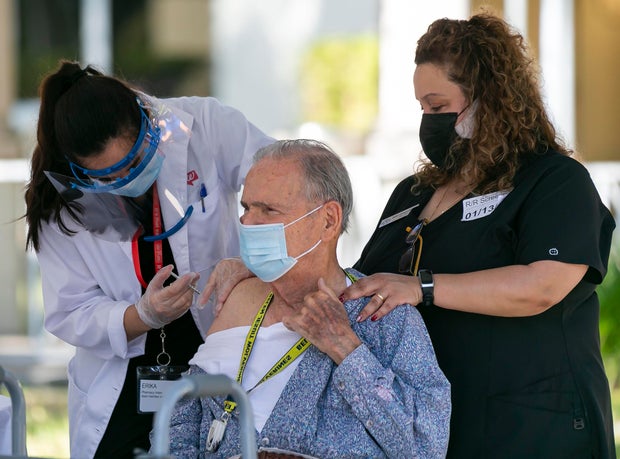
“Our ability to develop medicines and surgical techniques, to repair different injuries and remove cancers, it’s been transformative and people live much longer, healthier lives now,” Hintz said.
Computing
The U.S. census system, which counted the growing number of Americans every decade, sought ways to keep up as Americans lived longer and grew their families.
“By the 1870s and 1880s, it’s getting really hard to count the census,” Hintz said. That’s when Herman Hollerith used punch cards and designed a machine to tally census data.
Computing data also became vital during World War II to determine firing ranges, and shortly after the conflict ended, the Electronic Numerical Integrator and Computer, which occupied a massive room, weighed 30 tons, and included “arithmetic, memory and control elements,” was constructed at the University of Pennsylvania.
“They later use it to forecast some of the yields of the atomic weapons that came later after Hiroshima and Nagasaki,” Hintz said.
By the 1930s, International Business Machines helped automate the Social Security Administration’s payroll system with its technologies. IBM is still making breakthroughs in quantum computing and artificial intelligence.
The computer’s size and might changed drastically after Jack S. Kilby at Texas Instruments debuted an integrated circuit that enabled the technology to become more compact.
“It’s way smaller and it doesn’t produce as much heat and it doesn’t require as much energy,” Hintz said. “So that kind of drives the personal computing revolution in the 1980s.”
Since then, Apple’s computers, Microsoft applications and video game consoles have erupted in popularity, and after the world connected to the internet, computing became mobile with the invention of the iPhone.
Kim Kulish/Corbis via Getty Images 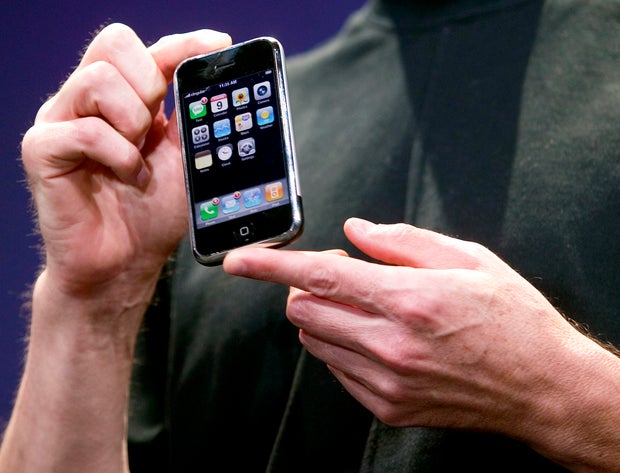
“Now, you’ve got all kinds of tools in one little device,” Hintz said, adding that social media and video platforms now allow people to preserve their memories. “It’s a hugely powerful innovation.”
Video
American scenes were confined to still paintings and portraits until the advent of photography and motion pictures.
“It also becomes, as you fast forward, visual evidence for police and prosecutors,” Hintz said. “Photography becomes a form of evidence.”
Bettmann 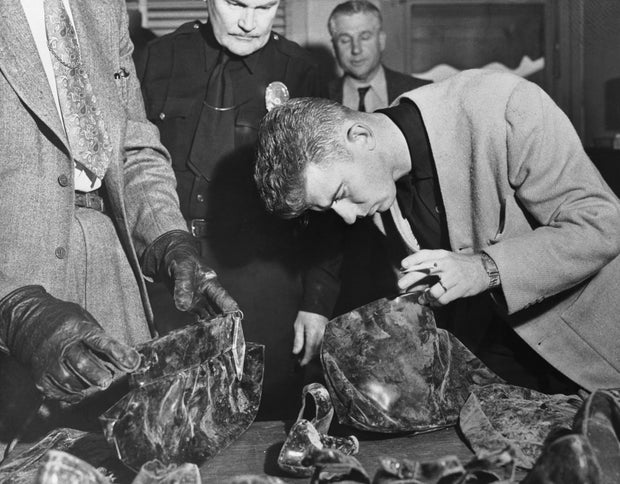
Later, photographer Eadweard Muybridge projected a series of images in successive phases of movement, which led to a meeting with Thomas Edison, who charged his assistant, William Kennedy Laurie Dickson, to invent a motion picture camera, according to the Library of Congress.
Eadweard Muybridge / Hulton Archive / Getty Images 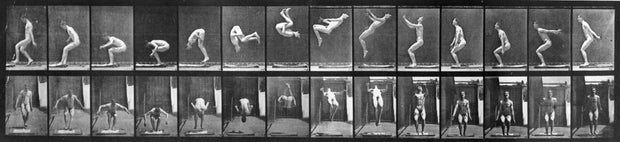
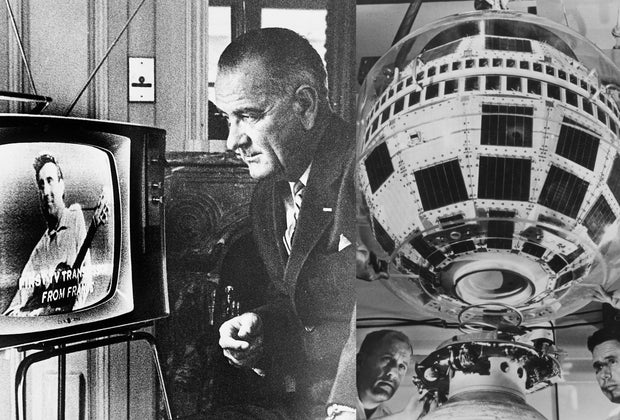
After Philo Farnsworth invented the television in the 1930s, television ownership exploded, growing from 5 million in 1950 to 60.6 million in 1970, according to census data, and by the 1960s, the American Telephone and Telegraph Company (AT&T) launched the Telstar, which paved the way for beaming television programs across the world, annihilating space and time, Hintz said.
To understand the vast impact of U.S. innovation, Hintz paints a picture of Aliens looking at Earth before America evolved.
“It would be dark,” Hintz said. “So think about that again, 1776, your life is attuned to the rhythms of nature.”
“Electricity is huge. … It’s light, it’s heat, it’s power, and it’s transportation.”
Join CBS for “The Great American Block Party 250,” a primetime special on Saturday, July 4, hosted by CBS Evening News anchor Tony Dokoupil and Entertainment Tonight’s Nischelle Turner, featuring live musical performances, celebrations around the country, and the largest fireworks show in history in the skies over the nation’s capital. Tune in July 4 at 8 p.m. ET on CBS and stream it on Paramount+ and CBS News 24/7.
Source link


