
New species of ghost shark may have been found in Costa Rica

SAN JOSE: Costa Rican scientists may have discovered a new species of ghost shark in Pacific waters near Cabo Blanco and Cano Island.
The latest discovery has a “shorter” snout, a “darker coloration pattern” and a “much longer spine on its dorsal fin,” according to Arturo Angulo Sibaja, a biology professor at the University of Costa Rica.
The discovery marks the only such species “known for the Central American coast,” Sibaja said, adding genetic analysis indicates the new species has “no reproductive contact” with other ghost sharks.
But earlier specimens collected “near Peru and Chile are very similar to the species” from Costa Rica, so scientists are still comparing the specimens before finalising the conclusion, he said.
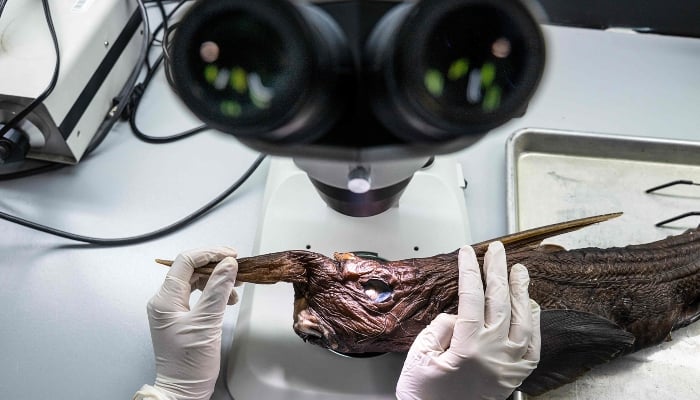
Three species of ghost shark — a type of fish that is related to sharks — have been discovered elsewhere, in waters off South Africa, Taiwan, Australia, Japan and in the Atlantic between Greenland and Brazil.
Ghost sharks belong to a group of cartilaginous fish called Rinochimaera that is related to sharks but genetically diverged from them nearly 400 million years ago.
Sibaja said it’s “most likely” the new species “has broader distribution along the (Pacific) coast of Central and South America.”


