
Elon Musk Announces SpaceX’s Plan to Launch First Starships to Mars in Two Years
Elon Musk’s Bold Plan to Launch Uncrewed Starships to Mars in Two Years: Pioneering a New Era of Space Exploration and Human Colonization.
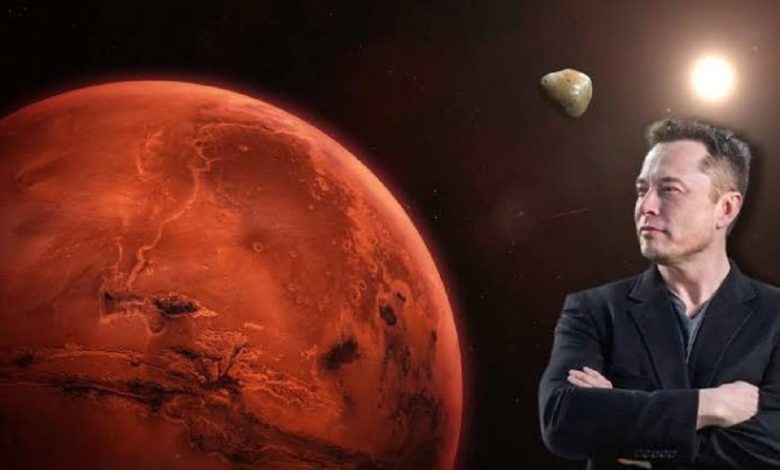
Elon Musk, the visionary founder and CEO of SpaceX, has unveiled the company’s bold plan to send its first uncrewed Starships to Mars within the next two years. This ambitious timeline is aligned with the upcoming Earth-Mars transfer window, a period when the two planets are closest to one another, making space travel between them more efficient in terms of time and fuel. This announcement is a major milestone in Musk’s ultimate dream of making humanity a multi-planetary species.
Earth-Mars Transfer Window: The Ideal Time for Space Travel
One of the reasons for Musk’s confidence in this timeline is the upcoming Earth-Mars transfer window. Occurring roughly every 26 months, this window represents the period when Mars and Earth are at their closest approach, also known as “opposition.” During this phase, the distance between the two planets is minimized, allowing spacecraft to travel more efficiently, using less fuel and making the journey faster.
For SpaceX, this transfer window is crucial to launching successful missions to Mars, as it significantly reduces the logistical and financial challenges associated with interplanetary travel. Musk has stated that these early missions will primarily serve to test the ability of Starships to land safely and withstand Mars’ harsh environment. This includes evaluating the performance of the spacecraft’s landing systems, heat shields, and structural integrity under the unique conditions on the Red Planet.
Testing the Waters: Uncrewed Missions to Mars
The first wave of missions will consist of uncrewed Starships, which will be used to evaluate the spacecraft’s capabilities in terms of landing, navigation, and durability. These tests are vital to ensure that the spacecraft can land safely on Mars without suffering any major damage. This phase will also test the vehicle’s ability to handle Mars’ thin atmosphere, which poses unique challenges compared to Earth’s atmosphere.
Should these initial missions prove successful, the next step will be to send crewed missions to Mars, which could happen as early as four years after the first uncrewed landings. Musk’s ultimate goal is to establish a sustainable human presence on Mars, with the long-term vision of creating a self-sustaining colony. While this may still seem like science fiction to many, SpaceX’s rapid advancements have brought the possibility closer to reality.
Key Milestone: The June 2024 Test Flight
A crucial step in the lead-up to Mars missions is a scheduled test flight set for June 6, 2024. This test will serve as a proving ground for the Starship’s ability to re-enter Earth’s atmosphere after space travel. Re-entry is one of the most critical aspects of any space mission, as spacecraft must withstand immense heat caused by friction between the vehicle and Earth’s atmosphere.
The June test flight will focus on Starship’s heat shields and its ability to endure the extreme conditions of atmospheric re-entry. If the test is successful, it will mark a significant advancement in SpaceX’s journey toward launching interplanetary missions. However, the flight is still pending regulatory approval, which SpaceX expects to secure in the coming months.
The Starship Program: Pioneering the Future of Space Travel
The Starship program represents a monumental leap forward in the future of space exploration. Designed as a fully reusable spacecraft, Starship aims to dramatically lower the cost of space travel, making it more accessible not just for governments and large corporations but potentially for private individuals as well. The reusability factor is key to making Musk’s vision of regular interplanetary travel economically viable.
Starship is expected to play a significant role not only in missions to Mars but also in other deep space missions, lunar landings, and even missions closer to home, such as satellite deployments. SpaceX has already secured contracts with NASA, including one to use Starship for crewed missions to the Moon as part of the Artemis program. The ability to reuse the spacecraft for multiple missions without the need for extensive refurbishment or reconstruction is a game-changer for space exploration.
Human Colonization of Mars: Musk’s Grand Vision
Elon Musk has never been shy about his grand vision for the future of humanity in space. Central to his philosophy is the belief that humans must become a multi-planetary species to ensure long-term survival. Mars, with its similar day length and availability of water in the form of ice, has always been Musk’s preferred destination for human colonization.
The development of the Starship program is a crucial step toward making this vision a reality. Musk envisions a future where thousands of Starships regularly travel between Earth and Mars, establishing a thriving colony capable of sustaining itself. While such a future may still be decades away, the groundwork is being laid with each test flight and mission.
A Mars colony would not only serve as a backup plan in case of catastrophic events on Earth but also as a new frontier for human civilization. Musk believes that expanding human presence into space will inspire future generations and foster innovation across multiple industries, from energy to transportation to communications.
Challenges Ahead: Overcoming the Red Planet’s Harsh Environment
While SpaceX has made tremendous progress, significant challenges remain in making human settlement on Mars a reality. The planet’s harsh conditions, including its thin atmosphere, freezing temperatures, and exposure to cosmic radiation, pose serious risks for human explorers. In addition, Mars’ low gravity (about 38% that of Earth) could have unknown long-term effects on human health.
One of the biggest hurdles will be ensuring a steady supply of food, water, and oxygen for astronauts and future settlers. SpaceX and NASA are already exploring potential solutions, including technologies that would allow Mars colonists to extract water from the planet’s ice reserves and produce oxygen from its carbon dioxide-rich atmosphere. Building sustainable habitats capable of shielding inhabitants from radiation and other environmental hazards will also be crucial.
SpaceX’s Impact on the Future of Space Exploration
SpaceX’s relentless push toward Mars has reinvigorated global interest in space exploration. By making space travel more affordable and accessible, the company is helping to inspire a new generation of engineers, scientists, and innovators who will continue to push the boundaries of what’s possible.
The Starship program, if successful, will not only pave the way for human missions to Mars but also unlock new opportunities for scientific discovery and commercial ventures in space. The prospect of mining asteroids, establishing lunar bases, and exploring other planets becomes far more feasible with reusable spacecraft like Starship.
Conclusion: A Bold New Era of Space Exploration
Elon Musk’s announcement that SpaceX plans to send its first Starships to Mars within the next two years is a testament to the company’s determination to make interplanetary travel a reality. While there are still many obstacles to overcome, each successful test brings us one step closer to the day when humans will set foot on Mars. SpaceX is not just pushing the boundaries of space travel—it is shaping the future of humanity’s presence in the cosmos.


