
Starlink Satellites Lost After Falcon 9 Upper Stage Glitch
Unexpected Anomaly Leaves 20 Starlink Satellites in Unrecoverable Orbit
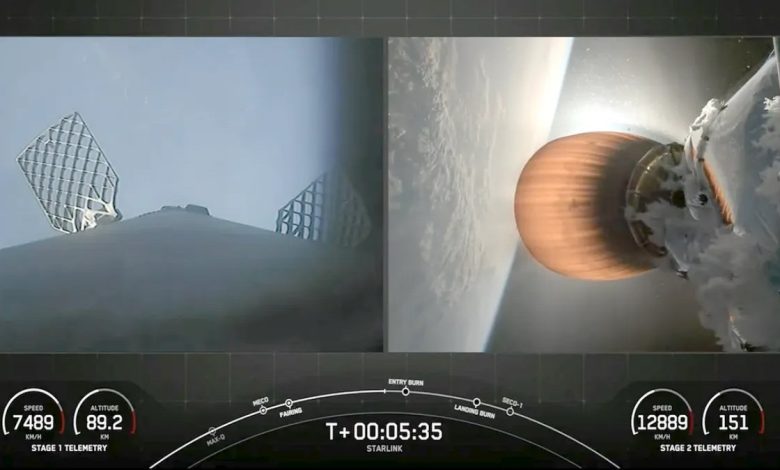
On July 12, SpaceX confirmed it could not recover 20 Starlink satellites after a Falcon 9 upper stage malfunctioned during a July 11 launch. The satellites, launched as part of the Group 9-3 mission, were left in a shallow orbit where their electric propulsion systems could not counteract high atmospheric drag.
Details of the Launch Anomaly
The upper-stage engine encountered an anomaly and failed to complete its second burn, which would have circularized the orbit before deploying the satellites. Consequently, the Starlink satellites were left in an orbit with a perigee of just 135 kilometers. This high-drag environment causes their orbit to decay rapidly, leading to re-entry and complete disintegration in the Earth’s atmosphere.
Efforts to Salvage the Mission
SpaceX CEO Elon Musk announced that satellite controllers attempted to run the ion thrusters at maximum levels to overcome atmospheric drag. Despite these efforts, Musk admitted the chances of success were slim. SpaceX reassured that the satellites pose no threat to other spacecraft or public safety due to their shallow orbits and a design intended for complete disintegration upon re-entry.
Investigating the Anomaly
The Starlink SpaceX statement provided limited details about the upper-stage problem. A liquid oxygen leak during the first burn of the Merlin engine caused unusual ice buildup. Musk referred to the engine failure as a “rapid unscheduled disassembly” (RUD). However, the stage still managed to deploy the satellites and passivate itself by removing energy sources from propellant tanks and batteries.
Impact on Starlinks’ Falcon 9 Launch Schedule
This incident indefinitely grounds the Starlink Falcon 9 rocket, currently the most active launch vehicle, as SpaceX investigates the root cause. The Federal Aviation Administration (FAA) will oversee the investigation and must approve SpaceX’s final report and corrective actions. A return to flight will depend on ensuring public safety.
Delays for Upcoming Missions
The launch failure affects numerous customers, including SpaceX’s Starlink satellites and NASA. The Falcon 9 had over 300 consecutive successful launches before this failure, making it a critical launch vehicle. Near-term missions facing delays include:
- The Arctic Satellite Broadband Mission them.
- Transporter-11 rideshare mission.
- The Polaris Dawn private astronaut mission.
Polaris Dawn Mission on Hold
Jared Isaacman, the billionaire backing the Polaris program and commander of the Polaris Dawn mission, expressed confidence in SpaceX’s ability to resolve the issue quickly. Initially scheduled for July 31, the mission will proceed once SpaceX is ready.
Industry Reactions and Concerns
Industry officials are cautiously optimistic that SpaceX will swiftly identify and rectify the problem. However, if Falcon 9 remains grounded for months, it could be catastrophic for the industry due to the lack of alternative launch options.
NASA’s Response
One of SpaceX’s biggest customers, NASA, has several critical missions on Falcon 9 rockets. These include the Cygnus cargo spacecraft launch to the International Space Station in early August and the Crew-9 Crew Dragon launch in mid-August. NASA is working closely with SpaceX to understand the issue and its implications for upcoming missions. Another significant mission, the Europa Clipper spacecraft, scheduled for launch on a Falcon Heavy rocket in October, faces transistor issues related to Jupiter’s radiation.
Ensuring Safety and Mission Assurance
NASA emphasized that crew safety and mission assurance are top priorities. The agency is collaborating with SpaceX on the ongoing anomaly investigation to ensure the path forward is safe and reliable. NASA will provide updates on mission schedules as more information becomes available.


