
PAF Heroes Honored After Defeating Indian Jets In May Conflict
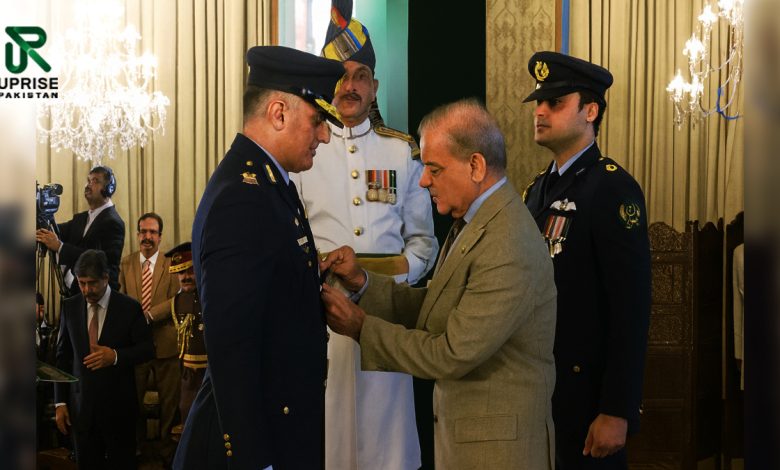
Pakistan marked Independence Day with mixed pride and grief. The nation honored Pakistan Air Force (PAF) Shaheens for a hard May fight. However, families also remembered those who never came home. According to ISPR, pilots and ground crews received major gallantry awards. Moreover, leaders praised a fast, coordinated defense against Indian strikes. India has disputed parts of the account. Still, the moment felt heavy, solemn, and historic.
- PAF received national honors for an aerial victory during the May 2025 conflict.
- Authorities said PAF downed six Indian aircraft, including three Rafales, during a one-hour battle.
- President Asif Ali Zardari and Prime Minister Shehbaz Sharif conferred awards on August 14.
- Officials cited an integrated operation across air, electronic, cyber, and space domains.
- According to Pakistani briefings, PAF later struck Indian airfields and an S-400 site.

Detailed Achievements
- The crisis followed the Pahalgam attack accusations in April 2025, which Pakistan rejected.
- Indian jets massed near the border on May 6–7, officials said.
- According to PAF, India launched about 72 aircraft; Pakistan scrambled about 42.
- PAF retained a first-shot advantage with long-range missiles, officials added.
- Reuters interviews suggested an Indian intelligence gap on the PL-15 missile range.
- The Washington Post reported visual evidence of at least two downed Indian fighters.
- The Wire reported that an Indian officer acknowledged losses at a June seminar.
- Chinese and French air chiefs reportedly praised PAF performance in separate remarks.
“Our response came at a time and place of our choosing.”
Said Air Vice Marshal Aurangzeb Ahmed in May.
“In modern warfare, if you do not act first, you get killed.”
“The Indians were not expecting to be shot at.”
Said Justin Bronk of RUSI.
“And the PL-15 is very capable at long range.”
Note: India has denied losing six aircraft. The Indian Air Force has not publicly confirmed all claimed losses.
Inside the Operation
The first alerts came just after midnight. Then Pakistani sensors tracked Indian jets massing near the border. Officials said that within two minutes, PAF fighters were airborne. Moreover, controllers cleared civilian lanes to keep passengers safe. According to PAF, the dogfight lasted about one hour. Also, more than 100 aircraft from both sides took part. The air was crowded, tense, and unforgiving.
Tactical Edge
According to Pakistani officials, PAF pilots gained a first-shot window. They used beyond-visual-range weapons to keep a distance. Moreover, officials said a J-10 fired a PL-15 from roughly 200 km. Reuters sources said Indian crews misread the missile’s true reach. Therefore, Rafale pilots may have believed they were safe. However, they were not. As a result, Pakistan claims multiple kills at varying distances from the LoC.
Electronic and Cyber Moves
Officials described broad-spectrum moves to confuse enemy systems. Moreover, they cited GPS jamming and data denial steps. They also mentioned SATCOM disruption against intruding drones. Meanwhile, Pakistan’s air defense reportedly downed a jet near the border. Furthermore, ground controllers kept PAF formations coordinated under high pressure. The tempo stayed high, but communications held.
Strikes And Deterrence
Days later, Pakistan struck back with targeted air operations. According to officials, PAF hit airfields, depots, and a BrahMos site. Moreover, briefers said PAF disabled parts of the S-400 network. Therefore, officials claimed that Indian bases faced temporary disruption. India disputed several points. Still, the message was clear on both sides. The sky had turned into a hard classroom.
Award Recipients Table
| Award | Number of Recipients | Notable Names (examples) |
| Sitara-i-Jurat | 8 | Wg Cdr Bilal Raza; Sqn Ldr M. Yousaf Khan |
| Sitara-i-Basalat | 24 | AVM Muhammad Ehsan Ulhaq; ACdre Attaullah Zeb |
| Tamgha-i-Basalat | 45 | Sqn Ldr Usman Yousaf (Shaheed); ACdre Adeel Shahab Qureshi |
| Imtiazi Sanad | 146 | Sr Tech Muhammad Ayaz (Shaheed); ACdre Syed Nabeel Masood |
| COAS Commendation Cards | 259 | — |
| Tamgha-i-Imtiaz (Mil.) | 1 | — |
The above counts reflect ISPR figures shared at the ceremony.
Why This Moment Matters
This story is about service and loss. Families mourned technicians and aircrew who fell in duty. Moreover, the awards honored courage under extreme stress. The event also showed how fast air wars now unfold. Sensors, long-range missiles, and electronic tools shape outcomes. Therefore, training and discipline matter even more. Pilots must read the sky and the network together. Ground teams must keep data clean and timely.
What We Learned About Air Combat
First, speed saves lives. PAF scrambled in minutes and set the pace. Second, range rules the fight. Long-reach missiles change pilot choices. Third, the spectrum is a battleground. Moreover, jamming and data denial can blind and delay. Fourth, evidence matters. Journalists and analysts reviewed audio, images, and intercepts. Therefore, facts will keep emerging over time. Finally, honor has a cost. Medals carry stories of risk and grief.
The Road Ahead
The region remains tense. Moreover, both forces will study this battle line by line. Experts will debate missile ranges and radar tactics. Therefore, training will be adapted for both sides. Also, Pakistan plans to keep improving its integrated defenses. India will do the same. Still, the hope is simple. People want quieter skies.


