
Economic Stakes High As Pakistan’s Leaders Sit Down With Trump
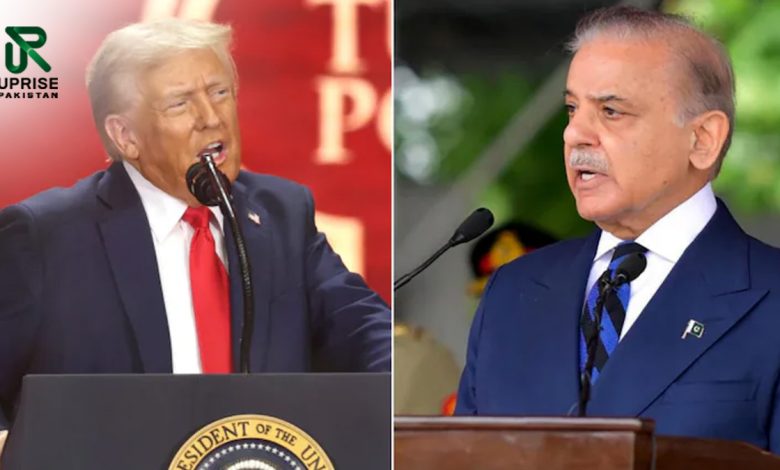
Pakistan’s Prime Minister Shehbaz Sharif met with U.S. President Donald Trump on a historic Thursday. This wasn’t just another diplomatic handshake. It was a high-stakes conversation about one powerful idea: minerals.
This time, Pakistan brought a new offer— critical minerals. These include antimony, copper, gold, tungsten, and rare earth elements. The U.S. needs resources for defense, tech, and clean energy.
“This isn’t just about rocks in the ground,” a former Pakistani general told Al Jazeera. “It’s about who controls the future’s building blocks.”
Why The Minerals Matter
The world is racing to secure materials for modern technology. From electric cars to smartphones, critical minerals are in everything. The U.S. wants to reduce its reliance on China for these materials. That’s where Pakistan sees an opening.
So, on September 8, Pakistan signed two non-binding Memoranda of Understanding (MoUs) with the U.S. firm USSM. The deal promises an initial $500 million investment into Pakistan’s mining sector.
According to the Pakistani PM’s office, the goal is clear:
- Export ready-to-ship minerals immediately.
- Build a refinery in Pakistan to process minerals locally.
- Begin new exploration for untapped reserves.
USSM specializes in recycling minerals from used batteries and mining metals like copper and cobalt.
Diplomatic ties between the U.S. and Pakistan may deepen if these strategic resource discussions lead to long-term partnerships.
| Element | Use in the U.S. Industry |
| Antimony | Batteries, flame retardants |
| Copper | Electronics, wiring, clean energy |
| Gold | Finance, electronics |
| Tungsten | Military armor, aerospace tools |
| Rare Earth Elements | Smartphones, EVs, fighter jets |
Why Is Pakistan Making This Move Today?”
So why is this deal happening now? The short answer: timing and strategy. For years, Pakistan was seen mainly as a U.S. security partner. But ties cooled after 2011, when U.S. forces found Osama bin Laden in Pakistan. Trump himself once accused Pakistan of “lies and deceit.”
Yet in 2025, things have changed. President Trump now thanks Pakistan for its help. He even hosted Pakistan’s army chief — a first for a non-head-of-state.
This new minerals offer could be Pakistan’s way back into Washington’s good graces. It is, as experts call it, “a strategic handshake.” This could also signal the beginning of renewed bilateral relations focused more on economics than defense.
A Deal With Risks And Rewards
Although the MoU sounds exciting, experts warn it’s still early. Here’s why:
Long timelines
Mining projects often take 5–15 years to develop. That’s a long wait before the best results.
Unverified resources
Much of Pakistan’s mineral wealth is still unexplored except for a few known sites like Reko Diq.
Security issues
Regions like Balochistan and Waziristan, where the resources are located, face instability.
Non-binding nature
The MoU is not a full contract. It shows interest but not commitment.
Still, early exports are expected soon. A senior geologist told Al Jazeera that copper and antimony could be shipped quickly. The deal may also align with the ongoing IMF bailout and Pakistan’s economic reforms that demand sustainable revenue sources.
A Nation’s Economic Crossroads
Many believe this deal could reshape Pakistan’s economy. The country has over $130 billion in foreign debt, with high inflation and unemployment. If the mineral promise becomes real, it could bring billions in revenue and new jobs.
At a summit earlier this year, Sharif said Pakistan’s buried resources are worth “trillions of dollars.”
Now, the world will see if those trillions can become reality.
What Steps Will Follow the Deal?”
The following steps are critical:
- USSM and FWO (Pakistan’s military-run engineering group) will start with easy-to-access minerals.
- Both sides will plan to build a specialized refinery in Pakistan.
- Later, they’ll begin larger exploration efforts across multiple regions.
This will boost Pakistan’s place in the global critical minerals market.
The China Question
This deal affects Pakistan and the U.S., but it also affects China. For years, China has invested billions in Pakistan through the China-Pakistan Economic Corridor (CPEC), and Chinese firms are also active in mining.
So, what does this U.S. deal mean for that relationship? Experts say Pakistan is trying to balance both powers — China and the U.S. — without choosing sides. It’s a tightrope, but one that could bring Pakistan significant benefits.
Can Pakistan Turn Promise Into Progress?
Pakistan’s sit-down with Trump is more than politics. It’s about money, minerals, and the future. If the country plays this right, it could become a key player in one of the world’s most important industries. But success will take time, planning, and peace on the ground. For now, the handshake has been made. The world waits to see if it turns into something real.


