
Key Constitutional Amendments: A New Draft Proposal for Reform in Pakistan
Exploring Major Changes in Governance, Judicial Appointments, and Political Processes
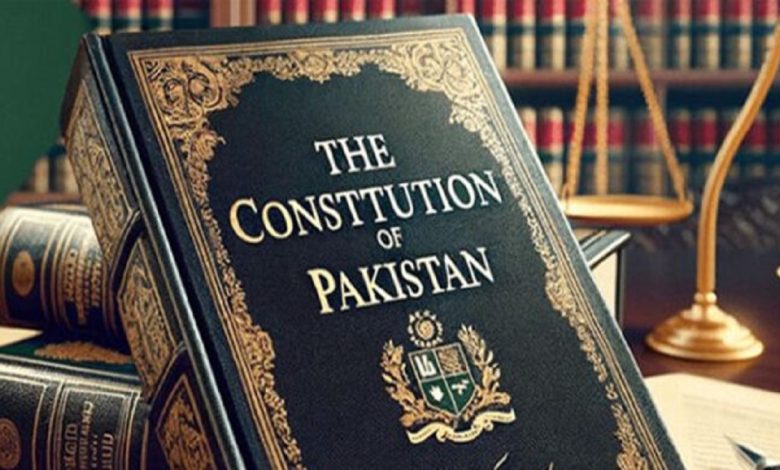
A new draft outlining a series of proposed constitutional amendments in Pakistan has been brought to light, sparking discussions across the country. The draft, prepared by the Federal Law Minister, focuses on revising critical aspects of governance, judicial appointments, and political processes, potentially reshaping Pakistan’s political landscape. These amendments, if passed, could introduce significant changes in how the government operates, how political party dynamics are managed, and how judges are appointed in the higher judiciary.
The draft has garnered widespread attention, particularly due to the nature of the proposed changes, which include amending pivotal articles of the Constitution. These amendments aim to modernize and refine the governance system, ensuring greater accountability and a more structured approach to political and legal processes. Below are the key aspects of the proposed amendments:
Amending Constitutional Clause 4 of Article 48: Challenging Presidential Advice
One of the most notable proposals in the draft is the amendment to Clause 4 of Article 48, which currently states that the advice provided by the President, Cabinet, or Prime Minister cannot be challenged in any forum. This clause has long been viewed as granting these officials unchecked authority, as their advice is essentially immune from any form of review or scrutiny.
The proposed amendment seeks to allow this advice to be subject to challenge, potentially providing more avenues for accountability. By opening up the advice of the country’s highest officials to judicial or parliamentary review, this change could bring more transparency to governance and limit the scope for arbitrary decisions. It reflects a desire for a more balanced system where even the highest offices are held accountable for their actions.
Article 63A: Empowering Party Leaders in Voting Procedures
Another major proposed amendment concerns Article 63A, which deals with voting procedures within political parties. Under the current law, party members are required to vote in line with the instructions of their party leadership. If they go against these directives, their votes are not counted. The proposed amendment aims to allow lawmakers’ votes to be counted even if they are cast in defiance of party instructions.
While this change might appear to encourage more independent decision-making by lawmakers, it also reinforces the authority of party leaders. According to the proposal, the party leader would retain the right to take disciplinary action against any member who votes against the party’s stance. This amendment strikes a delicate balance between allowing individual lawmakers some degree of freedom while still upholding party discipline, reflecting an evolving political structure in Pakistan.
Article 111: Expanding Legal Input in Provincial Assembly Discussions
The draft also suggests changes to Article 111, which currently limits provincial assembly discussions on legal matters to the Attorney General’s advice. The proposed amendment would allow provincial assemblies to involve not only the Attorney General but also legal advisors in legislative discussions.
This expansion of legal input could lead to more thorough and diverse perspectives on legal matters, potentially improving the quality of legislative discussions. By incorporating legal advisors, the provincial assemblies would have access to a broader range of expertise, ensuring that decisions are well-informed and comprehensive. This proposal reflects an effort to enhance the depth of legal consultations within the legislative process.
Judicial Reforms: Overhauling the Appointment of Judges
One of the most significant aspects of the proposed amendments pertains to judicial reforms, specifically focusing on the appointment of judges. The draft outlines amendments to Article 175A, which deals with the appointment of judges to the higher judiciary, including the Supreme Court and High Courts.
The Judicial Commission would be tasked with reviewing the performance of High Court judges under this proposal. Additionally, the draft suggests a new procedure for appointing Supreme Court judges. This new procedure involves the creation of a Judges’ Appointment Committee, consisting of both government and opposition members. The committee would be composed of two members from the government—a senator and a Member of the National Assembly (MNA) nominated by the Prime Minister—and two members from the opposition, nominated by the opposition leader.
This proposed structure aims to ensure that judicial appointments are made with input from both sides of the political spectrum, fostering a sense of balance and bipartisanship in the judiciary. The involvement of both government and opposition members reflects an attempt to ensure greater transparency and fairness in the appointment process, which has often been a contentious issue in Pakistan.
Parliamentary Committee’s Role in Chief Justice Appointment
In addition to the Judges’ Appointment Committee, the draft proposes that a 12-member parliamentary committee would have the authority to appoint the Chief Justice of Pakistan. This committee would be composed of eight members from the National Assembly and four senators. The selection process would involve choosing the Chief Justice from among the three most senior judges of the Supreme Court.
Furthermore, the proposal includes a provision for in-camera meetings during the appointment of the Chief Justice. These closed-door meetings aim to maintain the confidentiality and integrity of the selection process, preventing undue external influence or pressure.
This new approach to judicial appointments reflects a shift toward greater involvement of parliament in the judiciary, marking a significant change in how the country’s top judges are selected. It could potentially lead to more transparent and collaborative appointments, reducing the chances of favoritism or bias in the judiciary.
Conclusion: A Step Towards Modernizing Pakistan’s Constitution
The proposed constitutional amendments represent a bold step toward modernizing Pakistan’s governance and legal structures. By addressing key areas such as judicial appointments, voting procedures within political parties, and the scope of legal consultations in provincial assemblies, these changes aim to enhance transparency, accountability, and fairness in the political and legal systems.
While the draft is still in its early stages, the proposed amendments could bring about significant shifts in how power is distributed and exercised in Pakistan. As the country moves forward, it will be crucial to consider the potential implications of these changes and ensure that they align with the broader goals of good governance and democracy.


