
‘I couldn’t cope – menopause must be treated fairly at work’

A mother who faced a “nightmare” in the workplace during the menopause hopes new research will help women be treated more fairly.
Karen Farquharson, 50, of Aberdeen, successfully sued for unfair dismissal and harassment after being told she used the menopause as an excuse for everything.
“Work-wise I just felt that I couldn’t cope anymore,” she said. “I just didn’t know who I was.”
The new study, involving the University of Aberdeen, is looking at the scale of the mental health impact on women and what support and new policies are needed.
Karen said she was told to “just get on with it” after being off work ill due to her symptoms.
The office manager resigned from the Peterhead engineering firm where she worked.
An employment tribunal heard her menopause issues were dismissed as “aches and pains” and she won a £37,000 payout last year.
“It just came crashing down, I didn’t actually think I was a real person anymore,” Karen told BBC Scotland News.
“The brain fog and the anxiety. Driving became a nightmare. Being in social situations became worse.
“I was suicidal. Especially during the tribunal process. That was just the worst thing I’ve ever gone through.”
 Karen Farquharson
Karen is now taking part in the research project aimed at better understanding the mental health impact the menopause has on women.
Employment questions are included, as are topics such as moods, sleep, and pain.
“I was shocked that I have some of those symptoms that they’re asking about, and those feelings,” Mrs Farquharson said.
“Some days, the thought of even making a cup of tea is just so debilitating.
“I can tell when a woman’s really struggling, some have private messaged me, and it’s just so upsetting.
“We’re not being treated properly.”

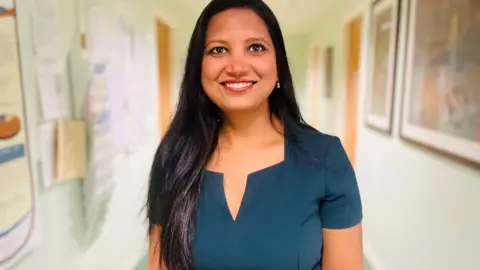
The University of Aberdeen’s Dr Lucky Saraswat – who also advises the Scottish government on the health of women – is involved in the study.
Dr Saraswat, a consultant gynaecologist at Aberdeen Royal Infirmary, believes employers can do better.
“Mental health was always less addressed compared to physical health,” she said.
“But knowing that some of our physiological conditions can also impact on mental health, I don’t think we can ignore it for too long.
“There needs to be a lot of work done, and a lot more funding for research as well, and this should be incorporated in government policies, employers should be aware.”
‘Losing good employees’
Dr Saraswat said a lot of women felt not able to speak to their employers about symptoms they are having due to menopause.
She added: “They are really productive members of society, they have a lot of experience, knowledge and skills, we don’t want to be losing them from the workforce.
“Knowing the impact of menopause on work is very important because this is something that can be addressed.
“But if you don’t know this is what’s causing the problem, and not dealing with it, it will really result in losing a lot of good employees.”
The Scottish Chambers of Commerce said it was no longer acceptable for any female in the workplace to feel they must hide the symptoms of menopause.
Director Liz Cameron said: “Businesses need to recognise the huge health and wellbeing impact of the menopause and provide strong support and understanding.”
What is the menopause?
The menopause is when women’s periods stop, which normally happens around the age of 51. This signals the end of the reproductive years.
The lead-up to this happening, when periods become irregular, is known as the peri-menopause. It starts, on average, at 46.
This is when many women notice their periods becoming unpredictable or heavy, and have feelings or physical problems they have not experienced before.
When periods have not happened for 12 months, a woman can look back and say she has been through the menopause.
For some, it can happen earlier – either naturally, or after treatment for another condition.
Information and support about suicide or feelings of despair is available at the BBC’s Action Line.
Source link


