
Rescue 1122 Saves 200 Lives After Glacial Burst In Gilgit-Baltistan
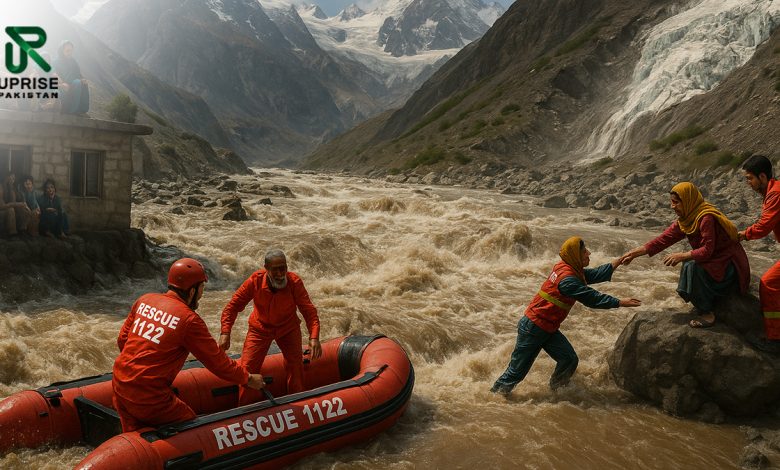
A glacier burst in Gilgit-Baltistan, blocked the Ghizer River, and put villages at risk. Rescue 1122 operations moved fast and saved 200 lives. Yet the danger stayed high as water piled behind debris. Families ran in the dark as homes collapsed. Roads failed. Bridges washed away. While some officials first reported no deaths, later updates from local sources noted fatalities and injuries. Moreover, blocked rivers due to floods raised fear of a sudden surge. Therefore, people downstream faced a long, tense night.
Consequently, the Ghizer River blockage created a temporary lake and threatened low-lying towns. Meanwhile, Rescue 1122 operations evacuated families as Pakistan Army rescue helicopters searched for the stranded. We can act smarter. Early warning systems in Pakistan must expand. Community training for GLOF should scale. And climate-resilient infrastructure can cut future losses.
What Happened in Gilgit-Baltistan?
A glacial lake outburst flood (GLOF) struck the Ghizer district overnight. The glacier burst in Gilgit-Baltistan followed a temperature rise in Gilgit-Baltistan, which experts say can trigger glacial outburst causes. Pakistan is among the countries most at risk of glacial lake outburst floods (GLOF). More than 3,000 potentially dangerous lakes exist in Gilgit-Baltistan and Chitral, many unmapped and unstable due to rapid glacial retreat.
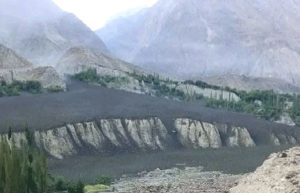
Talidas and Rawshan
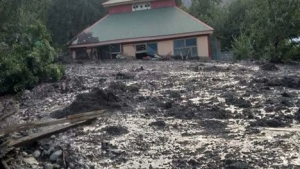
Officials reported heavy flooding in Talidas and Rawshan villages. Houses crumbled as water, mud, and rock rushed through streets. Locals said 80% of the village was washed away.
Ghizer River Blockage
Debris blocked the Ghizer River for about eight hours. As the water rose, officials warned of high-level flooding if the debris dam burst. Later, water began spilling over, easing pressure but spreading across fields.
Rescue Timeline
Rescue 1122 shifted families to Yangal and Samal. Local volunteers and shepherds made the first alerts. Then, Pakistan Army helicopters reached hard-to-access spots. Moreover, the FCNA and GB Scouts joined to widen the rescue. The Gilgit-Baltistan government response continued as teams cleared roads and set up relief camps.
Government and Rescue Response
- GB Chief Minister’s directives ordered rapid evacuations and medical aid.
- NDMA flood management Pakistan coordinated with district teams for supplies.
- FCNA rescue operations supported lifts from isolated hamlets.
- Mosques and Imambargahs used loudspeakers to warn residents.
- The government relief package GB aimed to fund quick repairs and support.
“This is why Pakistan must urgently scale alert systems, local response teams, and community training,” officials noted.
Why Are Glacial Bursts Increasing?
Pakistan hosts over 13,000 glaciers, the largest store outside the poles. However, thousands of receding glaciers in Chitral and GB show the effect of climate change impact on glaciers. Warmer air holds more moisture. Therefore, melting glaciers in Pakistan feed unstable lakes behind loose ice and rock. When heat spikes, a high temperature glacier burst can occur. Additionally, soil erosion and floods worsen as forests thin and slopes fail. While GLOF is natural, climate stress and weak infrastructure in GB raise the stakes.
Human and Economic Impact
- Houses destroyed in floods left hundreds displaced and in need.
- Agricultural land damage and loss of orchards and timber factories cut incomes.
- Road blockages in GB severed travel, trade, and emergency access.
- Schools and clinics closed as access routes failed.
- Families moved to shelters while the water kept rising.
Relief Efforts and Solutions
| Response Type | Current Actions | Future Solutions |
| Rescue Operations | Rescue 1122 operations, Army lifts, and volunteers moved families | Expand local teams; equip villages with radios and boats |
| Government Orders | GB Chief Minister directives; camps, rations, medical tents | Strengthen NDMA flood management Pakistan capacity |
| Warnings | Mosque alerts; mobile calls by shepherds | Scale early warning systems Pakistan with sirens, SMS |
| Infrastructure Impact | Bridges gone; roads cut; debris dams formed | Build climate-resilient infrastructure; no-build zones |
| Financing | Government relief package GB announced for repairs | Create GLOF resilience fund; insurance for high-risk communities |
| Community Preparedness | Local guides led evacuations | Community training for GLOF and evacuation drills in GB |
| Monitoring | Field updates from district teams | Improved flood monitoring; drones and gauges upstream |
| Water Management | Ad-hoc diversions were safe | Sustainable water management; spillways for lakes |
Lessons Learned And The Way Forward
Whose fault in the glacier floods is not a simple question. Climate stress is clear, but land use choices matter. Therefore, avoid building on flood paths and unstable fans. Second, alerts work when people trust them. Hence, invest in early warning systems in Pakistan and simple maps that show safe routes. Third, train people before storms. Consequently, community training for GLOF and evacuation drills in GB should be routine. Finally, connect climate to planning. Because climate-resilient infrastructure and sustainable water management can lower risk, planners should design for overflow, not average flow.
Preparing for the Next GLOF
This glacier burst in Gilgit-Baltistan showed both risk and resolve. The glacier burst in Gilgit-Baltistan created a dangerous Ghizer River blockage, yet a strong Gilgit-Baltistan government response and fast action by Rescue 1122 and the Army saved lives. While glacial lake outburst flood (GLOF) events will persist, we can reduce harm. If Pakistan scales NDMA flood management, invests in improved flood monitoring, and builds climate-resilient infrastructure, future emergencies will claim fewer homes and lives. With steady work and local training, mountain communities can face the next surge with better tools, safer ground, and more hope.


