
Trump Can’t Stop Talking About Field Marshal Asim Munir: Here’s Everything He Said
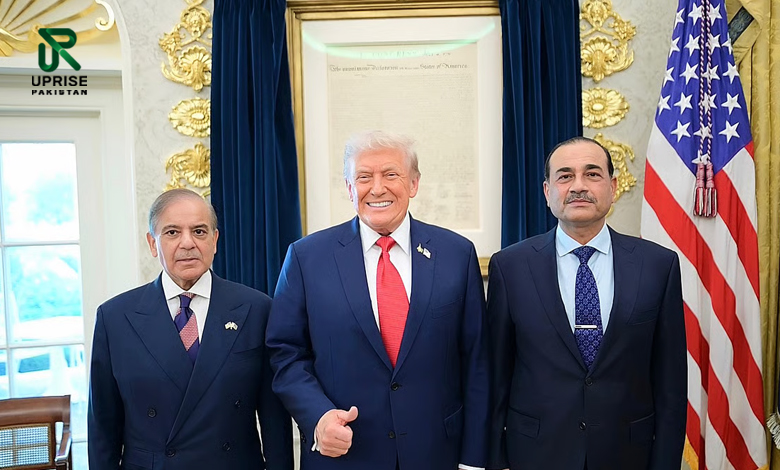
In recent months, former U.S. President Donald Trump has often mentioned Field Marshal Asim Munir, Pakistan’s Chief of Army Staff. Trump speaks on many global issues, yet his steady focus on Munir stands out in both countries.
From rallies to interviews, he has notably mentioned the Pakistani military leader. Some see it as careful messaging, while others compare it to Trump’s typical off-the-cuff style. Either way, his comments have made headlines. Let’s review Trump’s remarks on Asim Munir, why they matter, and the possible impact on U.S.-Pakistan ties.
Who Is Field Marshal Asim Munir?
Before Trump’s quotes, a quick profile helps.
- Position: Chief of Army Staff, Pakistan
- Rank: Promoted to Field Marshal in early 2025
- Background: Veteran intelligence officer; former head of ISI
- Known for: Discipline, low public profile, and tight institutional control
Munir has a major influence over Pakistan’s civil-military landscape. His leadership is seen as firm. He also shapes regional policy related to Afghanistan, India, and China.
What Trump Said
Since early 2025, Trump has brought up Munir at least five times in public forums. Here is a snapshot.
| Date | Event | Trump’s Quote | Context |
| Feb 2025 | Rally in Texas | “That guy Munir, tough man. Runs the show in Pakistan.” | Campaign rally speech |
| Mar 2025 | Podcast Interview | “Asim Munir is smart — maybe too smart. We had to watch him.” | National security conversation |
| May 2025 | Rally in Florida | “Pakistan’s military is not playing games under Munir.” | Middle East policy remarks |
| Aug 2025 | TV Interview | “You know, Munir, very different from the last guy. Very sharp.” | Comparing leadership styles |
| Sept 2025 | Speech in Ohio | “I dealt with many leaders. Munir knew what he was doing.” | Recalling international talks |
Why Does Trump Keep Talking About Munir?
Many analysts link the pattern to South Asia’s shifting balance. Unlike past presidents, Trump names foreign leaders, drawing attention and debate. His remarks may also serve domestic politics while signaling views on security and power abroad.
- Munir’s Rising Global Profile
Since his promotion, Munir has taken a more visible diplomatic role. He has engaged Gulf partners, met Chinese officials, and maintained quiet channels with U.S. figures. Trump’s repetition may reflect Munir’s growing footprint on key regional files.
- Pakistan’s Role in Regional Stability
After the U.S. exit from Afghanistan, power dynamics changed. Pakistan, under Munir, seeks to manage new risks and opportunities. Trump likely views Munir as central to counterterrorism, trade routes, and projects tied to China’s Belt and Road.
- Election Strategy
Trump often frames world leaders as “strong” or “weak.” Referencing Munir can reinforce a theme about hard-edged leadership. The mentions help contrast Trump’s approach with rivals and keep foreign policy in the campaign conversation.
How Pakistan Responded
Islamabad and the military have not issued formal replies. Pakistani media has covered the comments with mixed reactions. Some see acknowledgment of Munir’s clout. Others worry about Pakistan becoming a campaign talking point in the U.S.
“It’s unusual for a former U.S. president to repeatedly name a serving general,” a senior Pakistani journalist told Dawn News.
What Does This Mean For U.S.-Pakistan Relations?
U.S.-Pakistan ties are complex and cyclical. They include security links, trade, and concerns over China’s role in Pakistan’s economy. Trump’s words may not shift policy by themselves. Yet they can shape public narratives and complicate future engagement.
If Trump returns to office, diplomats may need to clarify intent and manage expectations when dealing with Pakistan’s leadership.
Trump, Munir, And The Bigger Picture
Trump’s repeated focus on Field Marshal Asim Munir is striking. It may be campaign framing, strategic signaling, or simply his style. For Pakistan, the attention brings both visibility and pressure. For the U.S., it raises fresh questions about policy direction in 2025 and beyond.
In a hyper-connected world, a single line can ripple across capitals. And when the speaker is Donald Trump, the echo is loud — from Washington to Rawalpindi.


