
Why Are Cloudbursts So Deadly In Pakistan And India This Year?
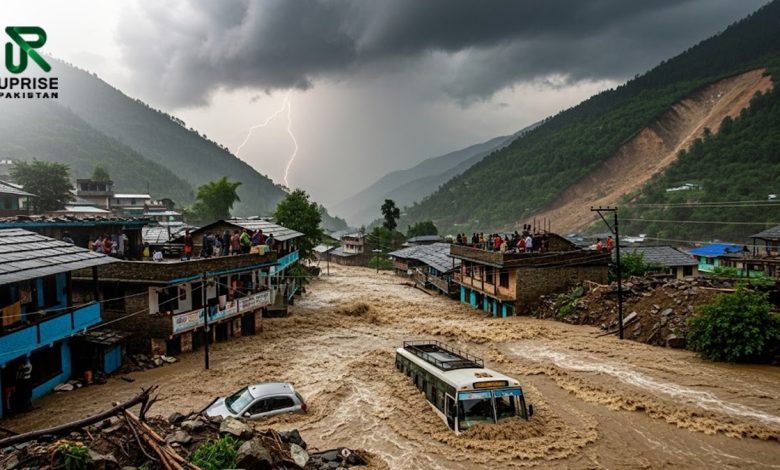
This monsoon turned deadly across South Asia. In northwest Pakistan, officials reported at least 321 deaths in 48 hours. In India-administered Kashmir, 60 people died and more than 200 are missing. Earlier this month, Uttarakhand saw homes tear off slopes. Meanwhile, Karachi faced hours of pounding rain and deep urban flooding. Streets became rivers. Families fled in the dark.
These bursts hit fast. Therefore, people get little time to act. Roads fail. Bridges wash out. Because storms stall in valleys, water pours down like a wall. In Pakistan’s Buner district, about 150 mm fell in one hour. So mud, boulders, and timber rushed through homes. As panic rose, rescuers fought landslides and blocked routes. We can cut risk. Early alerts must reach phones and loudspeakers. Safer building rules can move people out of high-risk zones. And simple steps, like avoiding riverbeds during warnings, save lives.
What Are Cloudbursts?
- A cloudburst is 100 mm or more rain over a small area in one hour.
- During the monsoon season, they strike most of the Himalayas, Karakoram, and Hindu Kush.
- They form when moist monsoon air meets cold mountain air and condenses fast.
- Then storms can stall over valleys, unleashing sudden, destructive downpours.
“The bigger gap is not the technology gap, it’s the communication gap,” said climate expert Ali Tauqeer Sheikh.
Areas Most Affected by Cloudbursts
Karachi (Sindh)
Karachi is low-lying and dense. Thus, even short, intense bursts flood roads fast. Drains clog with debris. As a result, water backs up into homes and shops. Power cuts and traffic jams slow rescue work.
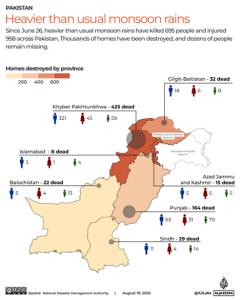
Khyber Pakhtunkhwa (KPK)
KPK sits amid steep valleys. Therefore, heavy rain concentrates into narrow channels. Hillsides slide. Villages near streams face the first hit. Moreover, road cuts and forest loss make slopes weaker.
Buner (KPK)
Buner saw over 150 mm in one hour, officials said. Consequently, flash floods and mudflows tore through more than ten villages. Local reports counted 300+ deaths. Rescuers still search debris fields.
India (Kashmir and Uttarakhand)
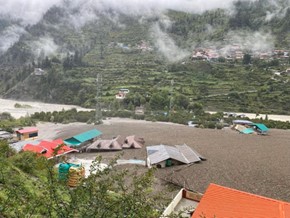
In Kashmir, at least 60 people died and 200+ are missing, according to reports. Furthermore, earlier in Uttarakhand, a surge of water swept through a mountain village. Footage showed buildings breaking apart in seconds.
Where and Why It Turned Deadly
| Location | What Happened | Why It Was So Severe | Status / Response |
| Karachi (Sindh) | Urban flooding after intense downpours | Flat city, clogged drains, high density | Pump-outs, drain clearing, traffic control |
| KPK (general) | Flash floods and landslides | Steep valleys, deforestation, and road cuts | Evacuations, road repairs, and relief distribution |
| Buner (KPK) | ~150 mm in one hour; villages devastated | Narrow valleys funneled water; debris flows | Search and rescue; relief camps; bridge fixes |
| Kashmir & Uttarakhand (IN) | Dozens dead; homes swept away | Steep slopes; storms stalled over valleys | State disaster teams; radar-based short alerts |
Note: Tolls and details are drawn from August 2025 reporting by Reuters, AP, and CNN, as well as statements by regional experts.
Why Are These Bursts Increasing?
Climate change stacks the deck. Warmer air holds about 7% more moisture per degree Celsius. Therefore, rain can drop in minutes when moist air climbs a mountain. Moreover, the Arabian Sea and the Indian Ocean are warmer. So monsoon winds carry extra water. In northern Pakistan, experts also point to the subtropical jet stream nudging south in summer when it meets moist monsoon clouds, a tall tower forms and dumps intense rain.
“We can warn about the area, but not the exact spot,” said Syed Muhammad Tayyab Shah of Pakistan’s NDMA.
“The Himalayas, Karakoram, and Hindu Kush are especially vulnerable,” added scientist Roxy Mathew Koll.
What Arrangements Are Being Made Now
- More radars in mountain belts to spot fast-growing storm cells.
- SMS and siren alerts in local languages for valley towns and cities.
- Evacuation drills in schools and community centers before the monsoon peaks.
- Relief stockpiles (food, water, tarps, fuel) are pre-positioned near risk zones.
- Drain clearing in Karachi and other cities to speed up runoff.
- Geohazard mapping to mark no-build zones along rivers and landslide tracks.
The Best Solution Forward
For families and travelers:
- Keep a go-bag with water, light, meds, IDs, and a radio.
- Save two escape routes from home and work. Practice them.
- Move to higher ground at the first alert. Do not cross fast water.
- Park away from riverbanks and steep cut slopes during storms.
For local leaders and agencies:
- Enforce no-build buffers along streams and fan deltas.
- Replant native trees to slow runoff and anchor soil.
- Design breakaway bridges and raised footpaths in key corridors.
- Use community wardens with loudhailers for last-mile alerts.
- Publish simple flood maps that show streets as blue and shelters as green.
- Run post-storm audits to fix weak spots before the next burst.
The India Meteorological Department defines a cloudburst as over 100 mm in one hour.
Building Resilience Against Extreme Rain
Cloudbursts are short, fierce, and more frequent. Because heat loads the air with moisture, storms now drop more rain, faster. Yet quick alerts, safer building rules, clean drains, and practiced exits can save lives. If we act on these steps, then the next burst will take fewer lives in Pakistan and India.


