
Donald Trump Voices Displeasure Over Apple’s Shift of iPhone Production to India
President Urges Apple to Focus on U.S.-Based Manufacturing Amid Global Supply Chain Shifts
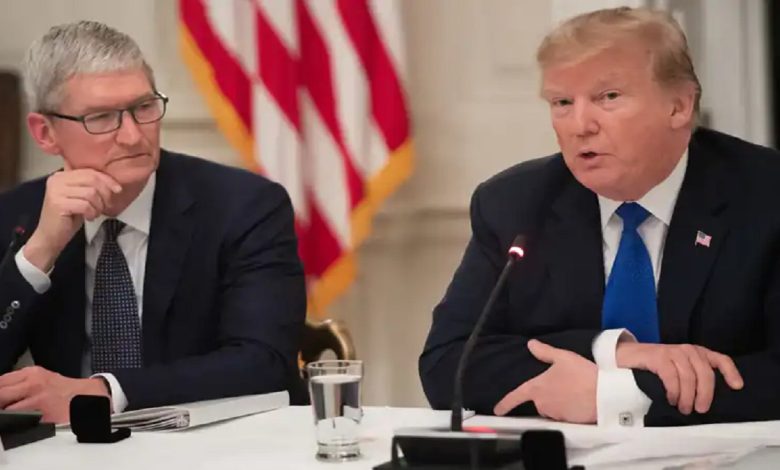
U.S. President Donald Trump has expressed his dissatisfaction with Apple’s increasing shift of iPhone production to India, a move he believes undermines American manufacturing efforts. In a recent statement to reporters, Donald Trump revealed a tense exchange with Apple CEO Tim Cook, where he strongly objected to the tech giant’s expanding presence in the Indian market.
“I had a little problem with Tim Cook yesterday,” Donald Trump said candidly. “I said to him, ‘My friend, I treated you very good. You’re coming here with $500 billion, but now I hear you’re building all over India. I don’t want you building in India.’”
This comment refers to Apple’s previous commitment to invest approximately $500 billion in the U.S. economy, an announcement made back in February during Donald Trump’s tenure. While that pledge was initially celebrated as a sign of strengthening domestic industry, Apple’s subsequent expansion into India appears to have irked the president, who has long advocated for reshoring American manufacturing.
Donald Trump made it clear that he expects Apple to prioritize building its devices within U.S. borders, stating, “We’re not interested in you building in India. India can take care of themselves. … We want you to build here.”
According to Donald Trump, Cook responded by agreeing to increase Apple’s manufacturing footprint in the U.S., although the specifics of that commitment remain unclear. No detailed plans have been released by Apple regarding any new factories or production lines in the U.S. following the conversation.
Apple’s Manufacturing Strategy Shift and Donald Trump
Apple’s move to diversify its manufacturing base isn’t a sudden pivot. It’s part of a long-term strategic shift accelerated by geopolitical tensions, trade wars, and the global need for supply chain resilience. The company has been gradually reducing its dependence on Chinese factories since the U.S.-China trade war intensified under the Trump administration. High tariffs on Chinese-made goods prompted Apple and other tech firms to look for alternatives that could offer both scalability and cost-effectiveness.
India has emerged as a favorable option due to its lower labor costs, a growing tech workforce, and government incentives designed to attract foreign investment. Apple has significantly ramped up production in India over the past few years, with suppliers like Foxconn and Pegatron playing a central role in local assembly operations. By the end of next year, a significant portion of iPhones intended for the U.S. market are expected to be assembled in India.
In addition to India, Apple has also expanded its manufacturing of other products—such as iPads, Macs, Apple Watches, and AirPods—to Vietnam, further diversifying its production away from China.
The Cost Challenge of Reshoring
Despite Donald Trump’s push for American-made products, experts argue that moving iPhone production to the U.S. presents significant logistical and financial hurdles. Tarun Pathak, a research director at Counterpoint Research, explained to Bloomberg, “This is a familiar Donald Trump tactic: He wants to push Apple to localize more and build a supply chain in the U.S., which is not going to happen overnight. Making in the U.S. will also be much more expensive than assembling iPhones in India.”
The U.S. lacks the vast, integrated supply chain ecosystem that China and other Asian countries have developed over decades. Manufacturing an iPhone isn’t just about assembly—it involves hundreds of components and a tightly managed logistics network that currently doesn’t exist at the same scale in the U.S.
Even if Apple were to shift assembly lines to the U.S., the increased production costs could result in higher prices for consumers or reduced margins for the company, neither of which would be favorable outcomes for the tech giant or its shareholders.
Political Pressure vs. Business Realities
Donald Trump’s stance reflects a broader political ideology that favors economic nationalism and domestic job creation. While these goals resonate with many American voters, they often clash with the practical realities of global business. For multinational corporations like Apple, decisions about where to manufacture products are driven by a complex mix of cost, efficiency, risk management, and long-term strategic planning.
Nonetheless, political pressure can influence corporate decisions. Public scrutiny, especially from high-profile figures like Donald Trump, can push companies to make symbolic gestures—such as opening small-scale manufacturing facilities in the U.S. or increasing hiring efforts—to appease policymakers and protect their public image.
The Market Reacts
Following the news of Donald Trump’s criticism and the uncertainties surrounding Apple’s production strategy, Apple’s stock experienced a minor dip. On Thursday morning, shares of the company slid slightly to $211.46, reflecting investor concerns about potential disruptions or shifts in Apple’s cost structure.
While the decline was minimal, it serves as a reminder of how political rhetoric and trade policy can impact market performance, particularly for companies with complex international operations like Apple.
Looking Ahead
As the global tech landscape continues to evolve, Apple is likely to remain at the forefront of supply chain transformation. While the company may face pressure to localize more production in the U.S., the broader trend points toward a diversified and flexible manufacturing model that spans multiple countries.
Ultimately, the tug-of-war between political expectations and corporate strategies will continue to shape Apple’s manufacturing decisions. Whether Donald Trump’s comments will lead to substantial changes in Apple’s operations remains to be seen, but they have certainly reignited the debate over where and how American tech products should be made.


