
Understanding the Rank of Field Marshal in Pakistan: History, Appointments, and Legacy
A Deep Dive into the Nation’s Highest Military Honor and the Only Field Marshal in Pakistan’s History
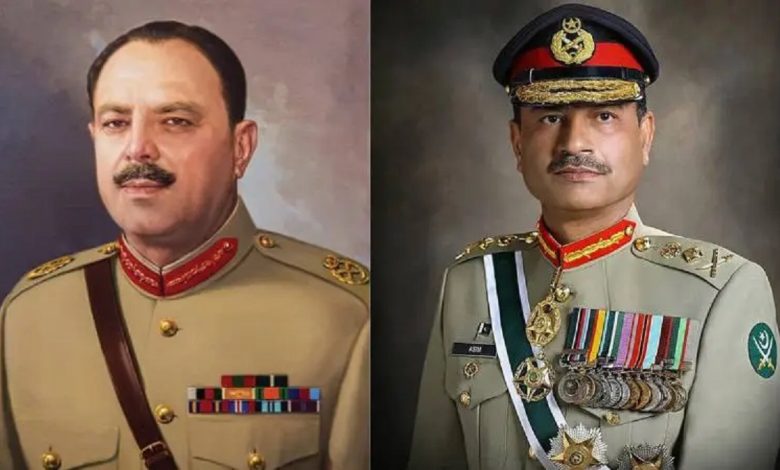
Military ranks carry immense symbolic and strategic weight in any nation’s defense structure. Among the highest military honors in the world is the rank of Field Marshal—a title that signifies not just command over military forces, but often reflects deep political influence, exceptional service, and legacy. In Pakistan, the rank of Field Marshal holds a particularly unique place in military and national history because it has only ever been awarded once.
What is a Field Marshal?
A Field Marshal is the highest rank in the army, often considered above a full general. It is typically an honorary or ceremonial title, awarded to military leaders for extraordinary contributions during wartime or for exceptional service to a nation’s military institution. The rank exists in several countries, including the United Kingdom, India, and some Commonwealth nations. However, it is not a common or frequently awarded title and is usually reserved for wartime heroes or for individuals with a lasting impact on the nation’s defense.
In terms of hierarchy, a Field Marshal is a five-star rank (General being four-star), although many armies, including Pakistan’s, do not actively use five-star generals in day-to-day command. Instead, the rank of Field Marshal in most nations is symbolic and not typically associated with operational command once awarded.
How Many Field Marshals Have There Been in Pakistani History?
In the entire history of Pakistan, two individuals have held the title of Field Marshal:
Field Marshal Muhammad Ayub Khan
Ayub Khan remains the sole Field Marshal in Pakistan’s military history, and his appointment is deeply tied to the political and military evolution of the country during the 1950s and 60s.
Who Was Field Marshal Ayub Khan?
Muhammad Ayub Khan was a career soldier who played a central role in Pakistan’s early military and political landscape. He served as the Commander-in-Chief of the Pakistan Army from 1951 to 1958 and later became President of Pakistan, holding power from 1958 to 1969.
His promotion to the rank of Field Marshal came in 1959, a year after he seized political control through a military coup that overthrew then-President Iskander Mirza. This self-promotion to Field Marshal was part of his effort to consolidate power and present himself as both the supreme political and military authority in the country.
Why Was Ayub Khan Appointed Field Marshal?
The appointment of Ayub Khan as Field Marshal was not the result of a military victory, nor did it follow conventional criteria for such an elevated title. Instead, the promotion was largely symbolic and political. Ayub Khan promoted himself to Field Marshal shortly after declaring martial law in 1958 and assuming the presidency.
There were several reasons and motivations behind this move:
- Consolidation of Authority: By promoting himself, Ayub reinforced his image as the unchallenged leader of both the armed forces and the government.
- Prestige and Legacy: The Field Marshal rank was used to elevate Ayub’s status domestically and internationally, placing him among an elite group of world military leaders.
- Civil-Military Relations: Ayub’s rule marked a significant shift where the military established its dominance in Pakistani politics—a pattern that has echoed through decades.
- Justification of Military Rule: Awarding himself this honor helped Ayub justify the military’s takeover of civilian institutions as a “national necessity” rather than a coup.
Legacy of Field Marshal Ayub Khan
Ayub Khan remains a pivotal figure in Pakistani history. His era witnessed substantial infrastructure development, economic reforms, and the creation of a new administrative capital—Islamabad. However, his rule also drew criticism for centralizing power, curbing press freedom, and suppressing political dissent.
His decision to assume the title of Field Marshal is often viewed as a symbol of military dominance in Pakistan’s politics—a theme that still sparks debate today.
General Syed Asim Munir: Pakistan’s Current Army Chief and Field Marshal
General Syed Asim Munir is the current Chief of Army Staff (COAS) of Pakistan, having assumed the position on November 29, 2022. In a historic move, he was promoted to the rank of Field Marshal on May 21, 2025, becoming only the second individual in Pakistan’s history to hold this prestigious five-star rank, following Field Marshal Ayub Khan.
Early Life and Military Career
Born in 1966 in Rawalpindi, Pakistan, Munir joined the Pakistan Army in 1986 after completing the 17th Officers Training Course at the Officers Training School in Mangla. He was commissioned into the 23rd Battalion of the Frontier Force Regiment. Throughout his career, Munir has held several key positions, including Director General of Military Intelligence and Director General of the Inter-Services Intelligence (ISI), Pakistan’s premier intelligence agency.
Promotion to Field Marshal
General Munir’s promotion to Field Marshal was announced by the Pakistani government in recognition of his leadership during recent military operations, notably Operation Bunyan Marsoos, which was Pakistan’s response to India’s Operation Sindoor. The government lauded Munir for his “exemplary leadership” and credited him with “crushing the enemy,” thereby bringing “great honour to our motherland” . This promotion is significant as it marks the first time a serving COAS has been elevated to the rank of Field Marshal in Pakistan’s history .
Legacy and Influence
General Munir’s tenure has been marked by a firm, nationalist stance, emphasizing a security-first approach and aiming to position Pakistan as a strong regional military power. His leadership during heightened tensions with India has solidified his position as one of the most powerful figures in the country, with a recent Gallup Pakistan poll indicating that 93% of citizens view the military more favorably following the conflict.
As Field Marshal and COAS, General Syed Asim Munir continues to play a pivotal role in shaping Pakistan’s military strategy and national security policies.
Conclusion: The Symbolism of the Field Marshal Rank in Pakistan
In Pakistan, the rank of Field Marshal is more than a military title; it is a symbol of the complex interplay between military authority and political power. The sole appointment of Ayub Khan to this rank underscores a period in Pakistan’s history where the military’s influence extended deeply into the political realm. The absence of subsequent appointments reflects a cautious approach to maintaining the delicate balance between honoring military service and preserving democratic institutions.


