
Humanoid robot skin senses people before contact

NEWYou can now listen to Fox News articles!
Working beside a metal humanoid robot would probably make you watch every step it takes. After all, a collision between a heavy robot and a human body will usually end worse for the person. Italian startup Generative Bionics believes its Gene.01 humanoid robot could help reduce that risk. The company covered the robot with sensor-filled skin that can detect a person approaching before physical contact occurs.
The system also senses touch, temperature and force. As a result, Gene.01 can gather information about what surrounds its body and what happens during an interaction. That sounds reassuring. However, the real question is whether the sensors and control software can react quickly enough when people start working beside the robot.
CyberGuy Live: Missed “Sick of Spam?” Get the replay and checklist
Our free CyberGuy Live class “Sick of Spam?” has ended, but you can still watch the full replay and download our spam-stopping checklist. Kurt “CyberGuy” Knutsson walks you step by step through simple ways to reduce robocalls, spam texts, junk email and unwanted messages. You’ll also learn how to curb political texts, clean up your inbox and spot messages that could put your personal information at risk.
Get the free replay and checklist now at CyberGuyLive.com.
WEARABLE PATCH VIBRATES WHEN DANGER IS NEARBY
Gene.01 uses sensor-filled skin across its body to detect nearby people before physical contact occurs. (Generative Bionics)
How the Gene.01 humanoid robot senses workers
Gene.01 carries distributed sensors across its torso and limbs. The company says this smart skin detects touch, temperature, proximity and force at the same time. Proximity sensing gives the robot an early warning when someone enters the space around its body.
The basic idea feels familiar. You may feel heat near a stove and pull your hand away before touching the surface. In a similar way, Gene.01 can detect a nearby person before the person touches its sensor-covered body. That information gives the robot’s control system a chance to respond before contact. It can also continue measuring force if contact happens. However, Generative Bionics has not released detailed workplace safety data showing how the system performs during full industrial shifts. For now, the safety benefits remain company claims tied to a newly introduced platform.
Why proximity sensing could reduce robot collisions
Traditional factory robots often operate behind barriers to keep workers outside their range of motion. Humanoid robots create a different challenge. Companies want these machines to use tools and move through spaces built for people. That could place them closer to human workers.
Cameras can help a robot see someone approaching. However, a camera may lose sight of a person who stands too close or moves behind part of the robot. Full-body proximity sensing adds another source of information. The robot can detect activity near its torso or limbs without depending entirely on its view of the room.
HUMANOID ROBOT VIDEOS SHOW MACHINES LASHING OUT
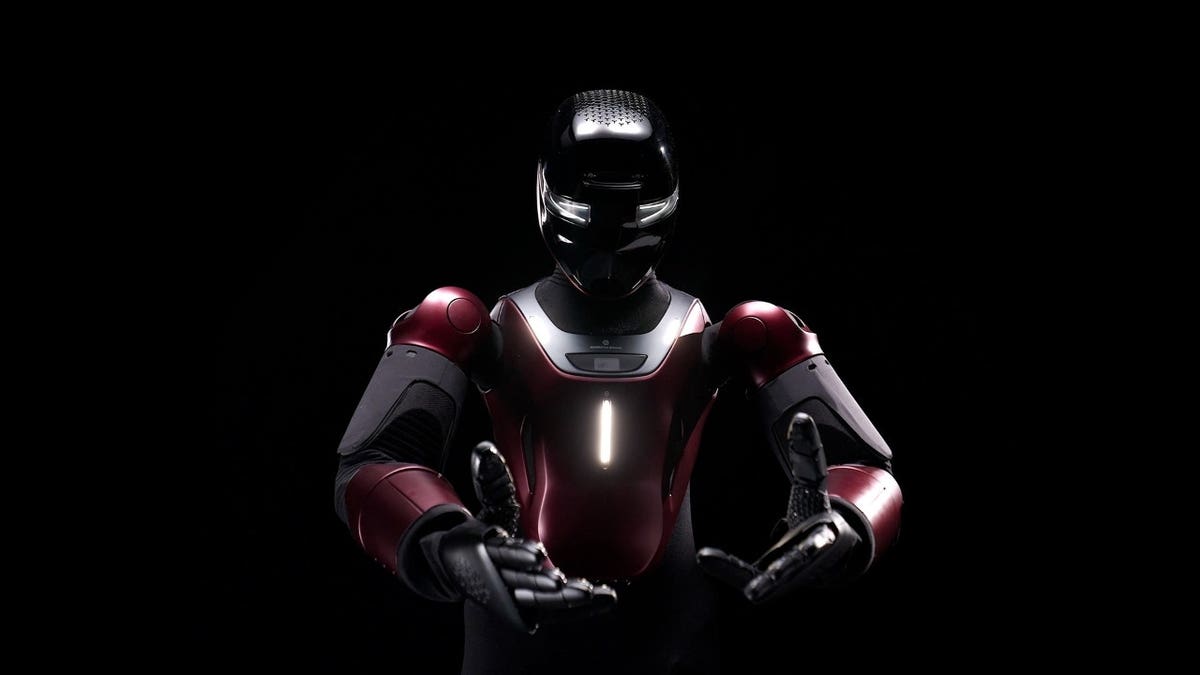
The humanoid can sense touch, temperature, proximity and force while working alongside people. (Generative Bionics)
Workers can physically teach Gene.01 new tasks
Gene.01’s sensors could also change how workers teach a humanoid robot. A person can guide the robot’s arm through a movement while the system records the motion and force involved. This gives the robot information that a video demonstration may leave out.
For example, a video can show a robot where to place its hand. Yet the footage may not reveal how tightly the robot should grip an object. Too little pressure could cause the item to slip. Excessive force could damage it.
By moving Gene.01’s arm directly, a worker can demonstrate the physical feel of the task. The company says this approach can help the robot learn how much force to apply. That could make robot training more accessible to experienced workers who understand the job but do not program robots.
What Physical AI means for Gene.01
Generative Bionics built Gene.01 around an approach it calls Physical AI. Under this approach, engineers develop the robot’s body and movement controls as a connected system. They do not build the hardware first and treat the software as a separate layer added later.
The team uses models of the robot and its human partner. It can then adjust the design around measurable factors such as walking stability and physical strain on the person. The approach grew from research conducted by members of the company’s founding team at the Istituto Italiano di Tecnologia.
Nature Machine Intelligence published that research on July 13, 2026. The paper focuses on a human-aware robot called ergoCub rather than Gene.01. Researchers jointly optimized ergoCub’s physical design and movement controls. They used human-related measurements, including stress on a person’s back, alongside the robot’s walking requirements. Generative Bionics says Gene.01 is the first industrial platform to apply that peer-reviewed methodology to a fully functional humanoid covered in sensors.
Generative Bionics built Gene.01 in 6 months
The company says its team moved Gene.01 from a concept to a functional platform in six months. Generative Bionics CEO Daniele Pucci said the company designed the robot as a foundation for different industrial machines.
“Unlike other one-size fits all humanoids, Gene.01 is a scalable platform, customized at the edge of AI, design and end-effector level to maximize each customer’s needs. It is also the first expression of our belief that Physical AI must be human-aware, physics-native and industrial from day one. In six months, our team moved from concept to a fully functional and sensorized humanoid platform by combining deep humanoid robotics expertise with AI, biomechanics and design.” Pucci said the company wants robots to learn from the physical world while adapting to each customer’s work.
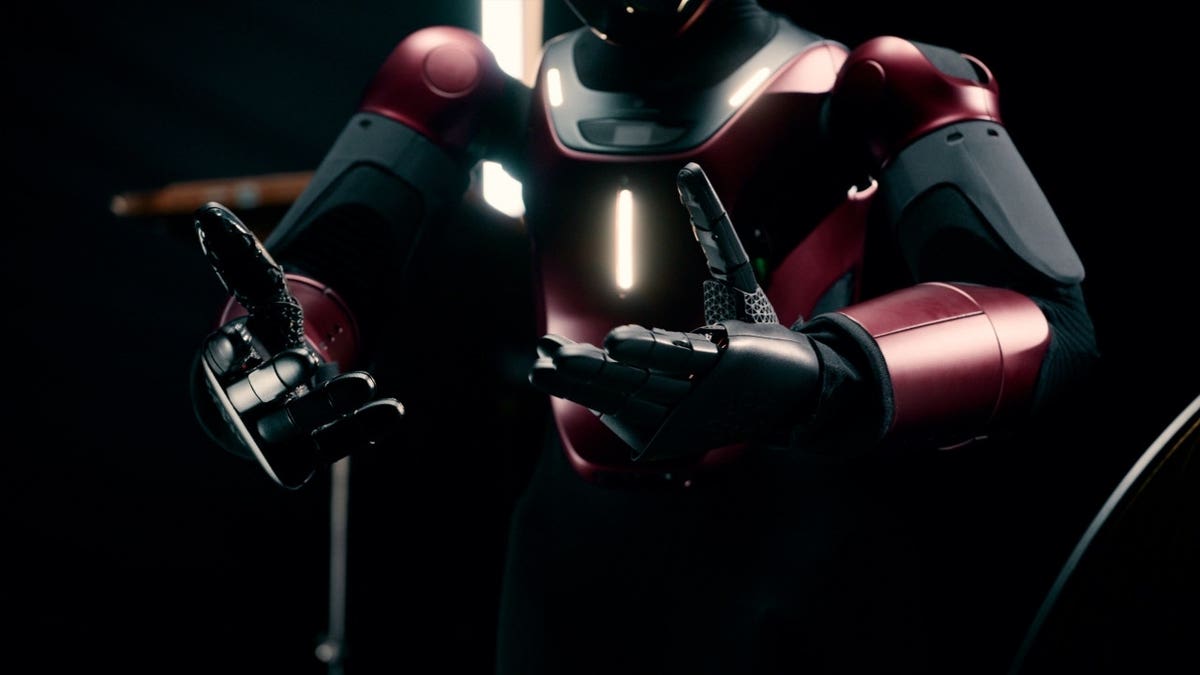
Workers can guide Gene.01’s hands directly to teach movements and the amount of force a task requires. (Generative Bionics)
Gene.01 can change for different industrial jobs
Generative Bionics designed Gene.01 as a base for a family of specialized humanoids. The company can adjust the AI for a particular task. It can also alter the robot’s exterior to fit the working environment.
Meanwhile, engineers can replace its end effectors. That technical term covers the hands, grippers or feet attached to the ends of a robot’s limbs. A robot built for warehouse work may need a different hand than one designed to operate welding equipment. This platform approach lets Generative Bionics adapt one core robot instead of designing every machine from the ground up.
The company sees potential uses in manufacturing and logistics. It has also identified inspection, public safety and health care as possible future markets. However, Gene.01 remains an early industrial platform. Generative Bionics still needs to show that its customization strategy can work reliably outside controlled demonstrations.
An open-source Gene.01 model gives developers a head start
Generative Bionics has also started releasing a digital model of Gene.01. The model lets developers simulate the robot before they gain access to the physical machine. They can test movement software and begin developing industry-specific applications in a virtual environment.
The company’s website currently links to a preview of the robot’s URDF model on GitHub. URDF stands for Unified Robot Description Format. Developers use it to describe a robot’s physical structure for software and simulation tools. Generative Bionics says it wants to maintain the model across software distribution systems that Physical AI developers already use. An open model could attract researchers and robotics developers to the platform.
Fincantieri partnership targets shipyard welding
Gene.01’s first planned industrial use involves shipbuilding. Generative Bionics is working with Italian shipbuilding company Fincantieri to develop a humanoid for welding operations in shipyards. Shipyards can contain tight work areas and heavy equipment. Welding also exposes workers to heat and fumes. A humanoid could eventually handle selected tasks in areas that place extra physical demands on people. However, Generative Bionics and Fincantieri have not yet published detailed performance results from the welding project. The partnership will give Gene.01 an important test.
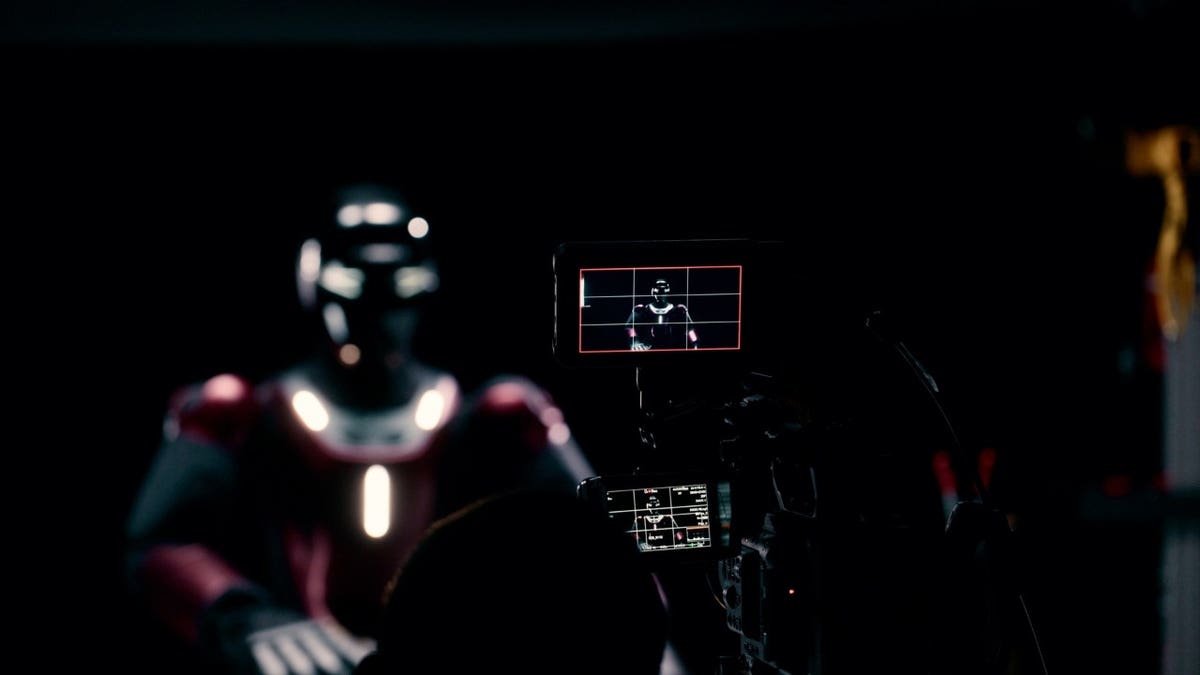
Generative Bionics built Gene.01 as a customizable platform for industrial jobs, including a planned shipyard welding application. (Generative Bionics)
An $81M investment backs the robot company
Generative Bionics has raised an $81 million seed round led by CDP Venture Capital. AMD Ventures, Duferco and Eni Next participated in the round. RoboIT and Tether also invested. That funding gives the company more resources to develop Gene.01 and expand its production capacity. Generative Bionics says its team includes about 100 people. Nearly half hold doctoral degrees, according to the company. The team’s experience includes earlier humanoid projects such as iCub and ergoCub.
Generative Bionics wants a European robot supply chain
The company also wants to build more of its humanoid technology in Europe. Generative Bionics formed a strategic partnership with German company Synapticon to develop an actuation system for Gene.01 and future robots. Actuators serve as the motorized joints that move a robot’s body. They play an important role in how quickly and forcefully a humanoid can move. The partnership covers final assembly and calibration in Europe. The companies also plan to conduct safety testing there. Generative Bionics says this approach will give it more control over key components while supporting European compliance requirements.
What the Gene.01 humanoid robot means for you
You probably will not find Gene.01 working beside you tomorrow. Still, its sensing skin points to a larger change in humanoid robot design. Companies want these machines to move beyond fenced-off areas and enter workplaces built for people. To do that safely, robots need more awareness of the humans standing around them. Detecting a worker before contact gives the machine more time to react. Force sensing could also help the robot respond more carefully when physical interaction occurs.
Kurt’s key takeaways
Gene.01 introduces a promising idea for factory safety. Its sensor-filled skin can detect a nearby person before physical contact and continue measuring force during an interaction. The system could also help workers teach the robot by physically guiding its movements. That gives Gene.01 information about force that video demonstrations may miss. However, most of the performance and safety details currently come from Generative Bionics. The company now needs to support those claims with workplace testing and clear data. Smart skin may give a humanoid more awareness of the person beside it. Yet awareness only helps when the robot reacts correctly every time.
Would you trust smart skin to protect you from a full-size humanoid at work, or would you still want a barrier between you and the machine? Let us know by writing to us at Cyberguy.com
CLICK HERE TO DOWNLOAD THE FOX NEWS APP
Sign up for my FREE CyberGuy Report
- Get my best tech tips, urgent security alerts and exclusive deals delivered straight to your inbox.
- For simple, real-world ways to spot scams early and stay protected, visit CyberGuy.com – trusted by millions who watch CyberGuy on TV daily.
- Plus, you’ll get instant access to my Ultimate Scam Survival Guide free when you join.
Copyright 2026 CyberGuy.com. All rights reserved.
Source link


