
In the 1950s, this weed entered India with American wheat: How Parthenium quietly became one of India’s biggest invasive plant problems

Not every invasion arrives in a country with pomp and show; some happen silently without us even noticing, with something as simple as a sack of grains. This is what happened with Parthenium hysterophorus, a wiry, white-flowered weed that entered the country with American wheat many years ago.However, the beautiful weed with tiny flowers is now found choking roadsides, fields, and wastelands across the country. Native to Mexico and parts of Central and South America, this plant is believed to have entered Indian soil sometime in the 1950s, hidden as a contaminant in wheat shipped from the United States.But what followed was a slow but continuous spread of the plant, and within a couple of decades, the weed had spread across the plains of India, getting itself unflattering nicknames like “Congress grass,” “carrot grass,” and “gajar ghas.”
A tiny white flower that is now a predator and invasive plant species in India
Parthenium hysterophorus is believed to have entered Indian soil around 1956, arriving as a stowaway in wheat imported from the United States under the PL-480 scheme, a food assistance programme designed to help developing nations tackle malnutrition, according to the study published in the Global Journal of Bioscience and Biotechnology.
From a few patches to a nationwide infestation
What began as scattered patches near ports and railway yards soon multiplied unexpectedly. Within a decade of its introduction, the weed had spread so vigorously across the Indian plains that controlling it became a serious challenge. Its rapid growth rate, prolific seed production, and tolerance for barren, nutrient-poor soil allowed it to colonise roadsides, industrial sites, and farmland with almost no natural resistance in its new environment.
The weed comes at a cost for health
The problems surrounding Parthenium are not just limited to agriculture; it’s a genuine public health concern as well. Exposure to its pollen and trichome hairs, which contain compounds called sesquiterpene lactones, is a cause of contact dermatitis, allergic rhinitis, asthma, and bronchitis.Research has found that Parthenium-related allergic contact dermatitis alone accounts for a significant share of dermatology clinic cases in affected regions, with symptoms ranging from skin eruptions to breathing difficulty in severe, prolonged exposure.
It impacts the growth and development of crops on lands
Beyond human health, Parthenium’s allelopathic nature is also dangerous as it releases chemicals that suppress the growth of surrounding plants, making it especially destructive to agriculture. It crowds out native vegetation, reduces crop yields, and is largely unpalatable to livestock due to its bitter taste and irritating hairs, which pushes grazing animals toward hunger or forces them onto degraded, weed-free patches. In pasture systems, heavy infestations have been shown to sharply cut fodder productivity, impacting livelihoods that depend on grazing land.
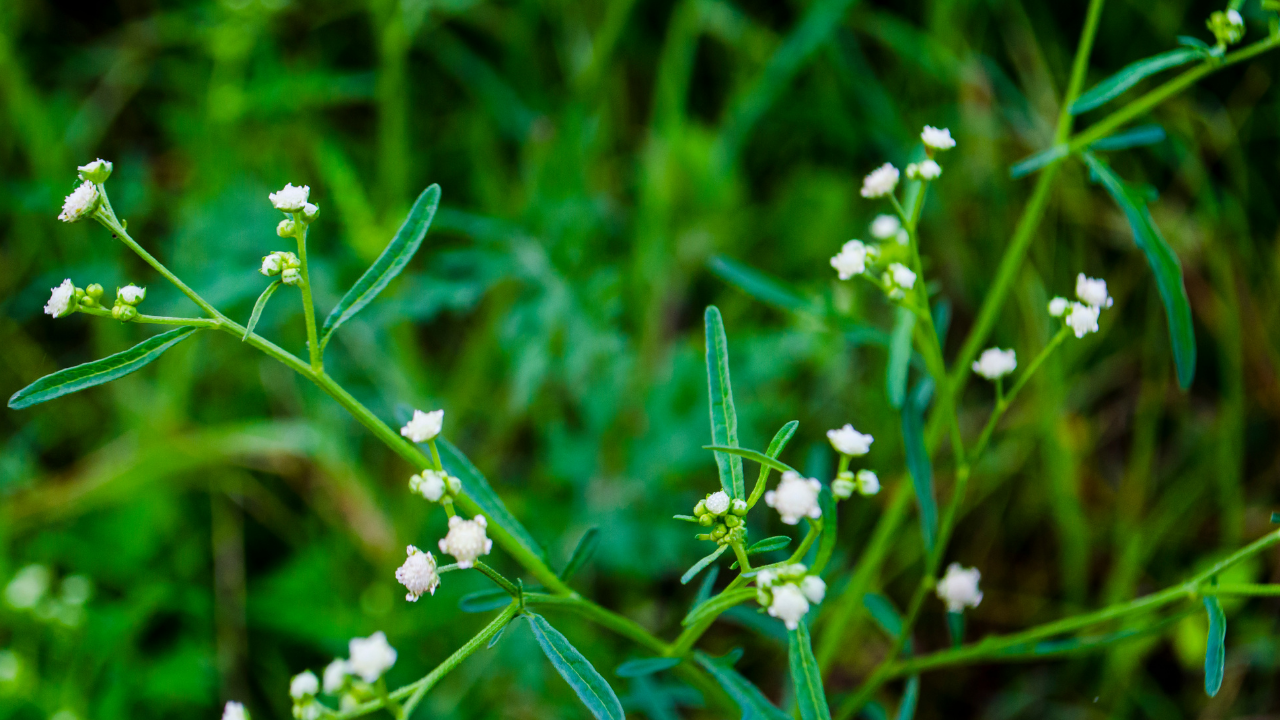
Parthenium
Fighting back with beetles and better awareness
India’s tried about everything to keep this weed under control, from pulling it out by hand to spraying herbicides on it. But the most surprising fix came from an unlikely friend, a small Mexican beetle called Zygogramma bicolorata, brought in specifically because it loves feasting on Parthenium leaves.Since it was introduced in the 1980s, the beetle has genuinely helped slow down the growth of the weed in several parts of the country. But long-term control still comes down to a mix of things, with regular monitoring, community awareness, and people simply knowing what this weed looks like and staying cautious around it.
Source link


