
Nestlé Pakistan Supports Clean Gilgit-Baltistan with Waste Segregation Initiative
Nestlé Pakistan takes a bold step towards sustainability with the first waste segregation machine in Gilgit City, reinforcing efforts for a waste-free future
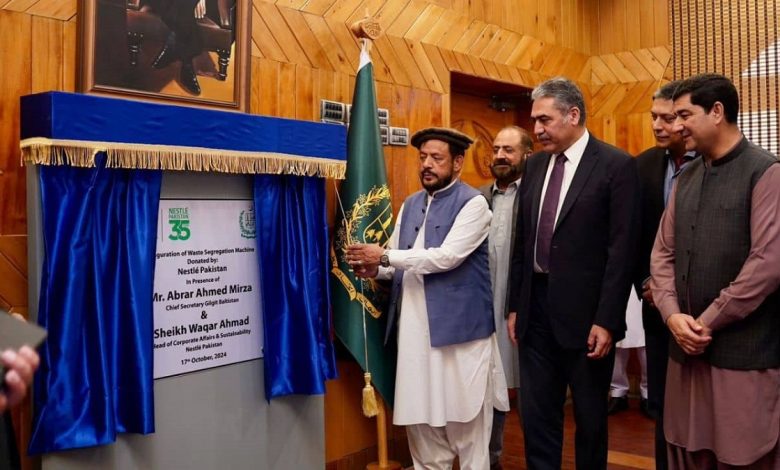
Gilgit-Baltistan, known for its breathtaking landscapes and as a prime destination for adventure tourism, now faces a growing environmental challenge due to increasing waste. As the region sees a surge in visitors, the accumulation of plastic waste has become a pressing issue. To address this, Nestlé Pakistan has introduced a new initiative that promises to bring a positive environmental impact: the installation of the first-ever waste segregation machine in Gilgit City.
Inaugurated by Chief Secretary Gilgit-Baltistan Abrar Ahmad Mirza, this machine is part of Nestlé’s ongoing Clean Gilgit-Baltistan Project (CGBP), a program designed to combat plastic waste and enhance waste management practices in the region. The machine, located at one of the collection sites of the Gilgit-Baltistan Waste Management Company (GBWMC), aims to revolutionize waste management by sorting and segregating plastic and paper waste more efficiently.
Smart Waste Management for a Cleaner Future
The waste segregation machine marks a pivotal step in smart waste management for the Gilgit-Baltistan region. It facilitates the separation of different types of plastic and paper waste, ensuring that recyclables are properly processed and reducing the strain on landfills. By improving the sorting process, the machine ensures that less waste ends up in the environment, thus contributing to a cleaner, greener Gilgit-Baltistan.
During the inauguration ceremony, Chief Secretary Gilgit-Baltistan Abrar Ahmad Mirza praised Nestlé’s efforts, stating, “We are delighted that Nestlé Pakistan is making great efforts to reduce packaging waste in the region, and the progress of the Clean Gilgit-Baltistan Project is a testament in this regard.” His acknowledgment highlights the critical role that private-public partnerships play in tackling environmental challenges.
Nestlé Pakistan’s Broader Commitment to Sustainability
Nestlé Pakistan’s commitment to environmental sustainability is not new. Over the years, the company has taken various steps under its Clean Gilgit-Baltistan Project to minimize waste and promote recycling. In fact, prior to the installation of the waste segregation machine, Nestlé had already installed three compressing and baling machines—one each in Gilgit, Hunza, and Skardu. These machines are designed to compact waste, making it easier to transport and recycle.
Additionally, Nestlé Pakistan has installed 122 benches and waste bins made from recycled plastic at popular tourist spots across the region. These eco-friendly benches and bins not only serve as reminders of the importance of recycling but also provide practical solutions for waste disposal in high-traffic areas. The company also donated 15,000 reusable bags to local communities, encouraging them to reduce their dependence on single-use plastic.
These combined efforts have had a significant impact. In the last five years alone, Nestlé Pakistan has helped facilitate the management of over 6,000 tons of plastic waste in Gilgit-Baltistan. This achievement underscores the company’s commitment to making a meaningful contribution to the environment while aligning with the global movement toward sustainability.
A Global Vision for Local Action
Nestlé Pakistan’s sustainability initiatives are part of a larger global vision to reduce the environmental footprint of packaging waste. Sheikh Waqar Ahmad, Head of Corporate Affairs and Sustainability at Nestlé Pakistan, emphasized the company’s mission during the inauguration ceremony, saying, “We are accelerating our actions to reduce the environmental impact of various kinds of packaging waste. Our vision is that none of our packaging, including plastics, ends up in landfills nor in oceans, lakes, and rivers.”
Ahmad’s statement underscores the urgency of tackling plastic waste at both the local and global levels. He stressed that addressing this issue requires collective action, highlighting the importance of public-private partnerships in finding innovative solutions to reduce, reuse, and recycle packaging materials. Through collaborations with local governments, companies like Nestlé can lead the way in creating sustainable systems for waste management.
The Road Ahead: Future Initiatives
Nestlé Pakistan’s commitment to improving waste management in Gilgit-Baltistan does not end with the installation of this machine. Under the CGBP program, the company has pledged to donate an additional waste segregation machine to the city of Skardu. The plan also includes the installation of 100 more benches across the region made from recycled plastic, continuing the effort to blend sustainability with functionality in public spaces.
Moreover, Nestlé is launching a series of waste management training sessions for the hospitality sector in collaboration with the Gilgit-Baltistan Waste Management Company and the Environmental Protection Agency (EPA). These training programs, set to roll out in 2025, aim to educate hotel owners, restaurants, and other businesses on sustainable waste management practices. By providing the necessary knowledge and resources, Nestlé hopes to foster a culture of responsibility among the key stakeholders in the region.
Aligning with Global Sustainability Goals
Nestlé Pakistan’s Clean Gilgit-Baltistan Project is closely aligned with the United Nations’ Sustainable Development Goals (SDGs), particularly Goal 12: Responsible Consumption and Production and Goal 17: Partnership for the Goals. These goals emphasize the importance of reducing waste through sustainable production practices and encourage collaboration between governments, private sectors, and civil society.
By taking these steps, Nestlé is not only contributing to a cleaner Gilgit-Baltistan but also reinforcing its role as a leader in corporate sustainability. The company’s efforts serve as a model for other businesses operating in environmentally sensitive areas and highlight the impact that corporate responsibility can have on local communities.
Conclusion: A Cleaner Gilgit-Baltistan on the Horizon
Nestlé Pakistan’s introduction of the first waste segregation machine in Gilgit City is a landmark moment for the region’s environmental efforts. As more initiatives like these are implemented, the future looks brighter for Gilgit-Baltistan, with the potential for the region to serve as a model for sustainable tourism and waste management.
The collaborative approach between Nestlé Pakistan, the local government, and the community is paving the way for a cleaner, more environmentally responsible Gilgit-Baltistan. Through continued efforts, including the donation of additional waste management equipment and the launch of educational programs, Nestlé is making strides toward achieving its vision of a waste-free future.


