
New cancer tech sends chemo straight to tumors

FDA fast-tracks pancreatic cancer drug daraxonrasib
Family and emergency medicine physician Dr. Janette Nesheiwat discusses how artificial intelligence could help detect pancreatic cancer earlier and the FDA fast-tracking the drug daraxonrasib on ‘Fox Report.’
NEWYou can now listen to Fox News articles!
Chemotherapy can save lives, but anyone who has watched a loved one go through it knows how hard it can be. The nausea. The exhaustion. The infections. The days when even getting off the couch feels like too much.
That happens because standard chemotherapy travels through the bloodstream. It attacks cancer cells but can also harm healthy cells along the way. For some pancreatic cancer patients, that approach may be changing.
A targeted drug-delivery system from RenovoRx is designed to send chemotherapy directly near the tumor instead of through the entire body. The system, called Trans-Arterial Micro-Perfusion, or TAMP, is being studied in a Phase III clinical trial for locally advanced pancreatic cancer.
For 83-year-old Hernando Salcedo, who had been left weak, nauseous and overwhelmed by standard chemotherapy, the trial offered something he desperately needed: a reason to hope. He enrolled at Miami Cancer Institute and soon began to feel the shift in his own body. His appetite started coming back. His energy improved. He felt more like himself. “The difference was tremendous,” Hernando said. “I completed eight sessions, one every 15 days, and I felt dramatically better than I did with the original chemotherapy.”
HIDDEN FACTOR IN CANCER TREATMENT TIMING MAY AFFECT SURVIVAL, RESEARCHERS SAY
Cancer patient Hernando Salcedo attended a family wedding after RenovoRx’s Trans-Arterial Micro-Perfusion system delivered chemotherapy directly near his tumor, helping him feel stronger during treatment. (Hernando Salcedo)
Sign up for my FREE CyberGuy Report
- Get my best tech tips, urgent security alerts and exclusive deals delivered straight to your inbox.
- For simple, real-world ways to spot scams early and stay protected, visit CyberGuy.com – trusted by millions who watch CyberGuy on TV daily.
- Plus, you’ll get instant access to my Ultimate Scam Survival Guide free when you join.
How the RenovoRx drug-delivery device works
RenovoRx’s platform uses the FDA-cleared RenovoCath device to deliver chemotherapy through a catheter placed in an artery near the tumor. A physician guides the catheter into position using X-ray imaging.
Shaun Bagai, CEO of RenovoRx, said the platform is designed to localize chemotherapy delivery near the tumor instead of relying on the drug to travel through the whole body.
“Once in position, two small balloons on the catheter are inflated, and the system is adjusted to isolate a targeted segment of artery adjacent to a tumor,” Bagai said. “The chemotherapy drug is then infused between the balloons, creating pressure to push the drug across the vessel wall and near the tumor, directly bathing the target tumor.”
That setup allows doctors to focus treatment in a specific area rather than exposing more of the body to chemotherapy. “The procedure itself is minimally invasive and is typically performed in an outpatient setting without the need for patients to be put under general anesthesia,” Bagai said.
For patients already dealing with pain, fatigue and fear, that outpatient approach may feel less overwhelming than a major hospital procedure.
How targeted chemotherapy for pancreatic cancer works
To understand why this approach matters, it helps to start with the problem doctors are trying to solve. Dr. Ripal Gandhi, a vascular interventional radiologist and interventional oncologist at Baptist Health Miami Cardiac & Vascular Institute and Miami Cancer Institute, explained why standard chemotherapy can be so hard on the body.
“With IV chemotherapy, the drug travels through the bloodstream, affecting both cancerous and healthy cells, which can lead to side effects,” Dr. Gandhi said. TAMP takes a more targeted route. A doctor places a catheter in an artery near the tumor, then delivers chemotherapy into that area instead of relying on the drug to circulate throughout the body.
Dr. Gandhi compared it to “a drip irrigation system for individual plants instead of watering an entire lawn.” For patients, that means doctors are trying to focus more of the treatment near the cancer while reducing how much chemotherapy reaches the rest of the body.
Why pancreatic cancer is so difficult to treat
Pancreatic cancer has a reputation for being one of the hardest cancers to fight, partly because the tumor itself can block treatment from working the way doctors want it to.
Dr. Gandhi said that creates a major challenge for standard IV chemotherapy. “Studies have shown that less than 10% of chemotherapy administered intravenously actually reaches tumor cells due to the few blood vessels in the tumor as well as dense fibrous stroma, which serves as a physical barrier in the tumor microenvironment,” Dr. Gandhi said.
That helps explain why targeted delivery could play an important role. TAMP sends the drug closer to the tumor rather than depending on the bloodstream to do all the work.
“This targeted approach via TAMP does not rely on chemotherapy circulating through the body to carry the drug to the tumor via tumor feeder vessels,” Dr. Gandhi said. “Trans-arterial micro-perfusion is a drug-delivery platform that delivers chemotherapy directly near the target tumor where it is needed most.”
NEW CANCER THERAPY HUNTS AND DESTROYS DEADLY TUMORS IN MAJOR BREAKTHROUGH STUDY
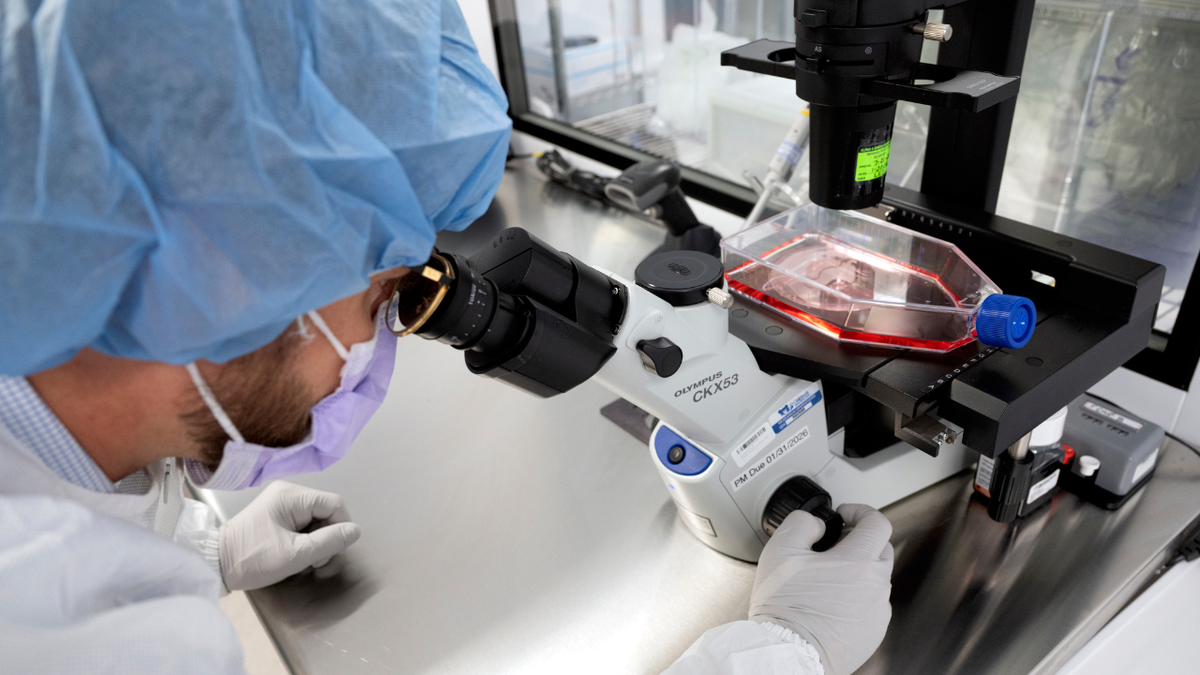
Chase McCann, associate director of the cell therapy lab core, demonstrates how cancerous T-cells from a child are used to develop an autoimmune treatment to fight cancer at Children’s National Hospital in Washington, D.C., on Aug. 26, 2025. (Marvin Joseph/The Washington Post/Getty Images)
Patient says targeted chemotherapy gave him hope
Hernando’s cancer journey began after he went to the doctor with a swollen stomach and hip pain. Doctors diagnosed him with locally advanced pancreatic cancer. When he started standard chemotherapy in August 2015, the side effects hit hard. “My body was going through an incredible amount of stress,” Hernando said. “My stomach was inflamed, I had persistent pain in my head, and I had almost no energy.”
He was also receiving chemotherapy and radiation at the same time. “It was a very difficult period, both physically and emotionally,” he said. “I remember feeling exhausted, overwhelmed and unsure of what the future would look like.”
When doctors presented the targeted treatment option, Hernando saw it as more than another medical procedure. “To me, it felt like a new opportunity to live,” he said. “It gave me hope at a time when my family and I really needed it.”
He credits Dr. Gandhi and the team at Miami Cancer Institute with helping him through it all. “From the beginning, he was honest, supportive and clear with my wife, my family and me,” Hernando said. “That meant everything.”
Fewer chemotherapy side effects changed daily life
“Before, I was losing weight, had no appetite and felt drained,” Hernando said. “After switching treatments, things began to change. I stopped losing weight, my appetite came back, my color improved and I had more energy.”
Cancer treatment can sometimes take over everyday life. When side effects ease, patients can get pieces of their normal life back. “After about eight weeks, we could see real progress,” Hernando said. “I was eating more, moving more and feeling excited about life again.”
One moment still stands out. Hernando was able to attend a family wedding and dance the entire night. “That moment meant everything to me,” he said. “After everything I had been through, being able to celebrate with my family in that way felt like a gift.” For Hernando, it was a chance to feel like himself again. “That night at the wedding, I was not thinking only about cancer or treatment,” Hernando said. “I was living.”
Early trial results show survival and quality-of-life signals
The early data from RenovoRx’s Phase III TIGeR-PaC trial suggest the targeted approach may offer both survival and tolerability benefits for some patients.
Dr. Gandhi said completed clinical studies with TAMP in pancreatic cancer showed “a potential for better outcomes and less side effects for patients.”
“In the initial interim analysis of the TIGeR-PaC clinical trial, there was a trend towards improved overall survival by 6 months and improvement in the progression free survival by 8.1 months with 65% fewer adverse events in the TAMP arm of the study,” Dr. Gandhi said.
Who may benefit from targeted chemotherapy delivery?
This approach isn’t for every pancreatic cancer patient. Doctors still need to look at the cancer stage, tumor location, treatment history and whether the cancer has spread.
Dr. Gandhi said Hernando was the kind of patient who could be a strong fit. “He is precisely the type of patient who would benefit best from this approach because he has a tumor which is too far advanced to be treated surgically, but it has not spread to other organs,” Dr. Gandhi said.
He also pointed to clinical trials as an important option for pancreatic cancer patients.”I discussed with him that the recommendation of the National Comprehensive Cancer Network is that the best management for pancreatic cancer patients is participation in a clinical trial whenever possible and he was an ideal candidate,” Dr. Gandhi said.
He went on to say that TAMP may be an option for patients who are not candidates for surgery, patients who have failed chemotherapy or patients who no longer want to continue IV chemotherapy because of side effects.
“TAMP can be used at any point within the treatment landscape, before, during or after other treatment modalities such as IV chemotherapy or radiation,” he said.
PANCREATIC CANCER PATIENT SURVIVAL DOUBLED WITH HIGH DOSE OF COMMON VITAMIN, STUDY FINDS
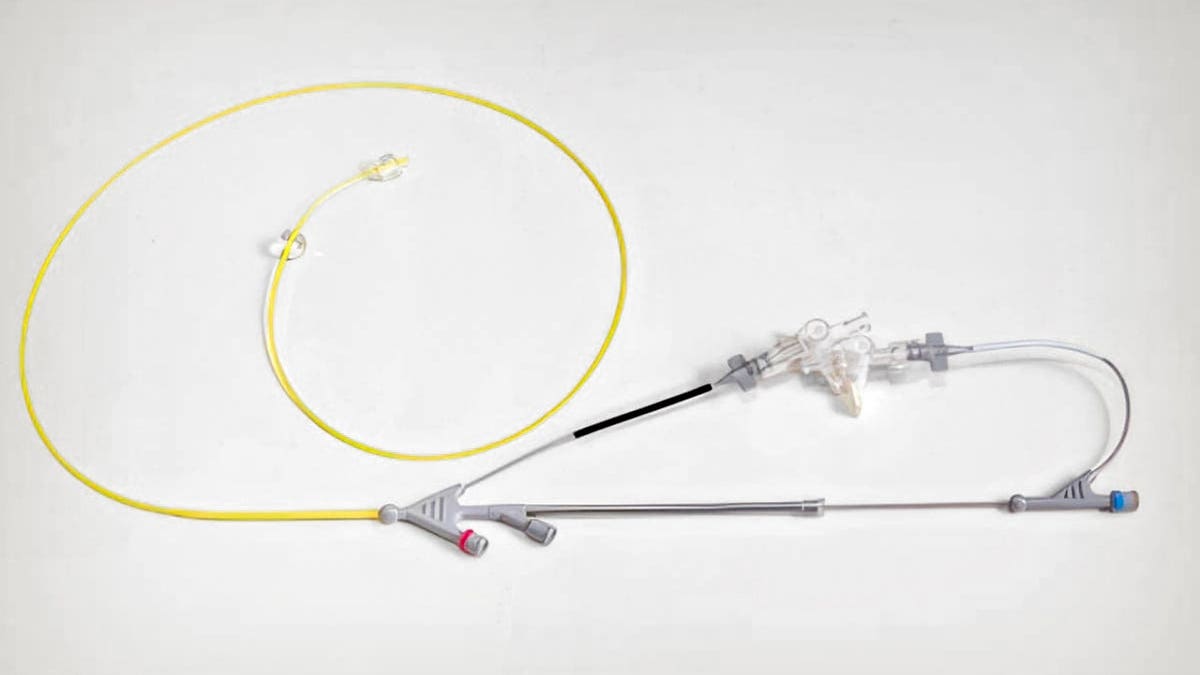
The RenovoCath device uses a catheter-based system to deliver chemotherapy near the tumor instead of through the whole body. (RenovoRx)
What comes next for RenovoRx’s cancer treatment platform
RenovoRx says the RenovoCath catheter is already FDA-cleared for general therapy and chemotherapy delivery. The company is also nearing the end of enrollment in its Phase III TIGeR-PaC trial.
That trial is evaluating intra-arterial gemcitabine (IAG) delivered through RenovoCath for locally advanced pancreatic cancer. Bagai said enrollment is expected to be completed in mid-2026, with final results expected in 2027.
“If positive, data generated from this trial could potentially support a new drug application for this combination product to the FDA for IAG,” Bagai said. RenovoRx also sees potential beyond pancreatic cancer. “The challenge we are addressing is not unique to pancreatic cancer,” Bagai said.
He said the platform could apply to other solid tumors with limited blood supply, including bile duct cancer, certain lung cancers and sarcomas. “The platform is designed to work with different types of therapies, not just one drug,” Bagai said. “That opens the door to future combinations and potential partnerships, with the goal of expanding options for patients who have limited treatment choices.”
What this means to you
If you or someone you love has pancreatic cancer, this story is worth paying attention to. Clinical trials can open up options when standard treatment feels too hard to tolerate or stops working.
Drug delivery matters, too. The medicine itself is only part of the story. Where it goes inside the body can affect side effects, energy levels and quality of life. Targeted chemotherapy delivery remains a specialized treatment approach. Some cancer centers may not offer it, and every diagnosis will not be a fit. Your care team can review imaging, staging, prior treatments and overall health to see whether it makes sense.
Start with direct questions. Ask whether a clinical trial makes sense. You can also ask about targeted delivery options or a second opinion from a pancreatic cancer specialist. Hernando’s advice to other patients is simple. “I would tell them not to lose hope and not to wait to ask questions,” he said.
Take my quiz: How safe is your online security?
Think your devices and data are truly protected? Take this quick quiz to see where your digital habits stand. From passwords to Wi-Fi settings, you’ll get a personalized breakdown of what you’re doing right and what needs improvement. Take my Quiz here: Cyberguy.com
Kurt’s key takeaways
Pancreatic cancer has a way of turning normal life upside down fast. One day, a family is making plans. The next, they are trying to understand scans, treatment choices and side effects that no one feels ready for. That is what makes Hernando’s story so powerful. The part that stays with you isn’t only the technology. It is the fact that he started eating again. He had more energy. He felt more like himself. And he got to dance at a wedding after wondering what the future would look like. The final Phase III trial results will be important. Doctors still need to see how widely this approach could help patients. But the promise is easy to understand. If chemotherapy can get closer to the tumor while taking less of a toll on the rest of the body, patients may get something that matters just as much as treatment itself: more good days.
CLICK HERE TO DOWNLOAD THE FOX NEWS APP
If you or someone you loved needed chemo, would targeted delivery change how you think about treatment? Let us know by writing to us at Cyberguy.com
Sign up for my FREE CyberGuy Report
- Get my best tech tips, urgent security alerts and exclusive deals delivered straight to your inbox.
- For simple, real-world ways to spot scams early and stay protected, visit CyberGuy.com – trusted by millions who watch CyberGuy on TV daily.
- Plus, you’ll get instant access to my Ultimate Scam Survival Guide free when you join.
Copyright 2026 CyberGuy.com. All rights reserved.
Source link


