
Simla Agreement Defunct: A Strategic Pivot on Kashmir Declared By Pakistan
Khawaja Asif calls the 1972 accord a "dead document," signaling a move away from bilateralism to a global approach on the Kashmir dispute.
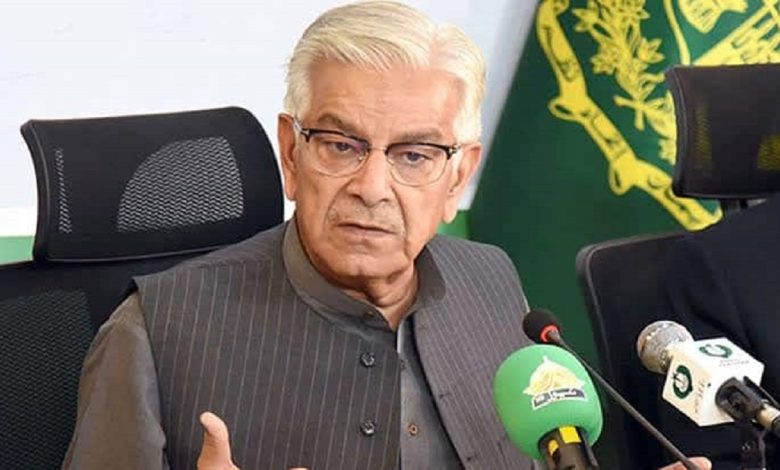
In a significant foreign policy shift, Pakistan’s Defence Minister Khawaja Asif has declared the 1972 Simla Agreement with India “null and void,” calling it a “dead document.” This statement reflects a dramatic change in how Pakistan intends to approach the decades-long Kashmir conflict, shifting from a bilateral framework to a multilateral strategy based on the United Nations’ original resolutions.
The Simla Agreement, signed in July 1972 between Indian Prime Minister Indira Gandhi and Pakistani President Zulfikar Ali Bhutto following the 1971 war, laid the foundation for resolving disputes—especially the Kashmir issue—through peaceful bilateral negotiations. However, Asif now argues that the agreement has lost its relevance due to repeated violations by India, particularly its unilateral decisions affecting the status of Jammu and Kashmir.
Simla Agreement
“The Simla Agreement is no longer relevant. It has been buried under India’s repeated breaches, particularly the revocation of Article 370,” Asif stated during a press conference.
He added that Pakistan is reverting to its pre-1972 stance, rooted in the 1948 UN Security Council resolutions that regard Kashmir as a disputed territory and call for a plebiscite. Asif made it clear that Pakistan now considers the Line of Control (LoC) merely a ceasefire line—terminology used by the United Nations following the first war between the two nations in 1947-48.
India’s Article 370 Move: A Breaking Point
Tensions between India and Pakistan have sharply escalated since August 2019, when the Indian government revoked Article 370 of its Constitution, effectively ending the semi-autonomous status of Jammu and Kashmir. Pakistan condemned the move, considering it a violation of both international law and the spirit of the Simla Agreement.
“India’s unilateral abrogation of Article 370 was the final blow to the idea that bilateralism can work,” said Asif. “How can we respect a framework that one party continues to undermine?”
Since then, Pakistan has attempted to internationalize the Kashmir issue, raising it at various platforms including the United Nations General Assembly, the Organisation of Islamic Cooperation (OIC), and through diplomatic channels with allies like China and Turkey.
Multilateral Approach: Back to the UN
Asif’s recent remarks make it clear that Pakistan will now push for international mediation and UN involvement, moving away from bilateral diplomacy with India. He reiterated that the LoC should be treated as it was intended in the 1948 UN resolutions—a temporary ceasefire line pending a final settlement.
This marks a return to Pakistan’s original diplomatic posture from the early years of the conflict, before the Simla Agreement was signed. At that time, Pakistan insisted on the implementation of UN Security Council resolutions, including a plebiscite to determine the wishes of the Kashmiri people.
“We are going back to the legal and moral high ground offered by the United Nations framework,” Asif emphasized.
India’s Position Remains Firm
India, on the other hand, has consistently maintained that Jammu and Kashmir is an internal matter and has rejected any international mediation. According to New Delhi, the Simla Agreement binds both nations to resolve disputes bilaterally without third-party intervention.
Indian officials have not formally responded to Asif’s latest remarks, but diplomatic analysts believe this move could further sour already fragile relations between the two nuclear-armed neighbors.
Diplomatic and Strategic Implications
The shift in Pakistan’s approach may reshape the regional and international dynamics of the Kashmir issue. By seeking broader international involvement, Pakistan aims to reinvigorate global attention on what it sees as an unresolved dispute with humanitarian implications.
However, the effectiveness of this strategy remains uncertain. While countries like China and Turkey have shown support for Pakistan’s position, many others—including Western powers—have urged both nations to resolve their issues through direct dialogue.
Still, Asif’s statement signals a bold move by Islamabad to break the diplomatic stalemate. Whether this approach yields tangible progress remains to be seen, but it does represent a marked departure from past practice.
No Official Treaty Withdrawal—Yet
It’s important to note that while Khawaja Asif’s statement is politically and diplomatically significant, the Foreign Office later clarified that no formal process to withdraw from the Simla Agreement has been initiated. This leaves the door open for future flexibility, should the geopolitical environment evolve.
Nevertheless, Asif’s remarks carry weight. They reflect Pakistan’s growing frustration with what it sees as India’s unwillingness to engage in meaningful dialogue on Kashmir under existing bilateral frameworks.
Final Thoughts
The declaration that Pakistan no longer views the Simla Agreement as valid is more than symbolic—it marks a fundamental recalibration of Islamabad’s Kashmir strategy. By emphasizing multilateralism, Pakistan is signaling that it intends to internationalize the dispute in ways not seen in decades. Whether this bold pivot will garner the necessary global support or provoke further tension remains to be seen. What’s clear is that the Kashmir issue is entering a new phase, shaped by shifting political priorities and growing geopolitical complexities.


