
China’s Foreign Direct Investment in Pakistan Surges 285% – What’s driving the Growth?
How Pro-Business Policies and Reforms Are Attracting Record Chinese Investments
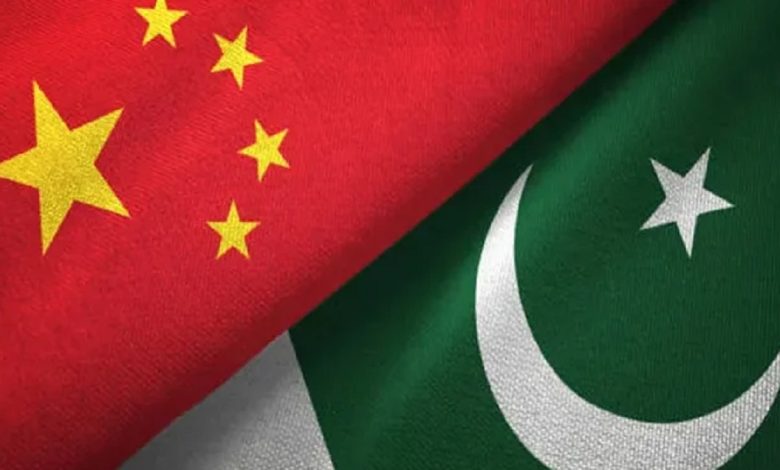
China has reaffirmed its position as Pakistan’s largest foreign investor, significantly increasing its Foreign Direct Investment (FDI) in the country. During the first eight months of FY 2024-25 (July-February), China’s net investment in Pakistan surged to $661.8 million, accounting for a staggering 40.9% of Pakistan’s total net FDI. This marks an impressive 285% year-over-year (YoY) increase, reflecting renewed confidence in Pakistan’s investment climate.
The Special Investment Facilitation Council (SIFC) has played a pivotal role in driving this surge, implementing financial reforms, business-friendly policies, and streamlined investment facilitation. By focusing on regulatory simplification, ease of doing business, and sector-specific incentives, Pakistan has successfully strengthened investor confidence, particularly among Chinese enterprises.
Let’s take a closer look at what’s behind this sharp rise in Chinese investments, the key sectors benefiting from it, and what this means for Pakistan’s economy moving forward.
China’s Role in Pakistan’s FDI Landscape
Foreign Direct Investment (FDI) plays a crucial role in economic growth, bringing in capital, technology, and expertise to boost local industries. Over the years, China has remained Pakistan’s top investor, largely due to strong bilateral relations and strategic economic cooperation.
Even during times of economic uncertainty, China has continued to inject significant funds into Pakistan, supporting major infrastructure projects and key industries. The recent 285% increase in FDI highlights China’s long-term commitment to Pakistan’s economic progress.
Key Sectors Attracting Chinese Investment
- Energy and Power Projects
One of the largest beneficiaries of Chinese FDI is Pakistan’s energy sector, particularly under the China-Pakistan Economic Corridor (CPEC). Many power plants, including coal, hydro, wind, and solar projects, have been developed with Chinese investment.
✔ CPEC Phase II focuses on renewable energy, with new solar and wind projects expected to further reduce Pakistan’s reliance on expensive imported fuel.
✔ The Thar Coal Project and Karot Hydropower Plant are prime examples of China-funded energy ventures transforming Pakistan’s power sector.
- Infrastructure and Transport
Pakistan’s transportation and infrastructure development has seen massive Chinese investment, improving connectivity and trade routes.
✔ The expansion of Gwadar Port and its Free Trade Zone is a strategic initiative under CPEC, aimed at turning Pakistan into a major regional trade hub.
✔ Several motorway and highway projects, including the Sukkur-Multan Motorway (M5), have enhanced road connectivity.
- Industrial and Manufacturing Growth
With Pakistan focusing on industrialization, Chinese companies have ramped up their manufacturing investments, particularly in special economic zones (SEZs).
✔ The Rashakai and Dhabeji SEZs are attracting Chinese enterprises in sectors like automobiles, textiles, and technology.
✔ Joint ventures in steel, cement, and engineering industries are helping Pakistan reduce its dependence on imports.
- Information Technology and Telecommunications
Pakistan’s IT sector is emerging as a key destination for Chinese tech firms, which are investing in:
✔ E-commerce and fintech startups to support digital transformation.
✔ 5G infrastructure and fiber-optic connectivity to enhance telecom services.
✔ Joint collaborations in AI, cloud computing, and smart city solutions.
- Agriculture and Food Processing
China’s FDI is also expanding into Pakistan’s agricultural sector, promoting modern farming techniques and agribusiness investments.
✔ New irrigation projects and high-tech farming equipment are being introduced.
✔ Joint ventures in dairy, livestock, and organic farming are helping Pakistan increase exports to China.
Why Is Chinese FDI in Pakistan Increasing?
Several key factors are contributing to the rise in Chinese investments:
- Strategic Bilateral Relations
✔ Pakistan and China share a deep-rooted friendship, often referred to as an “all-weather strategic partnership.”
✔ The Belt and Road Initiative (BRI) continues to strengthen economic cooperation between the two nations.
- Business-Friendly Reforms in Pakistan
✔ The Special Investment Facilitation Council (SIFC) has introduced pro-investment policies to attract more FDI.
✔ Simplified tax structures, fast-track regulatory approvals, and reduced bureaucratic hurdles are making Pakistan more business-friendly.
- Expansion of CPEC Projects
✔ CPEC Phase II focuses on industrial development and technology transfer, attracting more investors.
✔ The development of SEZs is providing Chinese companies with an attractive business environment.
- Currency Swap Agreement Between Pakistan and China
✔ The use of the Chinese yuan (RMB) for trade transactions between both countries is reducing reliance on the US dollar, encouraging seamless investments.
Challenges and Concerns
Despite the positive momentum, certain challenges need to be addressed to maximize the benefits of Chinese FDI:
- Security Concerns
✔ Ongoing security challenges, particularly in Balochistan and KP, have raised concerns for Chinese investors.
✔ Pakistan is working to enhance security measures, including dedicated CPEC security forces.
- Debt Sustainability
✔ Pakistan must ensure that FDI-driven projects remain financially sustainable, avoiding excessive reliance on loans.
✔ Public-private partnerships (PPPs) can help balance funding sources.
- Need for Policy Consistency
✔ Investors seek long-term policy stability to ensure that projects are not affected by political changes.
✔ Continuous economic and legal reforms will help retain investor confidence.
What’s Next? The Future of Chinese Investment in Pakistan
With the current momentum, China’s FDI in Pakistan is expected to grow further in the coming years. Some key future trends include:
✔ Greater focus on high-tech industries, including AI, blockchain, and robotics.
✔ More investment in urban development and smart cities.
✔ Expanding digital infrastructure to support Pakistan’s growing freelance and startup ecosystem.
✔ Increased agricultural trade to boost exports of Pakistani products to China’s massive consumer market.
Final Thoughts
China’s 285% surge in FDI marks a significant milestone in Pakistan’s economic journey. This increase not only reflects China’s confidence in Pakistan’s market but also underscores the impact of business-friendly reforms and strategic partnerships.
✔ For Pakistan, the challenge now is to maintain this investment momentum, ensuring that these funds translate into sustainable economic growth, job creation, and industrial progress.
✔ With a strong policy framework, improved security, and continued bilateral cooperation, Pakistan can fully leverage Chinese FDI to unlock long-term economic benefits.
🚀 The future looks promising as Pakistan continues to strengthen its position as a key investment destination for China and other global investors!


