
Psychology suggests letting children play on their own may be one of the best parenting decisions; here’s why

There was no expensive toy, no carefully planned activity and no adults telling them what to do. Just two six-year-olds, a pile of wooden boards, and a vivid imagination. The children had transformed the boards into a bridge over an imaginary river filled with crocodiles. They invented rules, negotiated turns, argued, laughed and solved problems as they played. Then, according to psychologist Peter Gray, a well-meaning parent stepped in and showed them the “proper” way to use the boards- with hammers and nails. The imaginative game came to an abrupt end. Within minutes, the children appeared bored and passive.The story, shared by Gray during an interview on Hidden Brain, has struck a chord with parents around the world because it raises a bigger question: Are today’s children getting enough opportunities to play without adults directing every moment?
28 Jul 2026 | 16:38
What factors did you consider, or would consider, before choosing the right school for your child?
The answer, according to many child development researchers, is probably no.But while scientists agree that free play is important, they are also careful not to blame the decline in independent play for every challenge children face today. The reality, as always, is more nuanced.
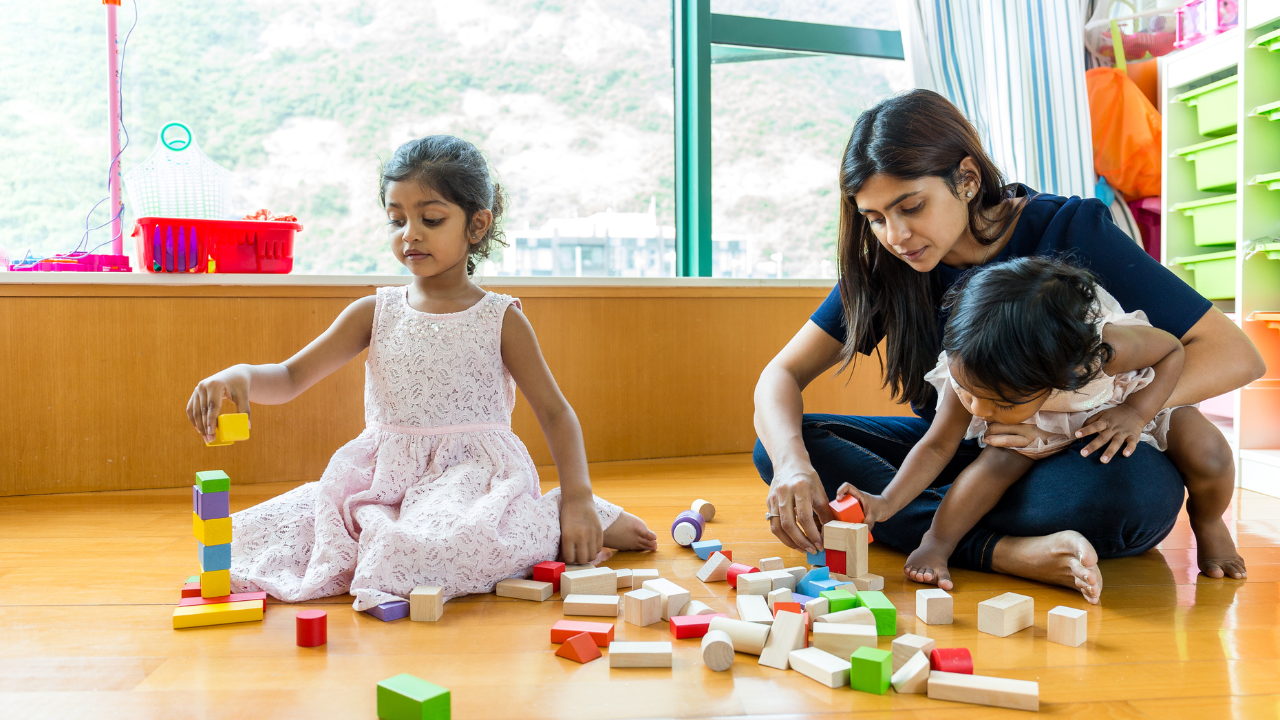
Image: Canva
The disappearing childhood of unsupervised play
Children today spend more time in organised classes, structured sports, supervised playdates and academic activities than previous generations. At the same time, opportunities to roam the neighbourhood, invent games with friends or simply “figure things out” have steadily shrunk in many countries.Peter Gray, a research professor of psychology and neuroscience at Boston College, has spent decades studying children’s play. He argues that the decline in children’s independent activities is one of the major societal changes affecting childhood. His work suggests that free play is not simply entertainment- it is how children naturally practise the skills needed for adulthood.Gray defines genuine play as activity that is freely chosen, self-directed, enjoyable and driven by the child rather than an adult. In such play, children make the rules, settle disagreements, negotiate fairness, test boundaries and adapt when things go wrong.
What children actually learn when adults step back
To an adult, children pretending the floor is lava or building imaginary kingdoms may seem unproductive. Developmental psychologists see something very different.During unstructured play, children constantly practise executive functions- the brain’s management system responsible for planning, self-control, flexible thinking and problem-solving. They also develop social competence. When there is no referee to settle every disagreement, children must negotiate, compromise, apologise, persuade and sometimes accept losing.Researchers have long found that pretend play encourages language development, creativity, perspective-taking and emotional regulation. Children must imagine another person’s thoughts, follow self-created rules and adapt when the game changes unexpectedly.A recent review published in Early Childhood Research Quarterly found that pretend play is associated with language development, creativity, social understanding and emotional skills. However, the authors also caution that while these associations are promising, stronger experimental studies are still needed to determine exactly how much pretend play directly causes these developmental gains.
Does less free play cause more anxiety?
This is where the science becomes more complicated. Gray has argued that as children’s opportunities for independent play have declined over the past several decades, anxiety, depression and emotional distress have increased.The timing certainly overlaps.However, scientists are careful to distinguish correlation from causation. In other words, just because two trends occur together does not prove that one caused the other.Today’s children are also growing up with smartphones, social media, changing school pressures, altered sleep patterns, reduced physical activity, different parenting styles and broader societal changes. All of these may influence mental health. Even Gray acknowledges that the evidence cannot definitively prove that reduced play alone caused rising anxiety rates. Instead, he argues that the decline in free play is one important contributing factor among many.
Image: Canva
New research is beginning to strengthen the case
While proving cause and effect is difficult, newer longitudinal studies are offering encouraging evidence.One recent Australian study followed more than 2,200 children over several years and found that toddlers and preschoolers who spent more time in unstructured play showed better self-regulation two years later, even after researchers accounted for earlier behaviour and other influencing factors.Self-regulation- the ability to manage emotions, attention and impulses- is considered one of the strongest predictors of later academic achievement, relationships and mental health. Although the study cannot prove causation, it strengthens the argument that free play contributes meaningfully to children’s development.
Why adults naturally step in- and why it isn’t always helpful
Parents rarely interrupt because they want to spoil play. Most intervene because they want to teach. Perhaps the tower looks unstable. The game seems unfair. Someone might get hurt. Or the child appears to be doing something “incorrectly.” The instinct comes from care. Yet developmental experts note that children often learn most effectively when adults resist solving every small problem.A disagreement over whose turn comes next may look frustrating in the moment, but it provides valuable practice in conflict resolution. A failed attempt at building a fort teaches engineering far better than watching an adult do it perfectly. Even manageable risk helps children gradually develop judgment and confidence.
Source link


